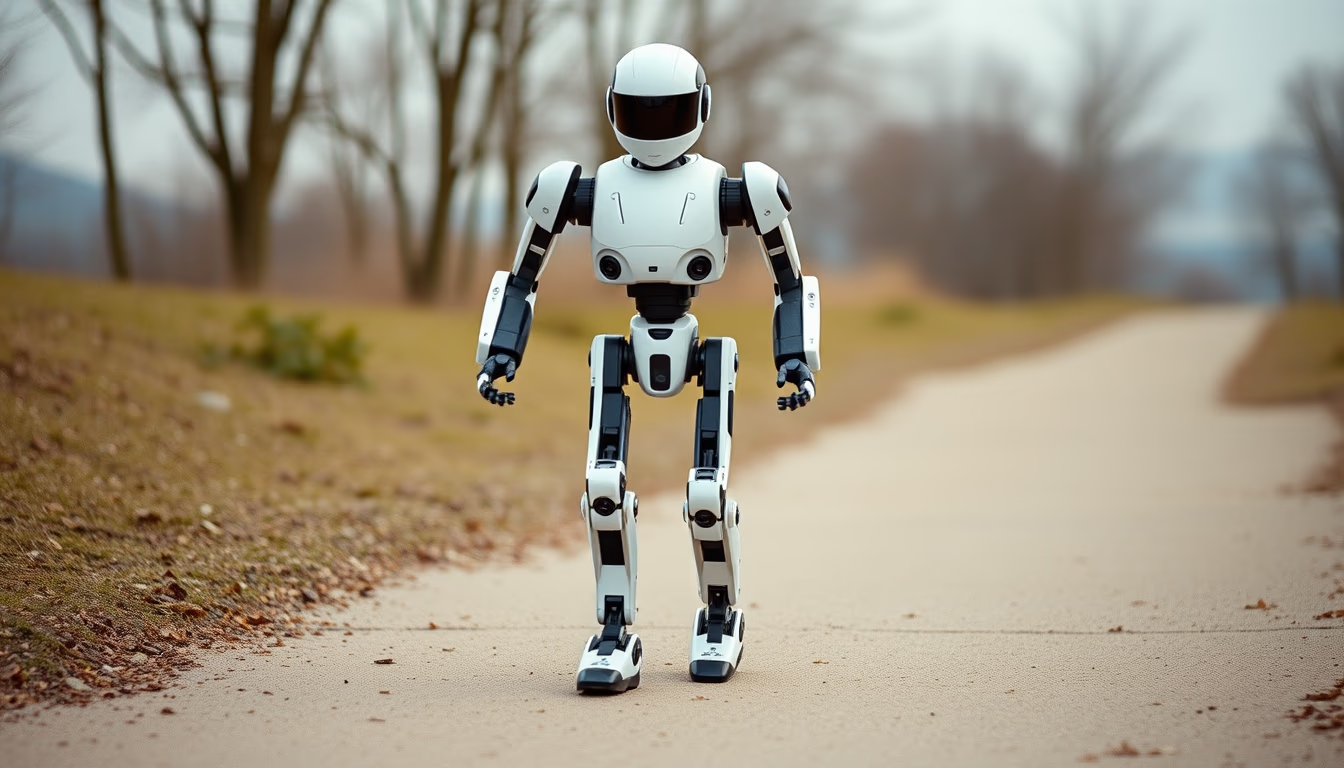
Bipedal robot walking
1344×768 · AVIF · CC BY 4.0
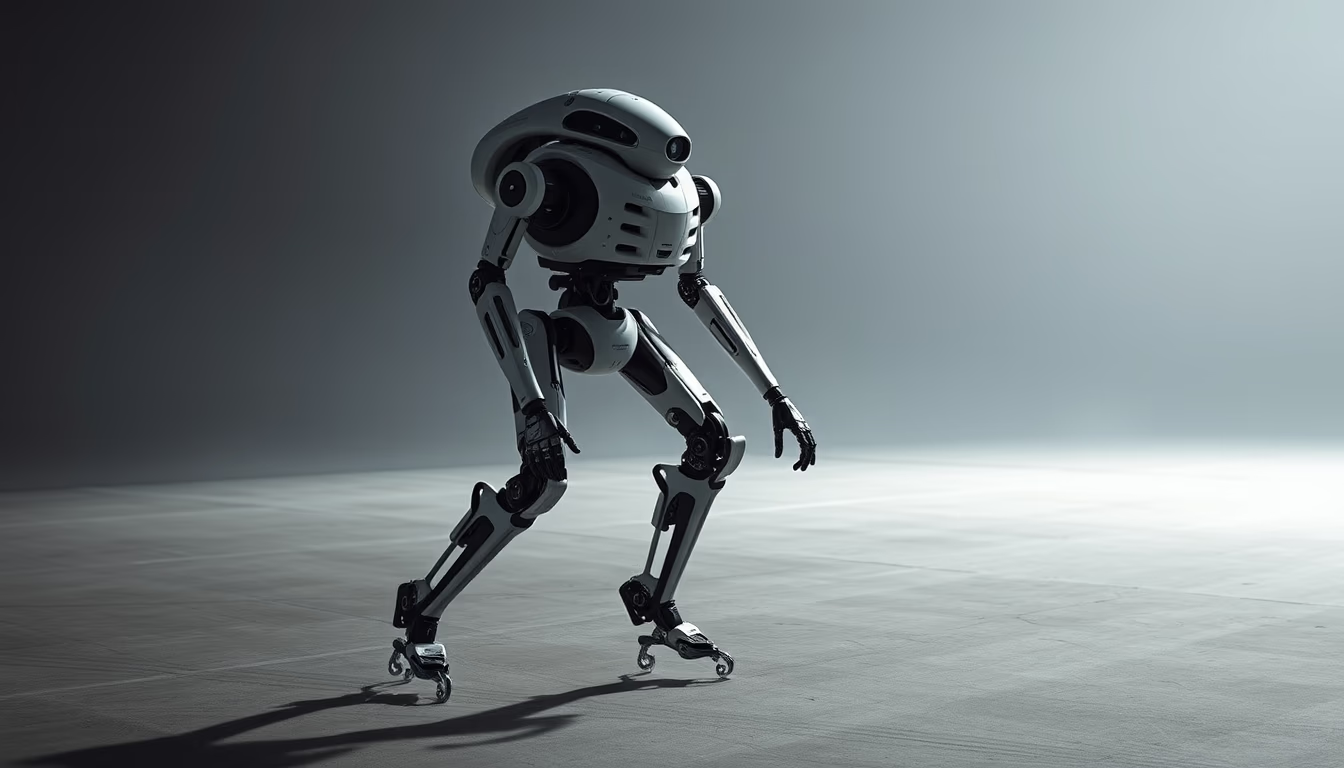
Bipedal robots that walk like humans are one of robotics' greatest challenges, combining mechanical engineering, sensors, and artificial intelligence to balance and move across varied terrains.
About this subject
Bipedal robots are machines designed to walk on two legs, mimicking human gait. This locomotion type is extremely complex due to the need for dynamic balance, coordination of multiple joints, and adaptation to uneven terrain. Early prototypes emerged in the 1970s, such as the WABOT-1 from Waseda University in Japan. Since then, companies like Boston Dynamics, Honda (with ASIMO), and Tesla (with Optimus) have heavily invested in development. ASIMO, introduced in 2000, was a milestone for climbing stairs and running. Atlas from Boston Dynamics demonstrates backflips and parkour, a leap in agility. Today, bipedal robots are used in research, entertainment, and hazardous environment exploration, but they still lack human energy efficiency, which consumes about 0.6 joules per meter. Bipedal locomotion remains one of robotics' hardest fields, requiring real-time torque and angle control, plus force sensors and gyroscopes to prevent falls. A fun fact: the longest continuous walk by a bipedal robot is 43 hours, set by Cornell Ranger in 2011, covering 65 kilometers.
Frequently Asked Questions
What are the main challenges in creating a bipedal robot that walks well?
Key challenges include real-time dynamic balance, coordination of multiple joints, adaptation to different terrains, and energy efficiency. Sensors such as gyroscopes and accelerometers are crucial to prevent falls.
Which bipedal robots are most famous today?
Boston Dynamics' Atlas is known for agility and acrobatic moves. Honda's ASIMO was a pioneer in human interaction. Tesla's Optimus promises industrial applications. Agility Robotics' Digit focuses on logistics.
Can bipedal robots replace humans in everyday tasks?
Not yet. They are used in research, entertainment, and hazardous missions, but cost, autonomy, and robustness limit widespread adoption. Advances in AI and batteries may change this in the next decade.
Direct URL
https://pub-c7d6a6ea828543ac903a74a341ccb2e1.r2.dev/imagens/bipedal-robot-walking-high-fashion-editorial-p10.avifHow to credit
Include a visible link back to UtilizAí. Copy one of the snippets below:
<a href="https://xn--utiliza-eza.com/en/midia/imagens/bipedal-robot-walking-high-fashion-editorial-p10">Bipedal robot walking</a> by <a href="https://xn--utiliza-eza.com">UtilizAí</a>, licensed under <a href="https://creativecommons.org/licenses/by/4.0/">CC BY 4.0</a>.
[Bipedal robot walking](https://xn--utiliza-eza.com/en/midia/imagens/bipedal-robot-walking-high-fashion-editorial-p10) by [UtilizAí](https://xn--utiliza-eza.com), CC BY 4.0
License: CC-BY-4.0