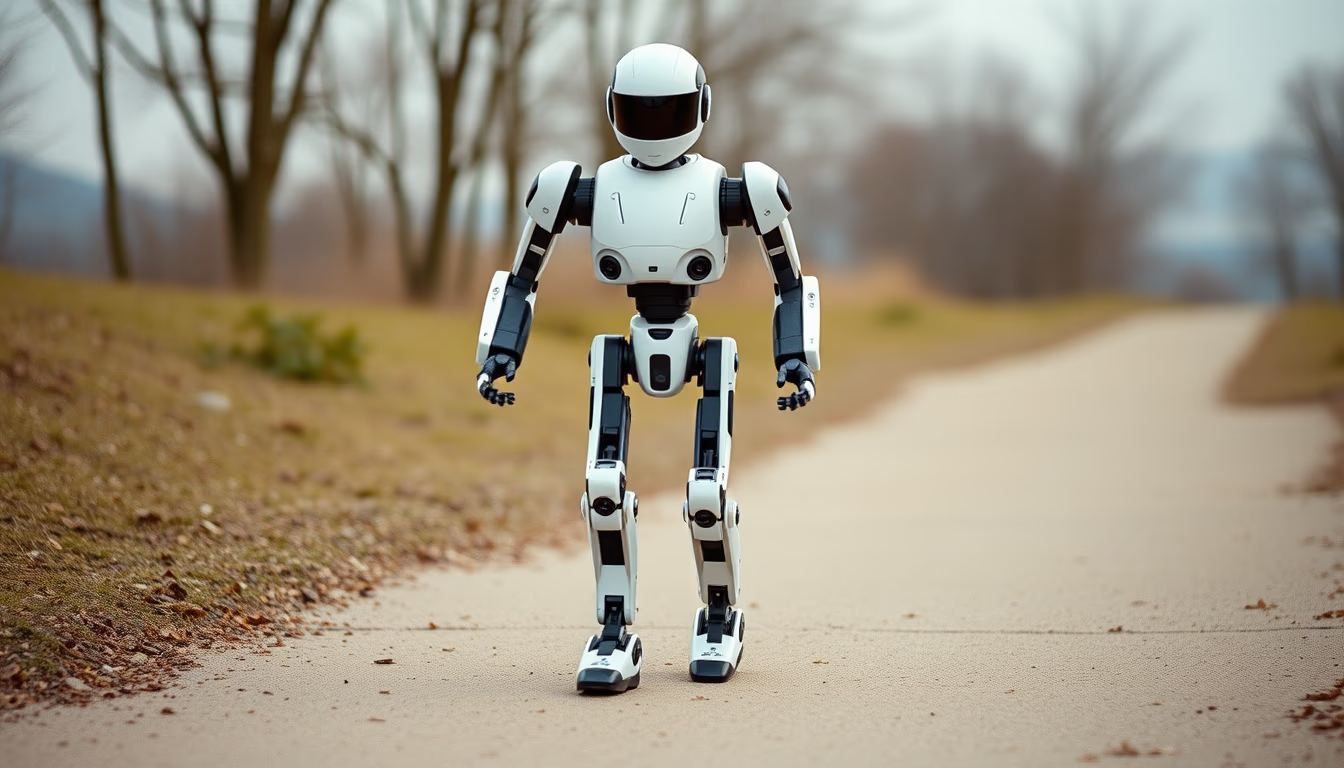
Bipedal robot walking
1344×768 · AVIF · CC BY 4.0
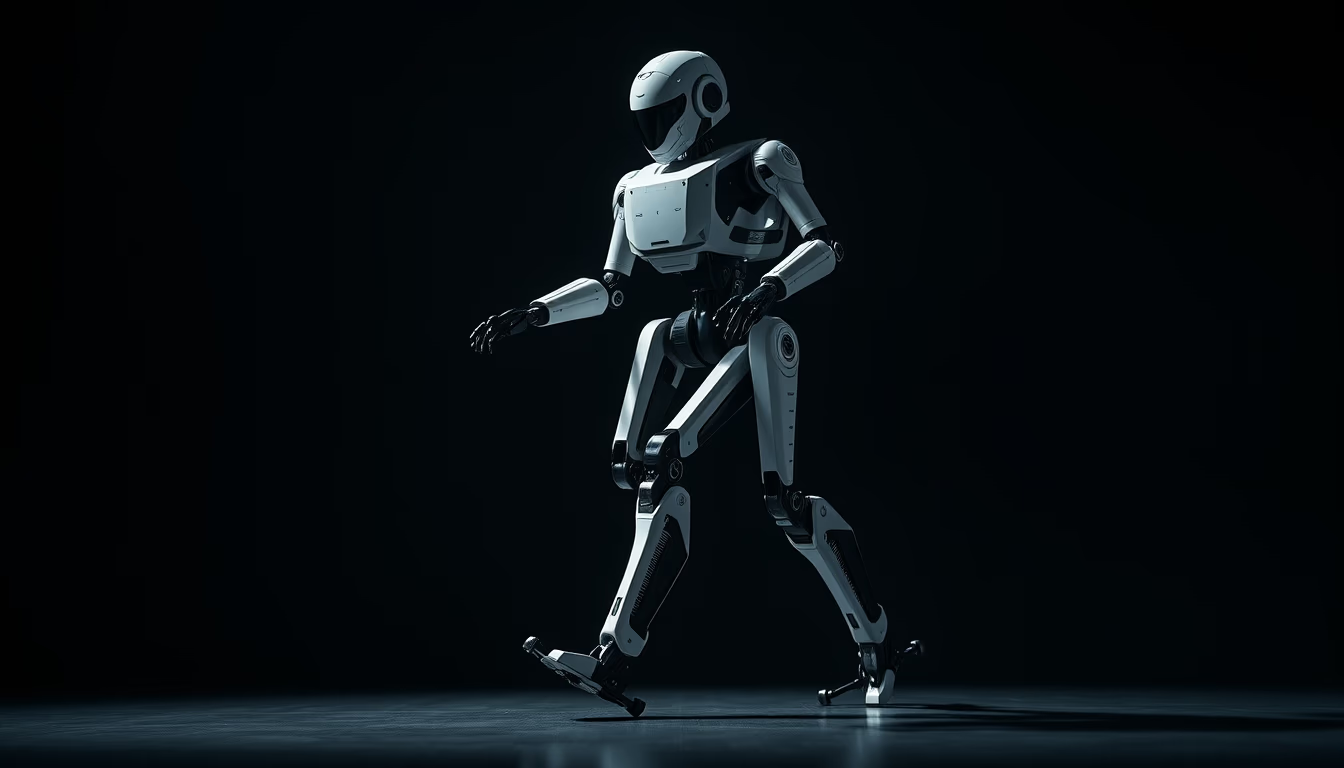
Bipedal robots are among the greatest challenges in modern robotics, combining dynamic balance, precise actuation, and artificial intelligence to mimic human locomotion.
About this subject
Bipedal robotics aims to replicate the complex mechanics of human walking. Unlike wheeled or tracked robots, a bipedal robot must maintain dynamic balance with every step, constantly adjusting center of mass, joint angles, and ground reaction forces. This control involves real-time prediction and correction algorithms, often based on inverted pendulum models or angular momentum control.
Notable examples include Honda's ASIMO, which since the 2000s has demonstrated walking, running, and human interaction, and Boston Dynamics' Atlas, which performs parkour and acrobatic maneuvers. More recently, robots like Cassie and Digit from Agility Robotics focus on efficient locomotion for logistics and delivery tasks. Each uses different electric or hydraulic actuation approaches and inertial and force sensing.
The development of bipedal robots has direct implications for disaster rescue, rough terrain exploration, and intelligent prosthetics. The ability to climb stairs, fit through narrow doorways, or operate in human-designed environments makes these robots versatile. However, challenges such as energy efficiency, sensor cost, and robustness on unstructured terrain still limit widespread adoption. Research continues to advance, notably using reinforcement learning to generate adaptive gaits.
Frequently Asked Questions
Why is it so difficult to create bipedal robots?
The main challenge is maintaining dynamic balance while moving, as the robot must coordinate multiple joints in real time to avoid falling. Additionally, energy efficiency and adaptation to uneven terrain require complex control algorithms and precise sensors.
What are the most famous examples of bipedal robots?
Honda's ASIMO, Boston Dynamics' Atlas, and Agility Robotics' Cassie/Digit are some of the best known. They demonstrate different approaches, from smooth walking to advanced acrobatics.
What are bipedal robots used for beyond research?
They have applications in disaster rescue, exploration of inaccessible terrain, warehouse logistics, and as platforms for developing intelligent prosthetics. Their human-like form allows operation in environments designed for people.
Direct URL
https://pub-c7d6a6ea828543ac903a74a341ccb2e1.r2.dev/imagens/bipedal-robot-walking-fine-art-photography-p5.avifHow to credit
Include a visible link back to UtilizAí. Copy one of the snippets below:
<a href="https://xn--utiliza-eza.com/en/midia/imagens/bipedal-robot-walking-fine-art-photography-p5">Bipedal robot walking</a> by <a href="https://xn--utiliza-eza.com">UtilizAí</a>, licensed under <a href="https://creativecommons.org/licenses/by/4.0/">CC BY 4.0</a>.
[Bipedal robot walking](https://xn--utiliza-eza.com/en/midia/imagens/bipedal-robot-walking-fine-art-photography-p5) by [UtilizAí](https://xn--utiliza-eza.com), CC BY 4.0
License: CC-BY-4.0