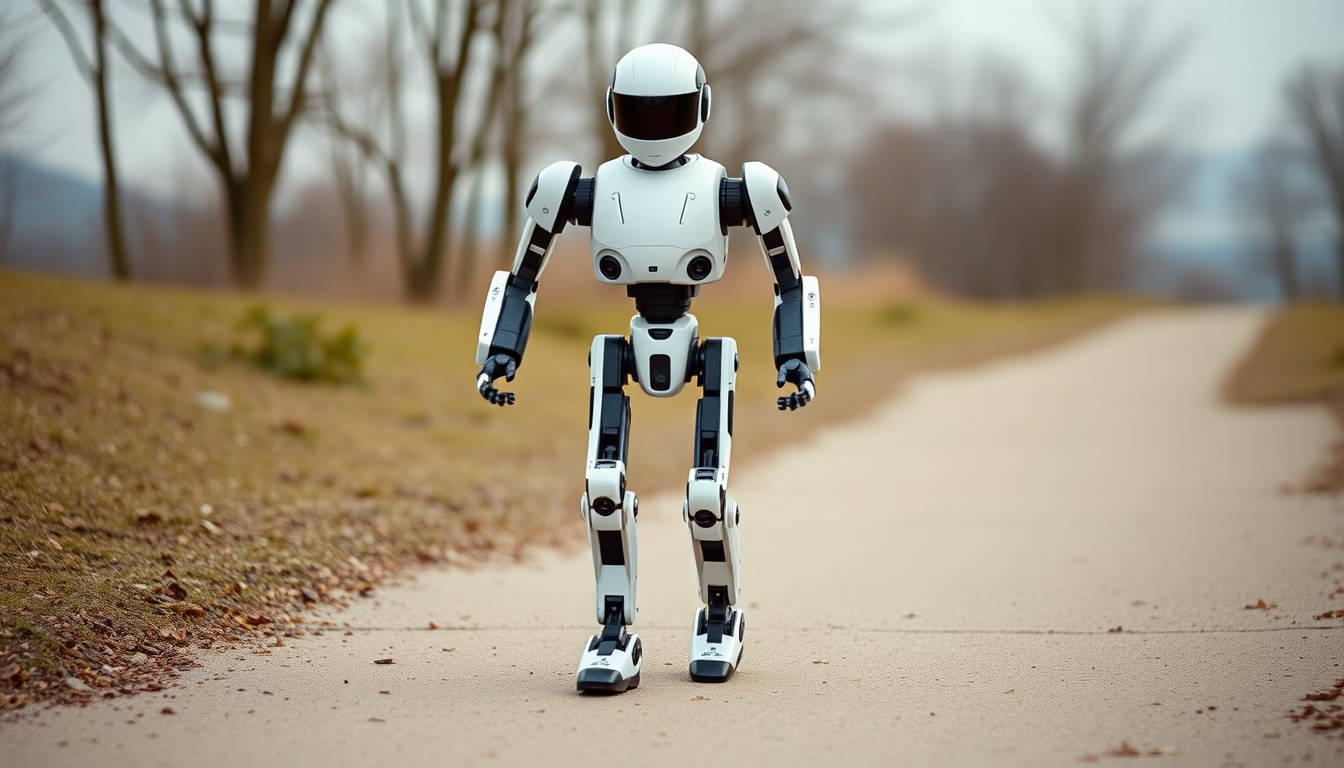
Bipedal robot walking
1344×768 · AVIF · CC BY 4.0
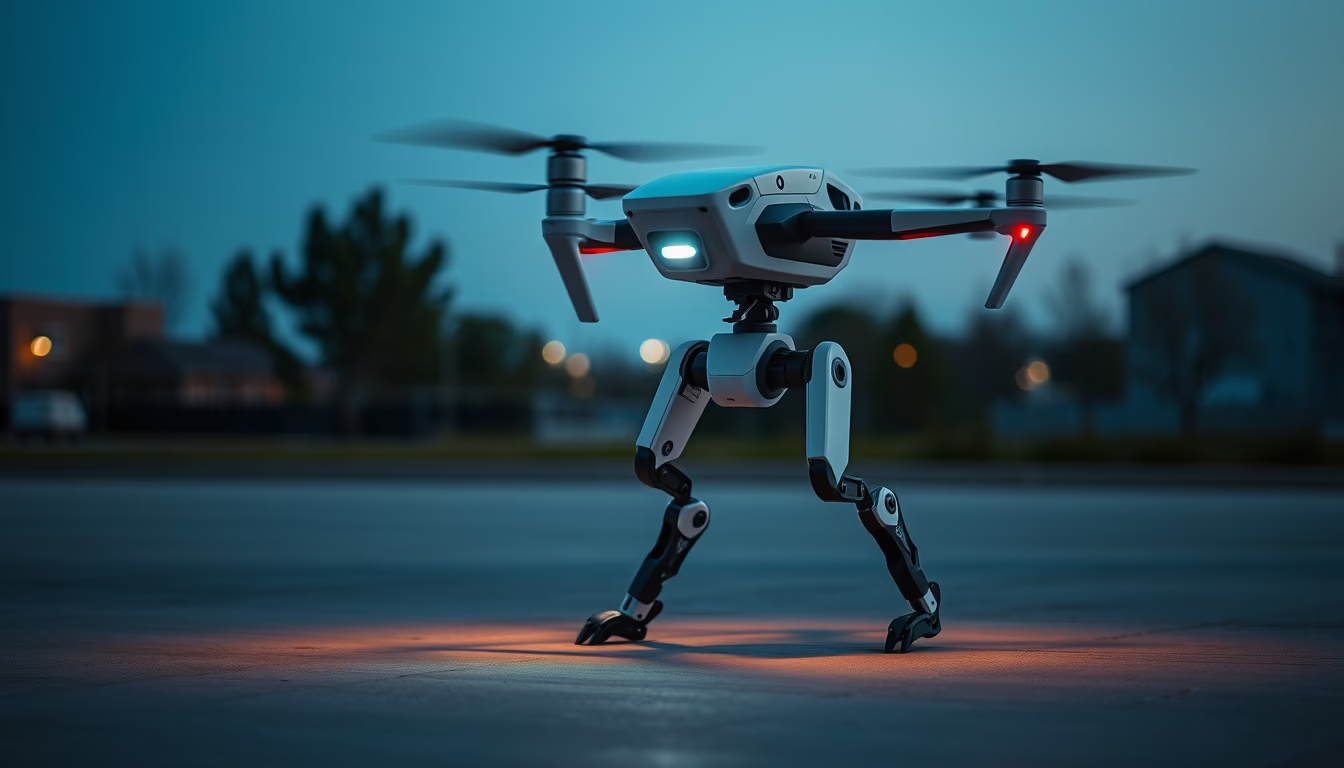
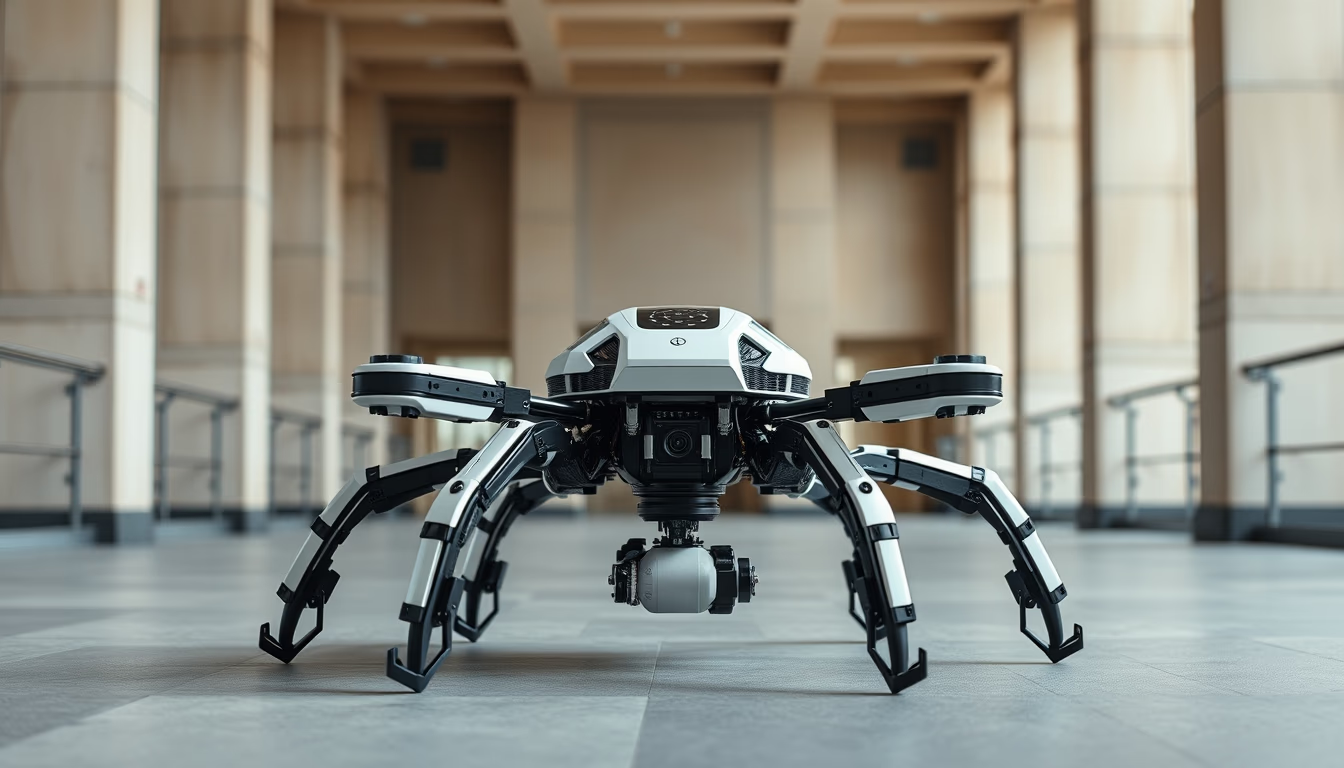
Bipedal walking robots are machines designed to mimic human locomotion, combining sensors, actuators, and control algorithms to maintain balance and move across various terrains.
About this subject
Bipedal robots represent one of the most challenging frontiers in robotics, requiring complex solutions for dynamic balance and stable locomotion. Unlike wheeled or tracked robots, bipeds must continuously control their center of mass, handle impacts at each step, and adapt to uneven surfaces. The first functional bipedal robot was WABOT-1, developed in Japan in 1973, but the field gained prominence with Honda's ASIMO, introduced in 2000, which could walk, climb stairs, and interact with people. Today, companies like Boston Dynamics and Agility Robotics produce bipedal robots such as Atlas and Digit, capable of walking, running, jumping, and even performing acrobatics.
Bipedal locomotion draws inspiration from human biomechanics, using concepts such as zero moment point (ZMP) and model predictive control to maintain stability. Each leg typically has 6 to 7 degrees of freedom, totaling about 20 to 30 actuated joints driven by servomotors or hydraulic systems. Sensors like gyroscopes, accelerometers, and cameras provide real-time feedback to adjust steps and posture. Furthermore, reinforcement learning algorithms have been employed to improve adaptability, allowing robots to learn to walk on different terrains without explicit programming.
Applications of bipedal robots range from industrial inspection to search and rescue operations in disasters. For instance, Boston Dynamics' Atlas robot has been tested in simulated rescue scenarios, navigating rubble and opening doors. Another promising area is logistics: Agility Robotics' Digit is already used to transport packages in warehouses. However, challenges such as energy efficiency, high cost, and robustness still limit widespread adoption. Ongoing research focuses on making these robots more autonomous, faster, and safer for human interaction.
Frequently Asked Questions
How do bipedal robots maintain balance while walking?
They use sensors (gyroscopes, accelerometers) to measure orientation and acceleration, and control algorithms like zero moment point (ZMP) to adjust foot and torso positions, keeping the center of mass over the support area.
What is the most advanced bipedal robot currently?
Boston Dynamics' Atlas is widely considered the most advanced, capable of walking, running, jumping, and performing complex maneuvers like backflips. Other notable examples include Agility Robotics' Digit and Honda's ASIMO.
What are the biggest challenges in building bipedal robots?
Key challenges include dynamic balance on uneven terrain, energy efficiency (walking consumes a lot of power), cost of sensors and actuators, and the need for robust algorithms to prevent falls.
Direct URL
https://pub-c7d6a6ea828543ac903a74a341ccb2e1.r2.dev/imagens/bipedal-robot-walking-aerial-drone-shot-p2.avifHow to credit
Include a visible link back to UtilizAí. Copy one of the snippets below:
<a href="https://xn--utiliza-eza.com/en/midia/imagens/bipedal-robot-walking-aerial-drone-shot-p2">Bipedal robot walking</a> by <a href="https://xn--utiliza-eza.com">UtilizAí</a>, licensed under <a href="https://creativecommons.org/licenses/by/4.0/">CC BY 4.0</a>.
[Bipedal robot walking](https://xn--utiliza-eza.com/en/midia/imagens/bipedal-robot-walking-aerial-drone-shot-p2) by [UtilizAí](https://xn--utiliza-eza.com), CC BY 4.0
License: CC-BY-4.0