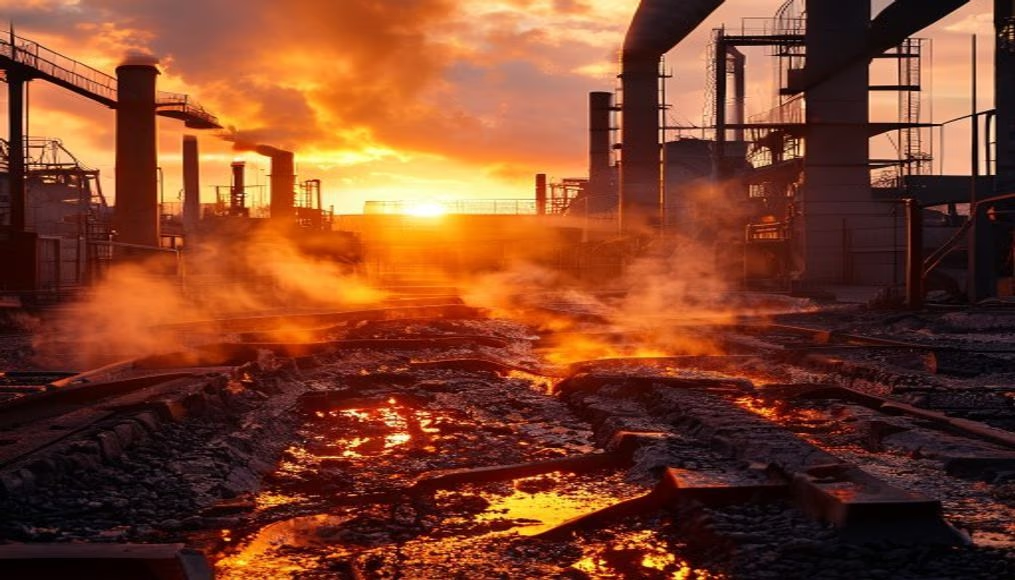
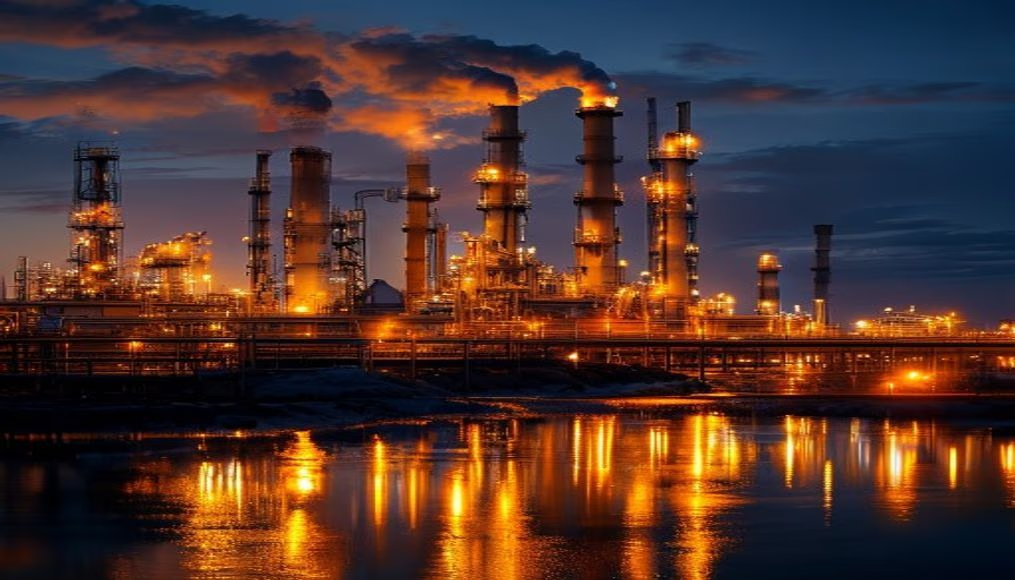
Biomass plant facility
1344×768 · AVIF · CC BY 4.0
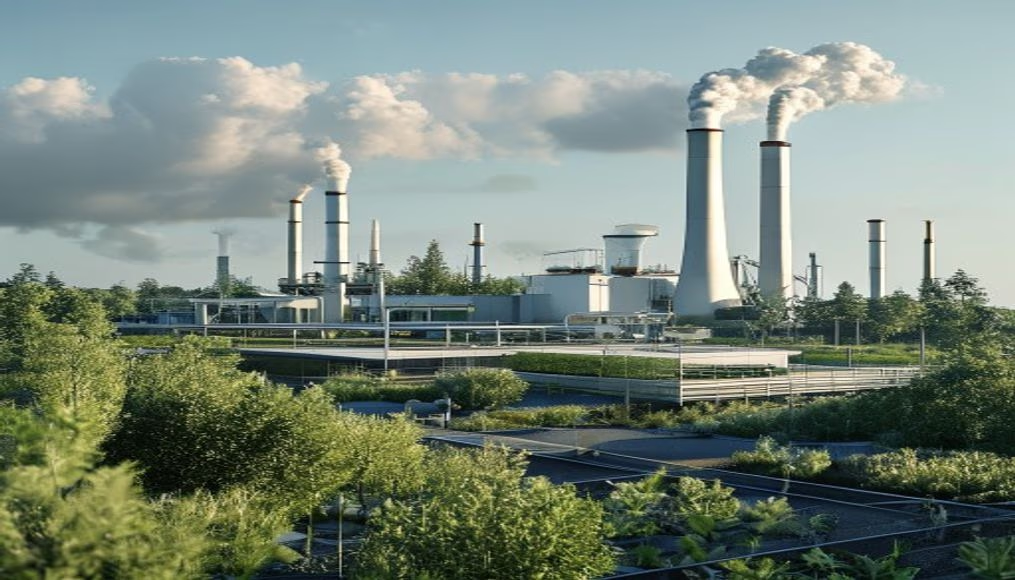
A biomass plant converts organic waste into electricity and heat, supporting Brazil's renewable energy matrix.
About this subject
A biomass plant is an industrial facility that generates energy by burning or gasifying organic materials such as agricultural, forestry, and urban waste. In Brazil, biomass plays a critical role in the energy mix, accounting for about 9% of the country's electricity generation, according to the National Electric Energy Agency (ANEEL). The highlight is sugarcane bagasse, a by-product of the sugar-energy industry, which fuels plants in states like São Paulo, Goiás, and Minas Gerais.
The typical operation involves burning the material in boilers to produce steam, which drives turbines connected to generators. In addition to electricity, waste heat can be used for industrial processes or district heating. More modern technologies like gasification achieve higher efficiency and lower pollutant emissions, converting biomass into synthesis gas that feeds engines or gas turbines.
The environmental importance lies in the fact that carbon dioxide released during combustion is reabsorbed by plants during growth, making the cycle theoretically carbon-neutral. However, challenges such as the cost of collecting and transporting biomass, seasonal variability, and competition with food land use require careful planning. In Brazil, biomass projects also utilize forestry residues, rice husks, and wood chips, expanding regional possibilities.
Interestingly, the world's first biomass thermal power plant was built in Brazil in 1907 in Ribeirão Preto (SP), using sugarcane bagasse. Today, the country has over 600 operating biomass plants, consolidating its position as a global reference in this technology.
Frequently Asked Questions
What is a biomass plant?
It is a facility that generates electricity and heat by burning or gasifying organic materials such as agricultural, forestry, and urban waste.
How does biomass contribute to renewable energy in Brazil?
Biomass accounts for about 9% of Brazil's electricity generation, mainly using sugarcane bagasse, and helps reduce CO2 emissions as it is considered carbon-neutral.
What are the main challenges of biomass plants?
Key challenges include the cost of collecting and transporting waste, seasonal supply variability, and the need for planning to avoid competition with food crops.
Direct URL
https://pub-c7d6a6ea828543ac903a74a341ccb2e1.r2.dev/imagens/biomass-plant-facility-commercial-product-photography-v9.avifHow to credit
Include a visible link back to UtilizAí. Copy one of the snippets below:
<a href="https://xn--utiliza-eza.com/en/midia/imagens/biomass-plant-facility-commercial-product-photography-v9">Biomass plant facility</a> by <a href="https://xn--utiliza-eza.com">UtilizAí</a>, licensed under <a href="https://creativecommons.org/licenses/by/4.0/">CC BY 4.0</a>.
[Biomass plant facility](https://xn--utiliza-eza.com/en/midia/imagens/biomass-plant-facility-commercial-product-photography-v9) by [UtilizAí](https://xn--utiliza-eza.com), CC BY 4.0
License: CC-BY-4.0