Bible old leather
1344×768 · AVIF · CC BY 4.0
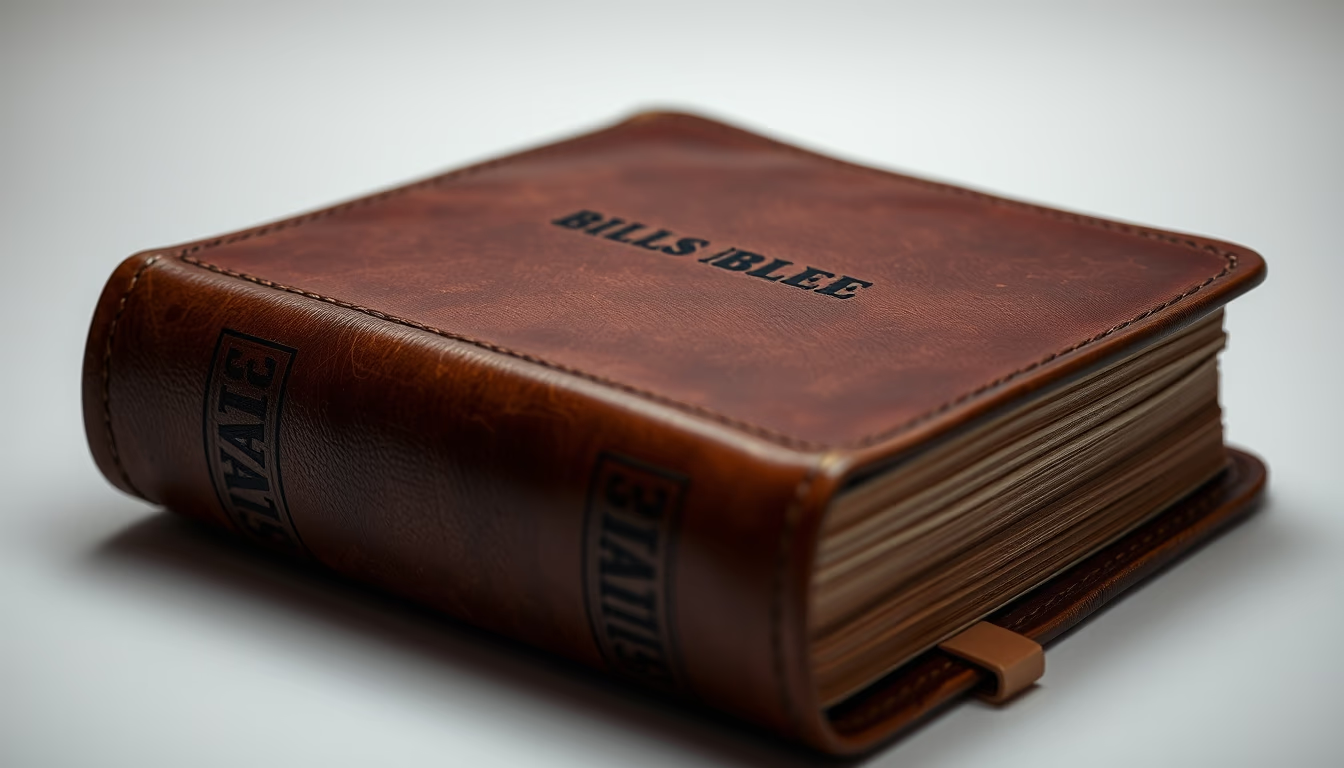
An old leather-bound Bible, typical of the 18th and 19th centuries, reflects the art of manual bookbinding and the historical importance of the sacred text.
About this subject
Leather-bound Bibles represent an important chapter in the history of books and Christian faith. During the 18th and 19th centuries, domestic Bibles became more accessible with the advancement of printing, but leather binding remained a sign of status and devotion. Artisans used goat, cow, or sheep leather, hand-tanned and dyed, often decorated with gold tooling, a technique known as gilding. Each copy was unique, with ornate spines and metal clasps protecting the paper text block.
These Bibles held significance beyond religion: they were often the only book in many homes, serving as records of births, marriages, and deaths. The family Bible was passed down through generations, and aged leather acquired a patina telling stories of use and affection. Common editions included the João Ferreira de Almeida version, translated into Portuguese in the 17th century, and the King James Version in English. Typographic characters and illustrations, such as those by Gustave Doré, enriched the content.
Preserving these Bibles is challenging: leather can dry, crack, or be attacked by fungi if exposed to moisture. Institutions like the National Library of Brazil and the Book Museum in São Paulo hold significant collections. Today, old leather-bound Bibles are coveted by collectors and historians, not only for spiritual value but as testimonies to graphic art and the material culture of the past.
Frequently Asked Questions
How were the leather covers of old Bibles made?
The covers were handmade: leather was tanned, dyed, and stretched over wooden boards. Then gold tooling was applied with heated tools and gold leaf. Metal clasps and corner pieces reinforced the structure.
What is the historical importance of leather Bibles?
Beyond religious value, these Bibles served as family record books and status symbols. Their production documents the evolution of bookbinding and typography between the 18th and 19th centuries.
How to preserve an old leather Bible?
Keep in an environment with temperature 18, 22°C and relative humidity 45, 55%. Avoid direct sunlight and handle with clean hands or gloves. For cleaning, use a soft dry cloth; do not apply oils or products not recommended by conservators.
Direct URL
https://pub-c7d6a6ea828543ac903a74a341ccb2e1.r2.dev/imagens/bible-old-leather-studio-editorial-portrait-p2.avifHow to credit
Include a visible link back to UtilizAí. Copy one of the snippets below:
<a href="https://xn--utiliza-eza.com/en/midia/imagens/bible-old-leather-studio-editorial-portrait-p2">Bible old leather</a> by <a href="https://xn--utiliza-eza.com">UtilizAí</a>, licensed under <a href="https://creativecommons.org/licenses/by/4.0/">CC BY 4.0</a>.
[Bible old leather](https://xn--utiliza-eza.com/en/midia/imagens/bible-old-leather-studio-editorial-portrait-p2) by [UtilizAí](https://xn--utiliza-eza.com), CC BY 4.0
License: CC-BY-4.0