Bible old leather
1344×768 · AVIF · CC BY 4.0
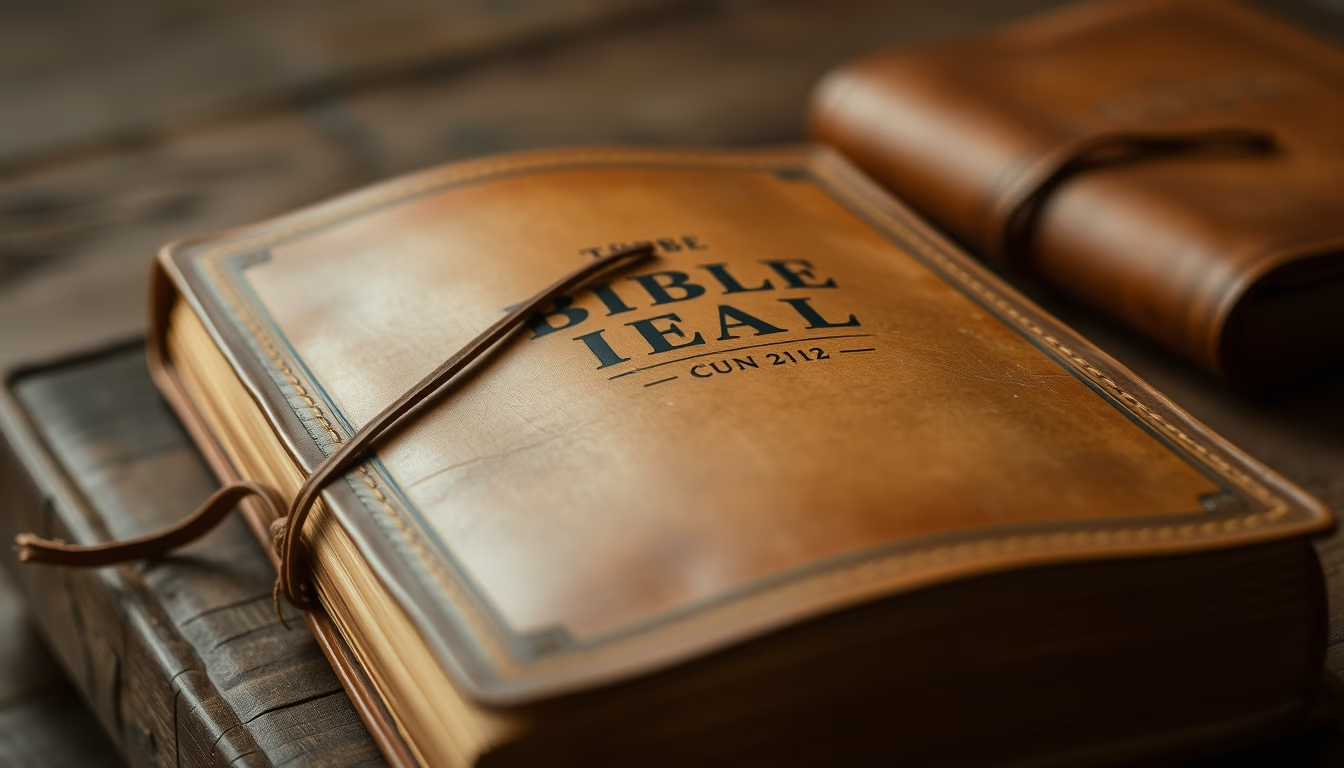
An old leather-bound Bible, with aged pages and handcrafted binding details, tells centuries of religious and artisanal tradition.
About this subject
Leather binding was widely used for Bibles between the 16th and 19th centuries, especially in Europe. Calf or sheep leather was most common, chosen for its durability and flexibility. Skilled artisans employed techniques such as embossing, gilding, and the application of metal tools to create ornamental designs on the covers, often including religious symbols like crosses or the tetragrammaton. These Bibles were not only sacred texts but also status and devotional objects, frequently passed down as family heirlooms.
Over the centuries, the leather acquires a characteristic patina, while the rag paper pages yellow and gain a peculiar smell of mold and history. Many copies contain woodcut illustrations or biblical maps, as well as handwritten annotations made by their owners over generations. These records are valuable sources for historians, who study everything from reading practices to the transmission of faith in different eras.
In Brazil, old leather-bound Bibles arrived with Portuguese colonizers and Jesuit missionaries. Some are preserved in ecclesiastical archives and museums, such as the Museu do Índio or convent libraries. Conservation of these volumes is delicate: it requires humidity control between 45-55% and mild temperature, as well as handling with gloves to avoid damage from sweat and skin oils. Restorers use techniques such as dry cleaning and consolidation of cracked leather to prolong the life of these relics.
Frequently Asked Questions
How to identify an old leather-bound Bible?
Look for the texture and smell of leather, usually darker and with signs of wear. Check for gilding, embossing, and visible stitching on the spine. Pages are typically yellowed and may contain watermarks.
What is the historical origin of leather Bibles?
Leather binding became common in Europe from the 16th century onward, replacing wooden covers. Printers like Gutenberg already used leather for their earliest Bibles.
What care is needed to preserve an old leather Bible?
Keep in an environment with humidity between 45-55% and temperature 18-22°C, away from direct sunlight. Wear cotton gloves when handling and avoid folding pages.
Direct URL
https://pub-c7d6a6ea828543ac903a74a341ccb2e1.r2.dev/imagens/bible-old-leather-national-geographic-style-p10.avifHow to credit
Include a visible link back to UtilizAí. Copy one of the snippets below:
<a href="https://xn--utiliza-eza.com/en/midia/imagens/bible-old-leather-national-geographic-style-p10">Bible old leather</a> by <a href="https://xn--utiliza-eza.com">UtilizAí</a>, licensed under <a href="https://creativecommons.org/licenses/by/4.0/">CC BY 4.0</a>.
[Bible old leather](https://xn--utiliza-eza.com/en/midia/imagens/bible-old-leather-national-geographic-style-p10) by [UtilizAí](https://xn--utiliza-eza.com), CC BY 4.0
License: CC-BY-4.0