Autonomous drone military
1344×768 · AVIF · CC BY 4.0
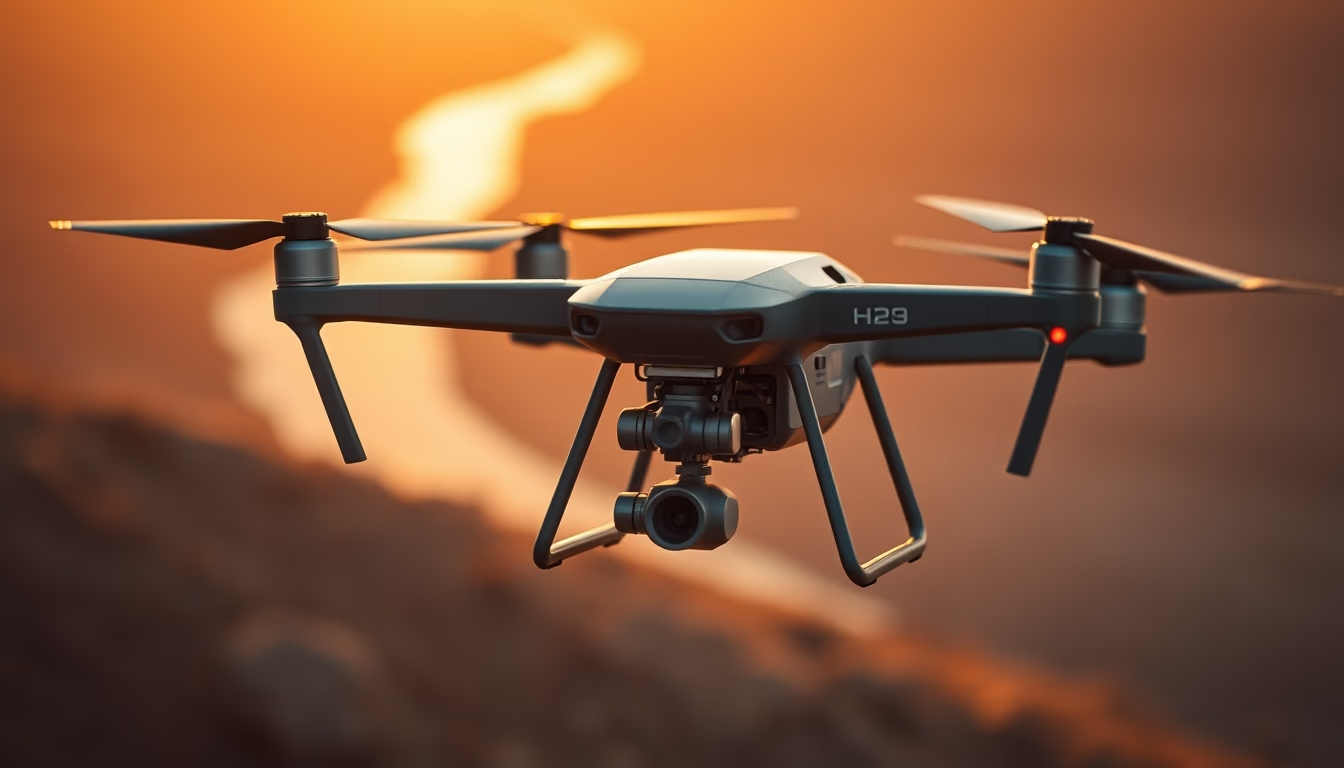
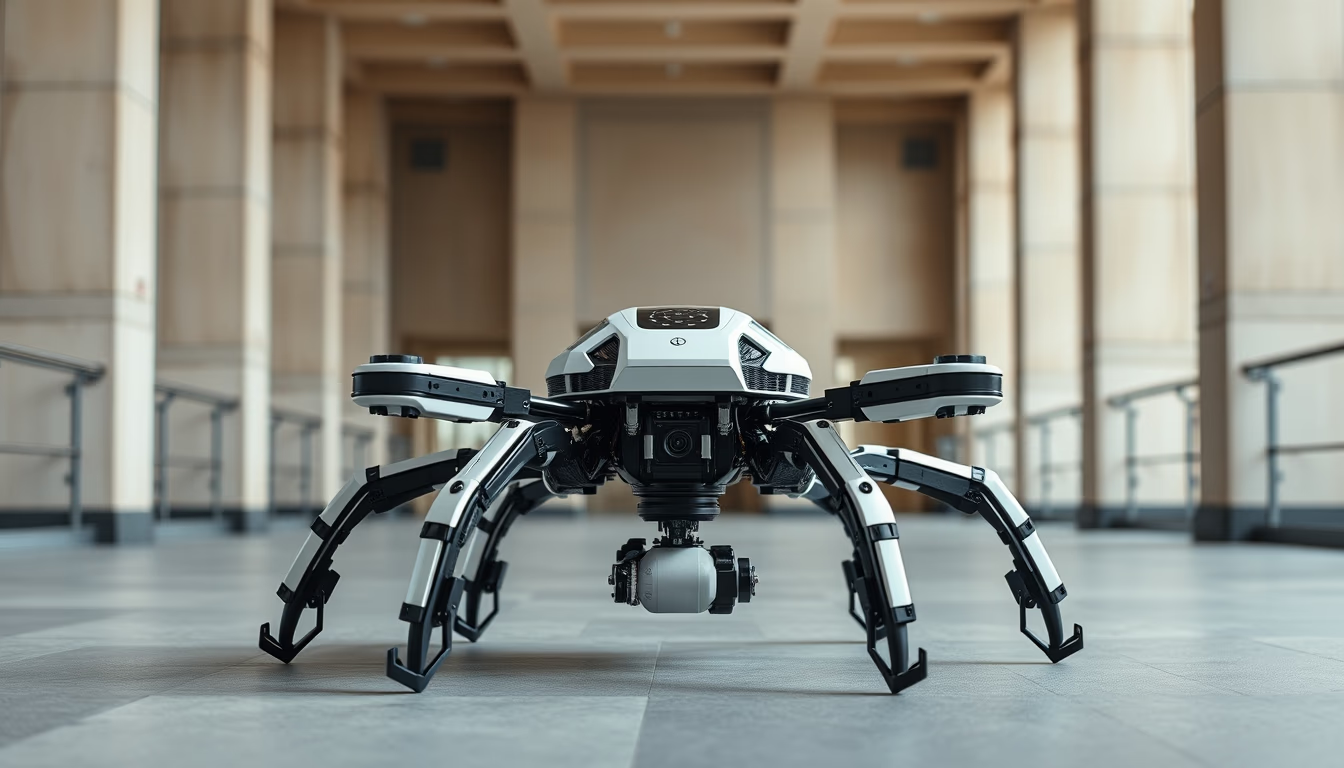
Military autonomous drones are transforming warfare tactics with onboard AI, remote surveillance, and unmanned attack capabilities.
About this subject
Autonomous military drones represent a technological leap in modern warfare. Equipped with artificial intelligence, these unmanned aerial vehicles can execute reconnaissance, surveillance, and attack missions without direct human intervention. Examples like the US MQ-9 Reaper and China's CH-5 Rainbow demonstrate the ability to fly for hours, identify targets, and make real-time decisions. Autonomy is made possible by computer vision algorithms, sensor fusion, and machine learning-based decision systems.
The evolution of autonomous drones began with remote-controlled platforms in the Vietnam War, but the major leap occurred in the 2000s with widespread use in Afghanistan and Iraq. Today, countries like Israel, Russia, and Turkey invest heavily in drone swarms, where multiple units communicate and coordinate to overwhelm enemy defenses. The war in Ukraine accelerated the adoption of autonomous FPV (First Person View) drones, capable of striking targets with pinpoint accuracy.
Behind this technology lie intense ethical debates. The possibility of machines deciding to take human lives raises questions about responsibility, laws of war, and proliferation risks. In 2020, a UN report suggested that autonomous drones may have violated international humanitarian law in Libya. Organizations like the Future of Life Institute advocate for international treaties to ban lethal autonomous systems without meaningful human control. Nonetheless, the arms race continues, with global defense budgets exceeding $100 billion annually in autonomous drone research.
Frequently Asked Questions
How do autonomous military drones work?
They use artificial intelligence to navigate, identify targets, and make decisions without constant remote human control. Sensors such as infrared cameras, radar, and LIDAR feed algorithms that process the environment in real time.
What are the main advantages of autonomous drones in combat?
The primary advantage is risk reduction for human pilots, along with greater persistence on long missions, the ability to operate in hostile environments, and faster decision making than humans.
Are there international agreements to limit the use of lethal autonomous drones?
There is no binding treaty yet, but the Stop Killer Robots campaign, comprising over 160 NGOs, pushes for an agreement within the framework of the Convention on Conventional Weapons. Some countries, like Germany, call for a complete ban on lethal autonomous systems.
Direct URL
https://pub-c7d6a6ea828543ac903a74a341ccb2e1.r2.dev/imagens/autonomous-drone-military-travel-photography-p10.avifHow to credit
Include a visible link back to UtilizAí. Copy one of the snippets below:
<a href="https://xn--utiliza-eza.com/en/midia/imagens/autonomous-drone-military-travel-photography-p10">Autonomous drone military</a> by <a href="https://xn--utiliza-eza.com">UtilizAí</a>, licensed under <a href="https://creativecommons.org/licenses/by/4.0/">CC BY 4.0</a>.
[Autonomous drone military](https://xn--utiliza-eza.com/en/midia/imagens/autonomous-drone-military-travel-photography-p10) by [UtilizAí](https://xn--utiliza-eza.com), CC BY 4.0
License: CC-BY-4.0