Autonomous drone military
1344×768 · AVIF · CC BY 4.0
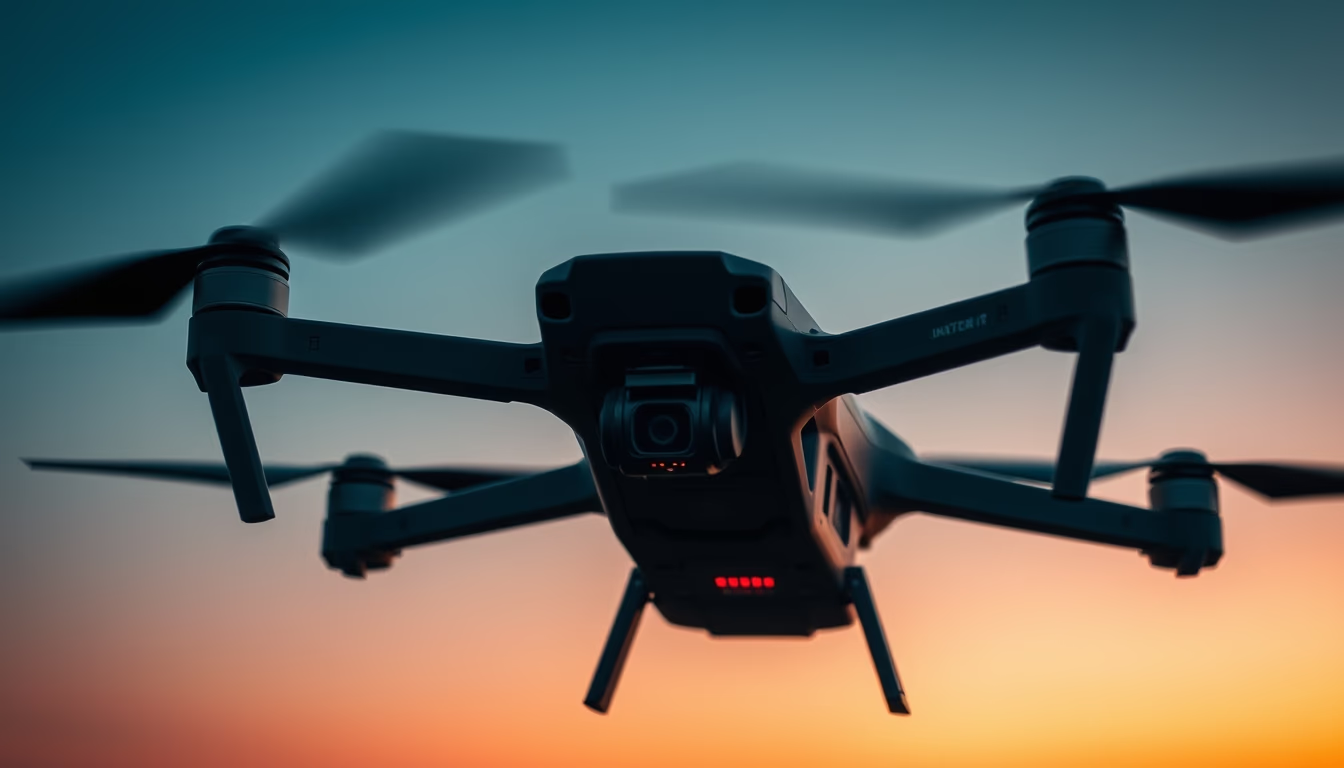
Autonomous military drones are transforming modern warfare with mission capabilities without direct human intervention, yet they spark deep ethical debates.
About this subject
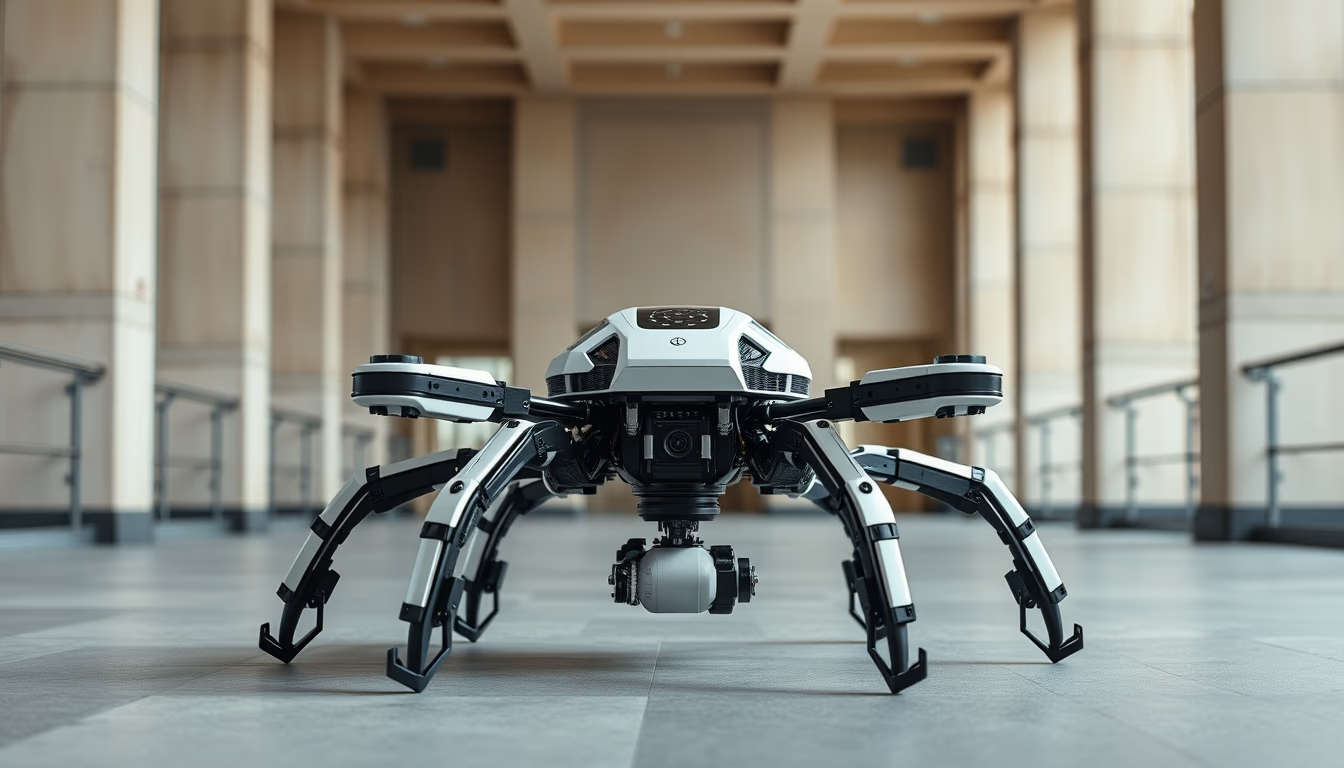
Autonomous military drones, also known as unmanned aerial vehicles (UAVs) with artificial intelligence, represent a radical shift on the battlefield. Unlike remotely piloted drones operated by human pilots, these systems can independently make flight, navigation, and even target engagement decisions. Countries like the United States, China, Israel, and Turkey lead the development and operational use of these aircraft. The famous American MQ-9 Reaper drone, for example, can already take off, fly, and land automatically, though the decision to fire still requires human authorization in most cases. However, systems like the Kargu-2, used in Libya, have demonstrated the ability to autonomously engage targets, raising alarms about the need for meaningful human control.
The technology behind these drones combines advanced sensors such as radar, electro-optical and infrared cameras with machine learning algorithms that process real-time data to identify and classify objects. Satellite connectivity allows beyond-line-of-sight operation, covering vast areas. One major technical challenge is navigation in GPS-denied environments, where inertial navigation systems and computer vision become crucial. Programs like Boeing's Loyal Wingman and DARPA's Air Combat Evolution (ACE) aim to create swarms of drones that cooperate with each other, mimicking group hunting tactics.
The use of autonomous drones raises serious ethical and legal questions. Critics point to the risk of an arms race, with nations developing systems that may violate international humanitarian law, especially if identification errors lead to civilian casualties. The lack of clear accountability in cases of illegal use of force is another central problem. Organizations like the Campaign to Stop Killer Robots advocate for an international treaty banning fully autonomous weapons. In 2023, the United Nations discussed restrictions on lethal autonomous systems but still has no consensus. Meanwhile, countries like Japan and Australia invest in defense drones, balancing innovation with safety protocols.
The proliferation of autonomous military drones also has economic and strategic implications. They are cheaper than manned aircraft, allowing smaller nations to obtain advanced aerial capability. However, that also reduces the cost of attack, potentially increasing the frequency of conflicts. The global military drone market is expected to surpass $120 billion by 2030. Ukraine, for example, uses adapted commercial drones for reconnaissance and attack, while Russia employs the Lancet kamikaze drone. The convergence with artificial intelligence and electronic warfare promises to further transform the landscape, requiring robust international regulation.
Frequently Asked Questions
What differentiates an autonomous drone from a remotely operated drone?
Autonomous drones use artificial intelligence to make flight and mission decisions without direct human intervention, while remote drones are piloted by humans from a distance.
Which countries lead the development of autonomous military drones?
The United States, China, Israel, and Turkey are at the forefront, with programs such as the American MQ-9 Reaper and the Turkish Kargu-2.
Are there international rules on the use of autonomous weapons?
Not yet a binding treaty, but UN discussions and campaigns like Stop Killer Robots seek to ban fully autonomous lethal systems.
Direct URL
https://pub-c7d6a6ea828543ac903a74a341ccb2e1.r2.dev/imagens/autonomous-drone-military-high-fashion-editorial-p12.avifHow to credit
Include a visible link back to UtilizAí. Copy one of the snippets below:
<a href="https://xn--utiliza-eza.com/en/midia/imagens/autonomous-drone-military-high-fashion-editorial-p12">Autonomous drone military</a> by <a href="https://xn--utiliza-eza.com">UtilizAí</a>, licensed under <a href="https://creativecommons.org/licenses/by/4.0/">CC BY 4.0</a>.
[Autonomous drone military](https://xn--utiliza-eza.com/en/midia/imagens/autonomous-drone-military-high-fashion-editorial-p12) by [UtilizAí](https://xn--utiliza-eza.com), CC BY 4.0
License: CC-BY-4.0