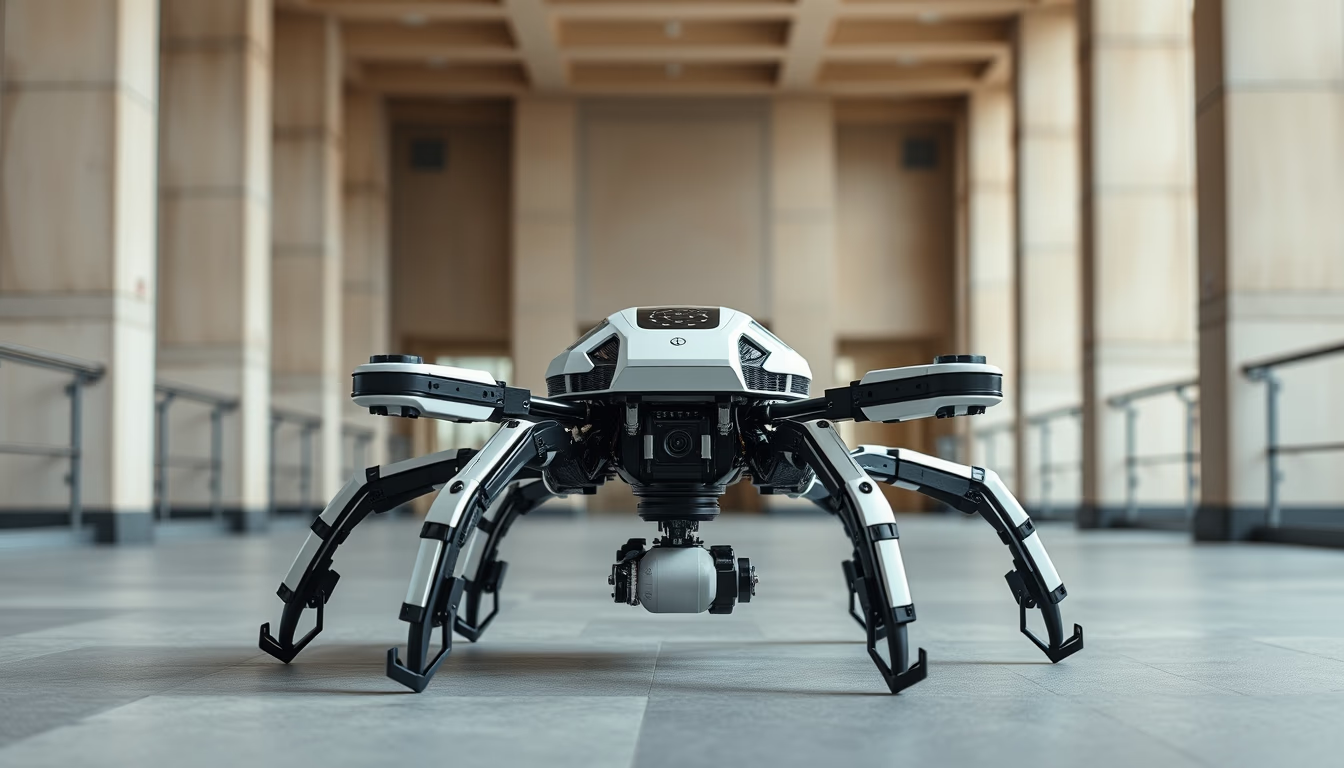
Autonomous drone military
1344×768 · AVIF · CC BY 4.0
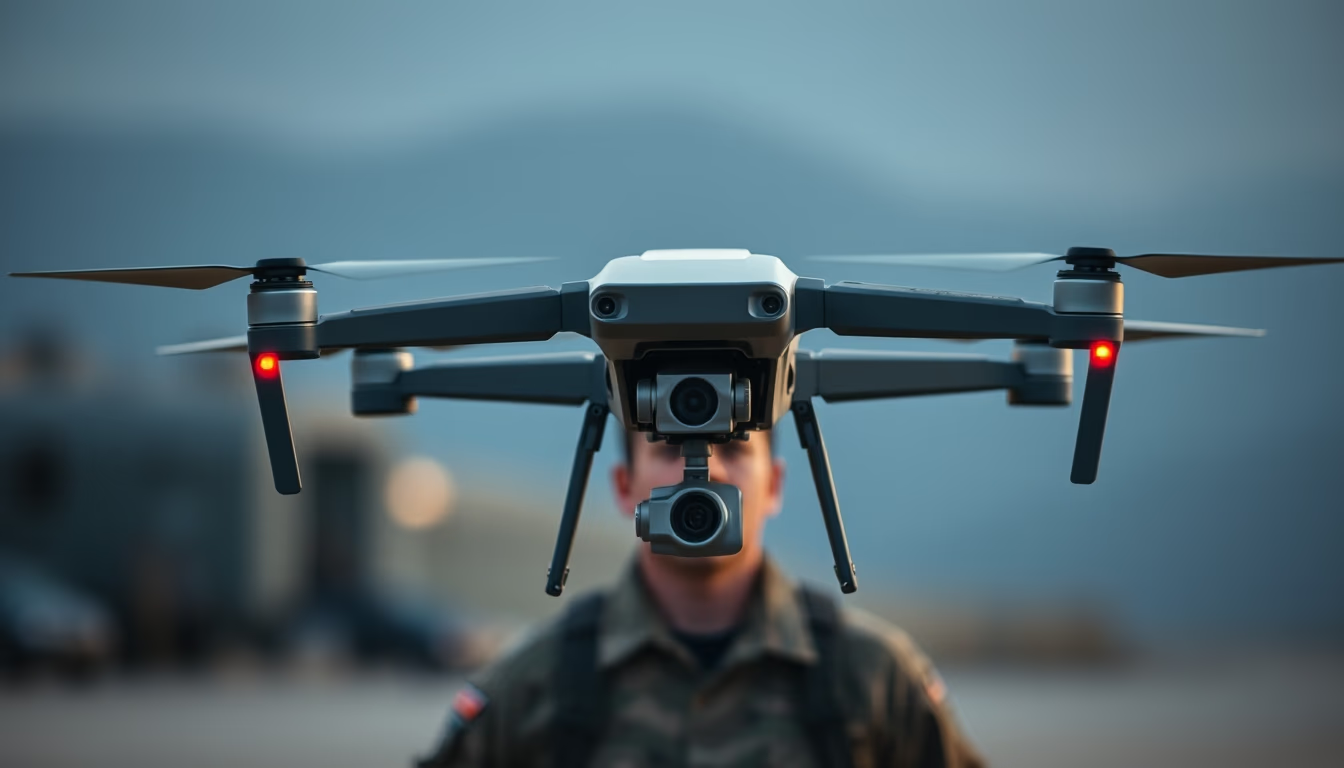
Autonomous military drones are transforming combat strategies with artificial intelligence and advanced sensors.
About this subject
Autonomous military drones represent a significant evolution in modern warfare. Unlike remotely controlled unmanned aerial vehicles such as the MQ-9 Reaper, autonomous systems can make decisions without direct human intervention, using artificial intelligence algorithms, computer vision, and sensor fusion. Countries including the United States, China, Turkey, and Israel lead development of these systems, with models like the Bayraktar Akıncı, CH-5 Rainbow, and Elbit Hermes. The use of these aircraft raises ethical and legal questions, particularly regarding accountability for attacks resulting in civilian casualties. Organizations such as the United Nations have debated the need for international regulation of lethal autonomous weapons systems (LAWS). The technology behind these drones includes inertial navigation systems, GPS, and machine learning for target recognition, but technical challenges remain, such as decision-making in complex and unpredictable environments. Historically, drone use began with reconnaissance in the Vietnam War and expanded to surgical strikes after 9/11. Today, autonomy promises greater efficiency and reduced risk to pilots, but also sparks debates on the dehumanization of warfare and potential for accelerated conflicts. Integration with air defense systems and swarm capability are developing trends that may reshape global military balance.
Frequently Asked Questions
How do autonomous drones make decisions in combat?
They use artificial intelligence and sensors such as cameras, radar, and LIDAR to process the environment. Machine learning algorithms identify targets and take predefined actions like tracking or attacking based on programmed rules of engagement.
Are autonomous military drones legal under international law?
Legality is debated. International humanitarian law requires distinction between civilians and combatants, proportionality, and precaution. Current autonomous systems may struggle to meet these criteria, prompting UN discussions on bans or restrictions.
What are the main risks of using autonomous drones?
Risks include technical failures causing unintended harm, rapid conflict escalation if machines decide to attack, and dehumanization of warfare where life-and-death decisions are delegated to algorithms without proper human oversight.
Direct URL
https://pub-c7d6a6ea828543ac903a74a341ccb2e1.r2.dev/imagens/autonomous-drone-military-documentary-photography-p1.avifHow to credit
Include a visible link back to UtilizAí. Copy one of the snippets below:
<a href="https://xn--utiliza-eza.com/en/midia/imagens/autonomous-drone-military-documentary-photography-p1">Autonomous drone military</a> by <a href="https://xn--utiliza-eza.com">UtilizAí</a>, licensed under <a href="https://creativecommons.org/licenses/by/4.0/">CC BY 4.0</a>.
[Autonomous drone military](https://xn--utiliza-eza.com/en/midia/imagens/autonomous-drone-military-documentary-photography-p1) by [UtilizAí](https://xn--utiliza-eza.com), CC BY 4.0
License: CC-BY-4.0