Antique microscope brass
1344×768 · AVIF · CC BY 4.0
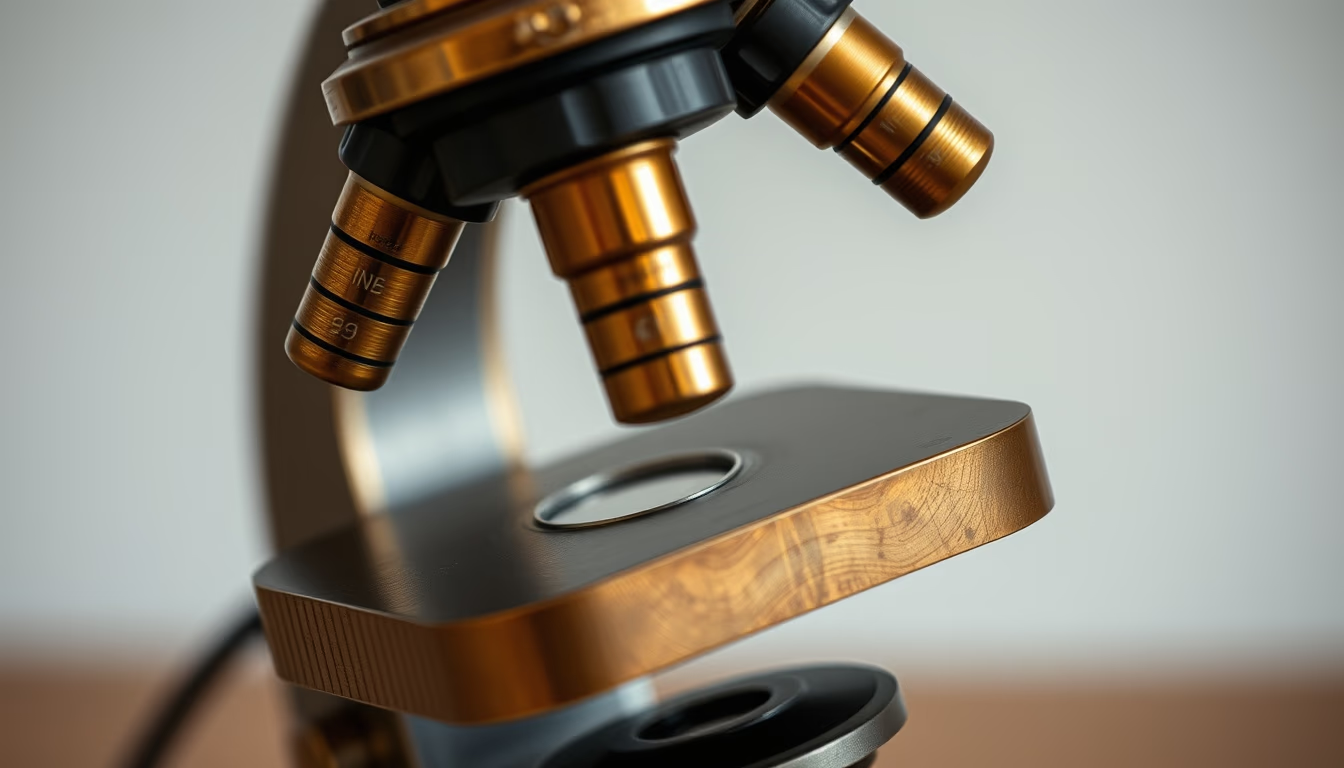
Antique brass microscope: a 19th-century scientific instrument that reveals the history of microscopy and cellular discovery.
About this subject
Antique brass microscopes were essential tools for scientific advancement between the 18th and 19th centuries. Handcrafted by renowned opticians such as Edmund Culpeper and Charles Gould, these instruments combined optical precision with ornate design. Brass was preferred for its corrosion resistance and machinability, enabling the creation of sturdy tubes, gears, and mounts that kept lenses aligned.
The peak of brass microscopes occurred during the Victorian era, when scientific demonstrations became entertainment for the elite. Models like Culpeper's "Compound Microscope" (c. 1730) used polished glass mirrors to illuminate specimens, a technique that predated artificial lighting. Despite their weight, these microscopes were portable and came in elegant wooden cases with shelves for slides and forceps.
The historical significance of these instruments goes beyond aesthetics. It was with a simple brass microscope that Robert Hooke published "Micrographia" in 1665, coining the term "cell" after observing cork. Antonie van Leeuwenhoek, though using single-lens mounts of metal, also popularized microscopy. Today, brass microscopes are valuable collector's items, especially those with original accessories such as lens drums and brass capsules for preserving specimens.
Interestingly, manufacturing these microscopes required skills in metalworking and optics, with lenses made from cast glass and hand-polished. Despite limitations like chromatic and spherical aberration, they enabled discoveries such as the structure of plant tissues and the existence of microorganisms. Modern reproductions now honor this classic design, keeping the tradition of microscopy alive.
Frequently Asked Questions
What is the typical age of an antique brass microscope?
Most date from the 19th century, between 1800 and 1900. Earlier 18th-century models are extremely rare and valuable.
How can I identify an original brass microscope?
Look for maker's marks, aged brass screws, and glass lenses with imperfections or bubbles. Original accessories like brass tweezers and wooden case increase value.
Do antique brass microscopes still work?
Yes, many can be used, but image quality is inferior to modern ones. They are mostly used as decorative pieces or collectibles.
Direct URL
https://pub-c7d6a6ea828543ac903a74a341ccb2e1.r2.dev/imagens/antique-microscope-brass-national-geographic-style-p0.avifHow to credit
Include a visible link back to UtilizAí. Copy one of the snippets below:
<a href="https://xn--utiliza-eza.com/en/midia/imagens/antique-microscope-brass-national-geographic-style-p0">Antique microscope brass</a> by <a href="https://xn--utiliza-eza.com">UtilizAí</a>, licensed under <a href="https://creativecommons.org/licenses/by/4.0/">CC BY 4.0</a>.
[Antique microscope brass](https://xn--utiliza-eza.com/en/midia/imagens/antique-microscope-brass-national-geographic-style-p0) by [UtilizAí](https://xn--utiliza-eza.com), CC BY 4.0
License: CC-BY-4.0