Antique microscope brass
1344×768 · AVIF · CC BY 4.0
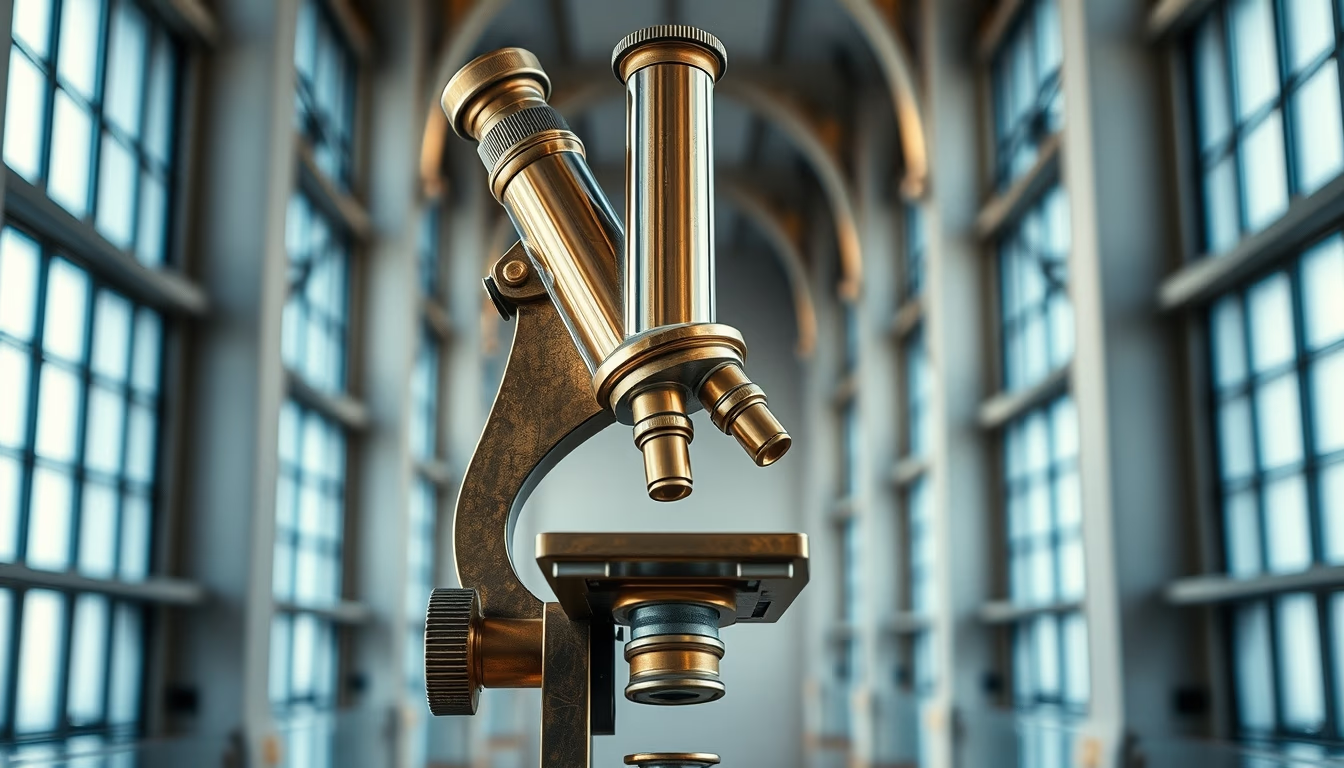
Antique brass microscope, a 19th-century scientific instrument combining optical precision and metal craftsmanship, key to the history of microbiology and metallurgy.
About this subject
Brass microscopes were manufactured from the early 18th century to the late 19th century, the golden age of optical microscopy. English makers like John Cuff (around 1740) and German pioneer Carl Zeiss (founded 1846) set quality standards. Brass was preferred for its corrosion resistance, malleability, and aesthetic finish that allowed engravings and ornamental details.
Technically, these microscopes featured a folding tube, rack and pinion adjustment, and glass lenses with magnifications up to 500x. The horseshoe-shaped base provided stability during use. Many models were portable, housed in wooden cases with compartments for slides and accessories. Illumination relied on natural light via a mirror or an oil lamp.
Culturally, these instruments were crucial for discoveries such as cell theory (Schleiden and Schwann, 1838) and the identification of tubercle bacillus by Koch in 1882. Today, brass microscopes are highly collectible, especially those signed by brands like Powell & Lealand, Beck, and Leitz. Well-preserved pieces can fetch over $10,000 at science-antiques auctions.
Conservation of an antique brass microscope requires care: avoid humidity, clean with a soft cloth and specific metal polish, and seek professional lens restoration. More than instruments, they are testimonies to Victorian engineering and aesthetics, merging function and art into a single piece.
Frequently Asked Questions
What is the origin of the brass microscope?
Brass microscopes appeared in the early 18th century, replacing cardboard and wooden models. English maker John Cuff (around 1740) and German Carl Zeiss (mid-19th century) were pioneers in standardization.
How much is an antique brass microscope worth?
Value varies greatly with condition, maker, and rarity. At specialized auctions, 19th-century pieces can range from $500 to $10,000. Models from renowned makers like Powell & Lealand may exceed $20,000.
How to care for a brass microscope?
Keep in a dry environment, clean with a soft cloth and specific metal polish. Avoid handling lenses; professional restoration is recommended. Do not dismantle original parts without technical knowledge.
Direct URL
https://pub-c7d6a6ea828543ac903a74a341ccb2e1.r2.dev/imagens/antique-microscope-brass-architectural-photography-p2.avifHow to credit
Include a visible link back to UtilizAí. Copy one of the snippets below:
<a href="https://xn--utiliza-eza.com/en/midia/imagens/antique-microscope-brass-architectural-photography-p2">Antique microscope brass</a> by <a href="https://xn--utiliza-eza.com">UtilizAí</a>, licensed under <a href="https://creativecommons.org/licenses/by/4.0/">CC BY 4.0</a>.
[Antique microscope brass](https://xn--utiliza-eza.com/en/midia/imagens/antique-microscope-brass-architectural-photography-p2) by [UtilizAí](https://xn--utiliza-eza.com), CC BY 4.0
License: CC-BY-4.0