Antique books library
1344×768 · AVIF · CC BY 4.0
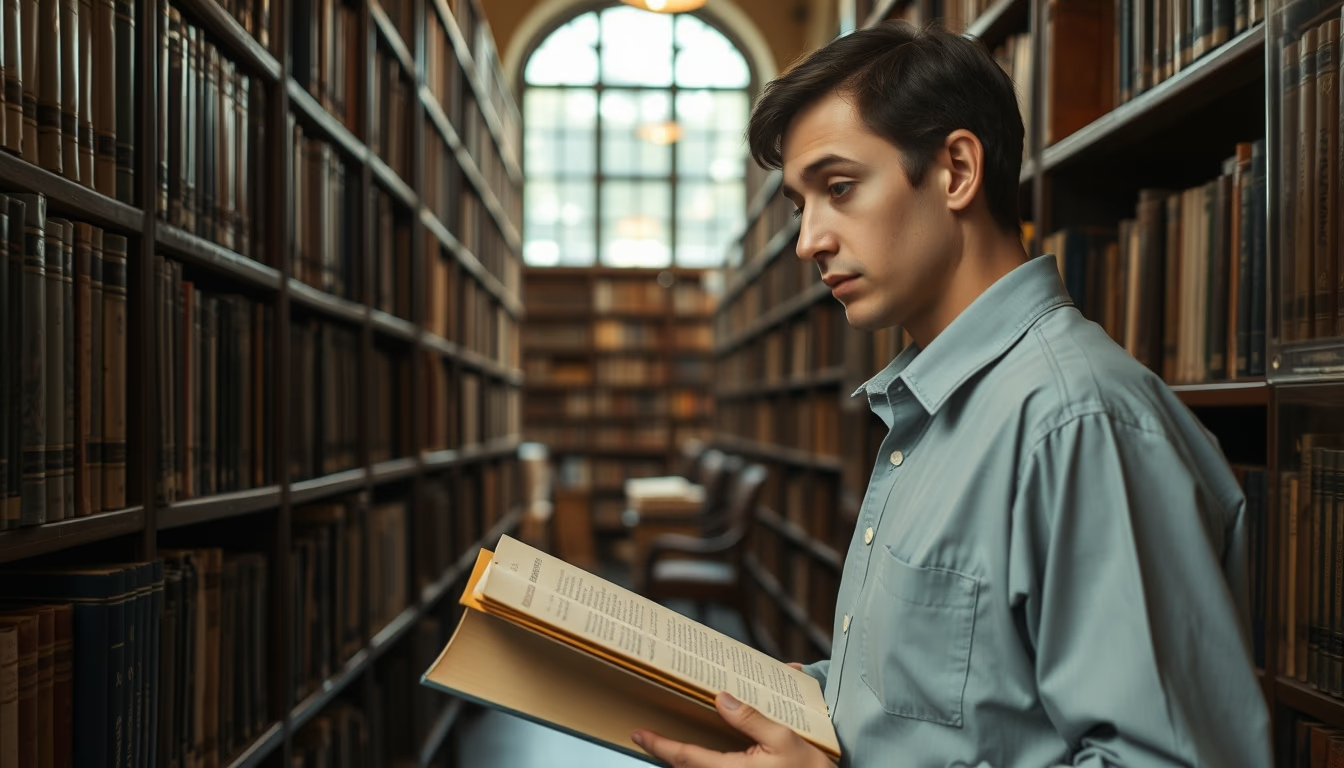
An antique books library is a collection that preserves rare works, some centuries old, offering a valuable cultural and intellectual heritage.
About this subject
Antique book libraries are true treasures of human knowledge. They house manuscripts, incunabula (books printed before 1501), and rare editions that have survived through the ages. Many are located in historic buildings such as monasteries, palaces, or centuries-old universities, where the environment is conducive to preservation. The Library of Congress in the United States, the National Library of France, and the Bodleian Library in England are iconic examples. In Brazil, the National Library of Rio de Janeiro holds a rich collection of rare works, including the famous "Obras Raras" collection with 16th-century copies.
These institutions play a fundamental role in preserving written memory. They employ specialized restoration and storage techniques, such as temperature and humidity control, to prevent the deterioration of paper and leather. Moreover, many ancient books contain illuminations, handmade bindings, and watermarks that are objects of study for historians and bibliophiles. Access to these materials is usually restricted to researchers, but temporary exhibitions allow the public to appreciate these works.
A fascinating curiosity: the oldest book in the world, the "Codex Sinaiticus" from the 4th century, is kept at the British Library. Another example is the "Book of Kells", an illuminated manuscript from the 9th century at Trinity College Library in Dublin. These libraries not only store books but also preserve the history of humanity, from scientific treatises to literary works that have shaped Western thought. Visiting an antique book library is like taking a trip in time, where each volume has a story to tell.
Frequently Asked Questions
What makes a book considered antique or rare?
Antique books are usually over 100 years old, but 'rare' involves criteria such as limited print runs, historical importance, signatures of famous authors, or unique physical features like special bindings or illuminations.
How do libraries preserve antique books?
They maintain controlled environmental conditions, such as temperatures between 18-22°C and relative humidity of 45-55%, use acid-free storage materials, and employ restoration techniques by trained conservators.
Can the public freely access these antique books?
Usually, access is restricted to researchers by appointment. However, many libraries hold open exhibitions and digitize works for online consultation.
Direct URL
https://pub-c7d6a6ea828543ac903a74a341ccb2e1.r2.dev/imagens/antique-books-library-documentary-photography-p2.avifHow to credit
Include a visible link back to UtilizAí. Copy one of the snippets below:
<a href="https://xn--utiliza-eza.com/en/midia/imagens/antique-books-library-documentary-photography-p2">Antique books library</a> by <a href="https://xn--utiliza-eza.com">UtilizAí</a>, licensed under <a href="https://creativecommons.org/licenses/by/4.0/">CC BY 4.0</a>.
[Antique books library](https://xn--utiliza-eza.com/en/midia/imagens/antique-books-library-documentary-photography-p2) by [UtilizAí](https://xn--utiliza-eza.com), CC BY 4.0
License: CC-BY-4.0