Agricultural robot field
1344×768 · AVIF · CC BY 4.0
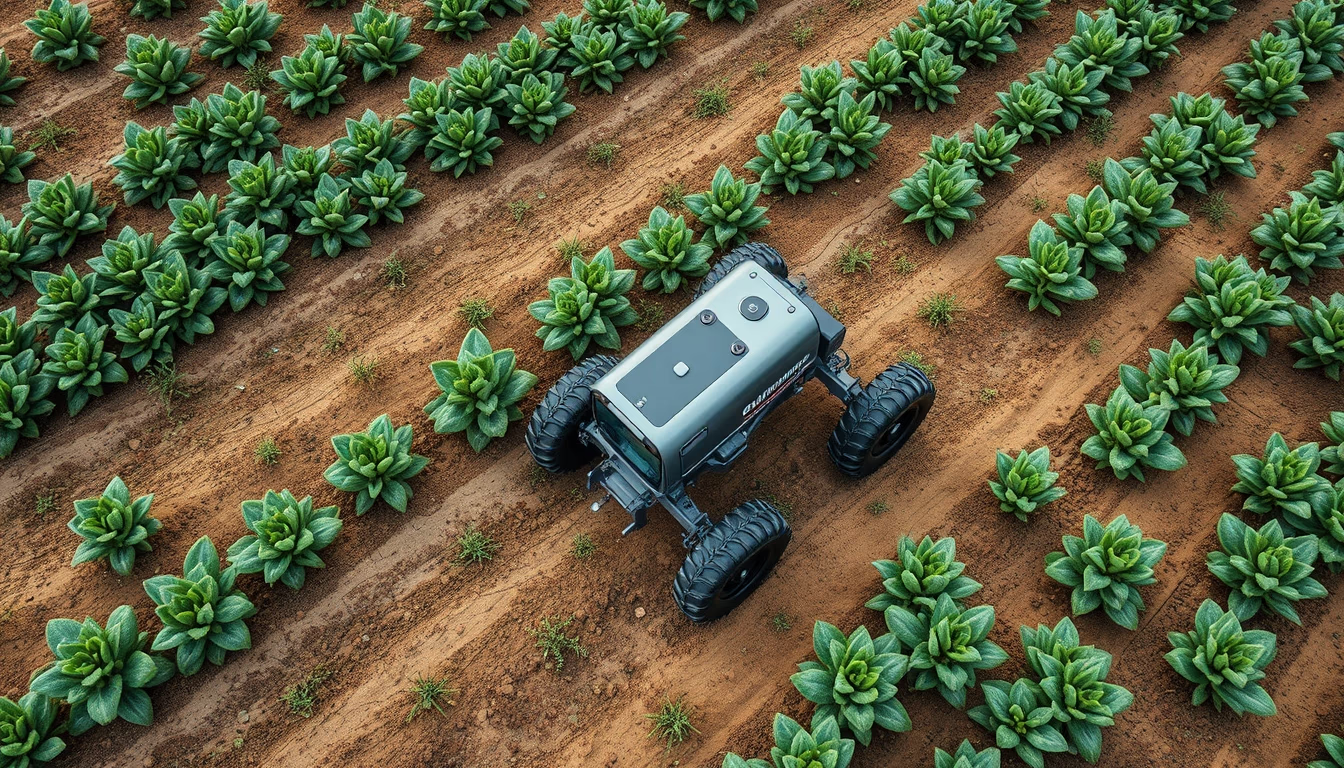
Agricultural robots are transforming farming through automation, sensors, and artificial intelligence, boosting productivity and sustainability.
About this subject
Agricultural robots are one of the most promising applications of robotics in the primary sector. They range from autonomous vehicles for planting and harvesting to drones for crop monitoring and precision spraying. Equipped with multispectral sensors, high-resolution cameras, and machine learning algorithms, these robots can identify weeds, diseases, and nutrient deficiencies, applying inputs only where needed. This reduces pesticide use by up to 90% in some crops, as demonstrated by startups like Brazil's AgRobotics and the US-based Blue River Technology.
In Brazil, the adoption of agricultural robots is growing rapidly, especially in soy, corn, and sugarcane crops. Embrapa has developed prototypes like the Robô Agricultor, which performs autonomous seeding and pest control. Globally, the agricultural robotics market is expected to reach $12.9 billion by 2030, according to MarketsandMarkets. Countries such as Japan and the Netherlands lead in automation, with strawberry-picking robots and smart greenhouse systems.
One of the biggest challenges is adapting to uneven terrain and adverse weather conditions. Robots with wheels or tracks require robust navigation systems, such as RTK GPS and SLAM. Another bottleneck is the high initial cost, but mass production is expected to lower prices. Integration with the Internet of Things (IoT) allows robots to communicate with tractors, harvesters, and management centers, creating a fully connected agricultural ecosystem.
Frequently Asked Questions
How do agricultural robots identify weeds?
They use multispectral cameras and computer vision algorithms trained on thousands of images. The robot compares the plant's spectral signature with a database and applies herbicide only to the exact spot, reducing chemical use by up to 90%.
Which crops benefit most from agricultural robotics?
High-value crops such as fruits, vegetables, and vineyards are the most benefited. Grains like soy and corn also use robots for monitoring and localized input application, but harvesting is still mostly done by traditional machinery.
Are there Brazilian companies developing agricultural robots?
Yes. AgRobotics (MG) develops precision spraying robots, and Solinftec offers automation solutions for sugarcane. Embrapa Instrumentação (SP) tests robots for soil analysis and no-till planting.
Direct URL
https://pub-c7d6a6ea828543ac903a74a341ccb2e1.r2.dev/imagens/agricultural-robot-field-isometric-flat-lay-p3.avifHow to credit
Include a visible link back to UtilizAí. Copy one of the snippets below:
<a href="https://xn--utiliza-eza.com/en/midia/imagens/agricultural-robot-field-isometric-flat-lay-p3">Agricultural robot field</a> by <a href="https://xn--utiliza-eza.com">UtilizAí</a>, licensed under <a href="https://creativecommons.org/licenses/by/4.0/">CC BY 4.0</a>.
[Agricultural robot field](https://xn--utiliza-eza.com/en/midia/imagens/agricultural-robot-field-isometric-flat-lay-p3) by [UtilizAí](https://xn--utiliza-eza.com), CC BY 4.0
License: CC-BY-4.0