Agricultural robot field
1344×768 · AVIF · CC BY 4.0
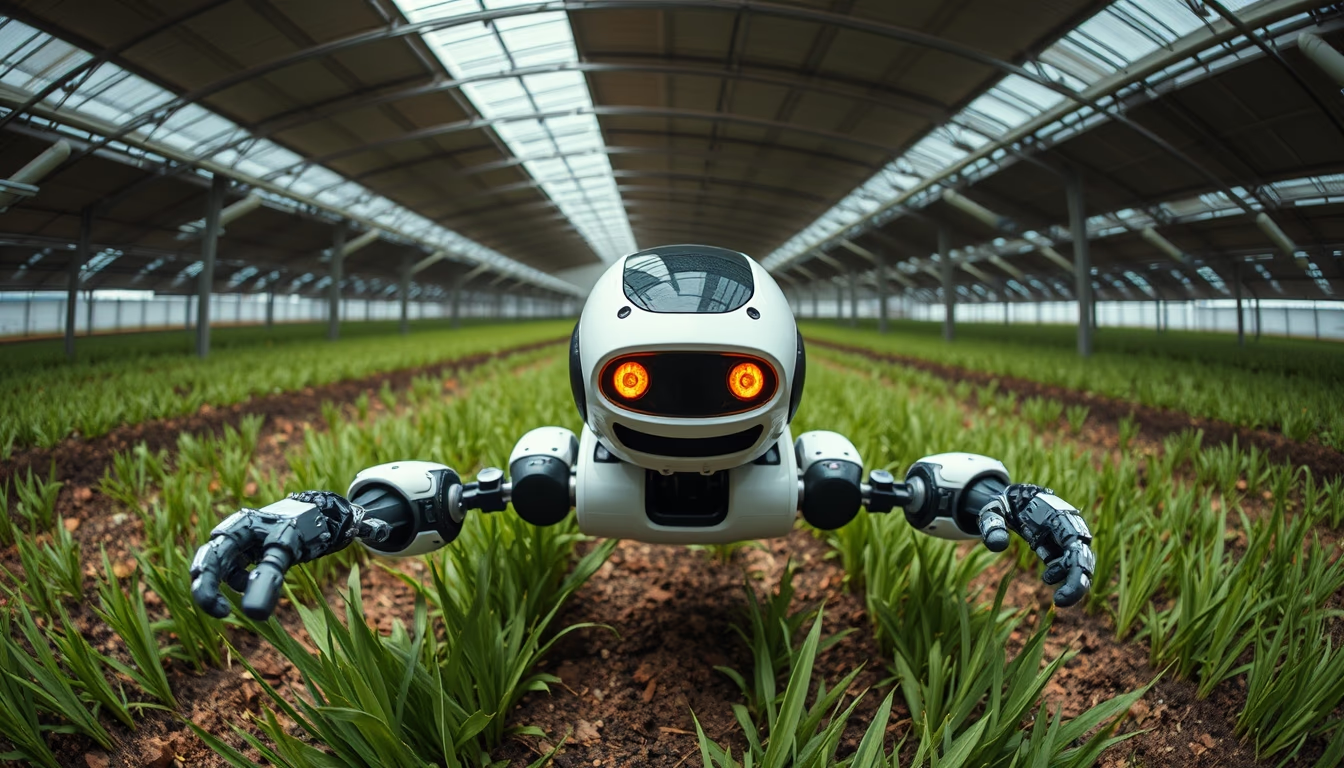
Autonomous agricultural robots transform the field with precision, efficiency and sustainability, revolutionizing modern farming.
About this subject
Agricultural robots are autonomous or semi-autonomous machines designed to perform tasks in the field, such as planting, irrigation, harvesting and pest control. Equipped with sensors, cameras and artificial intelligence, they collect real-time data on soil, plants and weather, enabling more precise decisions. This technology is known as precision agriculture, which aims to optimize inputs, reduce waste and increase productivity.
Different types of robots are already in operation. Autonomous tractors, such as those from John Deere, can plow and sow without a driver. Harvesting robots, like the Strawberry Picker from Harvest CROO, identify ripe fruits and pick them gently. Weeding robots, such as the See & Spray from Blue River Technology, use computer vision to apply herbicides only on weeds, reducing chemical use by up to 90%. These advances are especially relevant in a context of rural labor shortages and growing food demand.
The adoption of agricultural robots also faces challenges. The initial cost is still high, though it tends to decrease with scale. Connectivity in rural areas is limited in many regions, hampering remote operation. Additionally, cybersecurity and regulation issues need to be addressed. In Brazil, the Brazilian Agricultural Research Corporation (Embrapa) develops projects with robots for crop monitoring and localized spraying, adapting the technology to tropical conditions.
The future points to fully automated farms, with swarms of small robots collaborating on tasks. Startups like Iron Ox and Root AI already operate robotic greenhouses. Combined with drones and IoT sensors, agricultural robots promise more sustainable farming with lower environmental impact and greater efficiency in the use of resources such as water and fertilizers.
Frequently Asked Questions
What are the main benefits of agricultural robots?
Agricultural robots increase efficiency, reduce input use (water, fertilizers, pesticides), decrease labor needs and enable continuous crop monitoring, leading to higher productivity and sustainability.
How do agricultural robots identify weeds?
They use cameras and computer vision algorithms to distinguish crops from weeds. Based on that identification, they apply herbicides locally, reducing chemical usage.
Are agricultural robots viable for small farmers?
Currently, the cost is still high, but there are initiatives for shared robotics services and government subsidies. As technology advances and prices drop, they are expected to become more accessible.
Direct URL
https://pub-c7d6a6ea828543ac903a74a341ccb2e1.r2.dev/imagens/agricultural-robot-field-fish-eye-wide-angle-p4.avifHow to credit
Include a visible link back to UtilizAí. Copy one of the snippets below:
<a href="https://xn--utiliza-eza.com/en/midia/imagens/agricultural-robot-field-fish-eye-wide-angle-p4">Agricultural robot field</a> by <a href="https://xn--utiliza-eza.com">UtilizAí</a>, licensed under <a href="https://creativecommons.org/licenses/by/4.0/">CC BY 4.0</a>.
[Agricultural robot field](https://xn--utiliza-eza.com/en/midia/imagens/agricultural-robot-field-fish-eye-wide-angle-p4) by [UtilizAí](https://xn--utiliza-eza.com), CC BY 4.0
License: CC-BY-4.0