Agricultural robot field
1344×768 · AVIF · CC BY 4.0
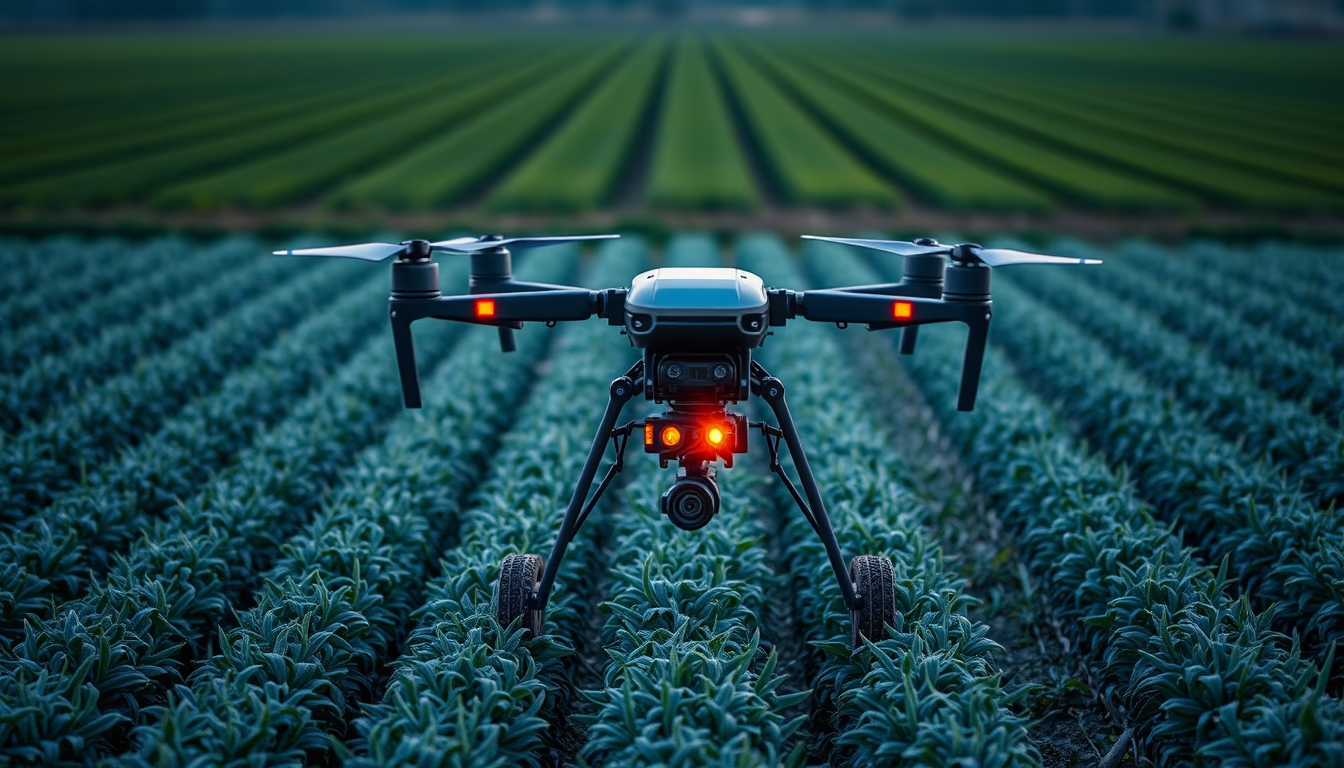
Agricultural robots automate field tasks, boosting productivity and reducing costs in modern farming.
About this subject
Agricultural robots are autonomous or semi-autonomous machines designed for tasks such as planting, harvesting, spraying, and crop monitoring. Equipped with sensors, cameras, and GPS, they navigate fields with centimeter-level precision, applying inputs only where needed. This technology reduces herbicide and fertilizer usage by up to 90% in some cases, as seen in Blue River Technology's See & Spray system. In Brazil, Embrapa and startups like Solinftec develop solutions tailored to the cerrado and sugarcane crops.
The adoption of agricultural robots addresses labor shortages and the demand for sustainable practices. Data from MarketsandMarkets indicates the global agricultural robotics market will reach $20 billion by 2025, growing at 20% annually. Strawberry-picking robots (Harvest CROO) and fruit harvesters for apples are being tested at scale in the US and Europe, while aerial drones map fields to detect pests and nutrient deficiencies.
Despite benefits, challenges such as high upfront costs (from $10,000 to $200,000 per unit), the need for field connectivity, and adaptation to diverse terrains limit adoption. However, Robotics-as-a-Service (RaaS) models allow small farmers to access the technology without purchasing. As AI advances, agricultural robots are becoming capable of distinguishing weeds from crops and even predicting yields based on historical data.
Frequently Asked Questions
How does an agricultural robot navigate a field without hitting plants?
It uses RTK GPS, LiDAR sensors, and computer vision cameras to map the environment in real time, avoiding obstacles and following pre-programmed routes.
Which crops can benefit from agricultural robots?
High-value crops like strawberries, grapes, tomatoes, and lettuce are most common, but prototypes exist for soybeans, corn, and sugarcane.
What is the average cost of an agricultural robot?
Prices range from $10,000 for simple monitoring models to $200,000 for multifunctional robots. Rental options (RaaS) help lower the barrier.
Direct URL
https://pub-c7d6a6ea828543ac903a74a341ccb2e1.r2.dev/imagens/agricultural-robot-field-aerial-drone-shot-p9.avifHow to credit
Include a visible link back to UtilizAí. Copy one of the snippets below:
<a href="https://xn--utiliza-eza.com/en/midia/imagens/agricultural-robot-field-aerial-drone-shot-p9">Agricultural robot field</a> by <a href="https://xn--utiliza-eza.com">UtilizAí</a>, licensed under <a href="https://creativecommons.org/licenses/by/4.0/">CC BY 4.0</a>.
[Agricultural robot field](https://xn--utiliza-eza.com/en/midia/imagens/agricultural-robot-field-aerial-drone-shot-p9) by [UtilizAí](https://xn--utiliza-eza.com), CC BY 4.0
License: CC-BY-4.0