Wormhole portal blue
1344×768 · AVIF · CC BY 4.0
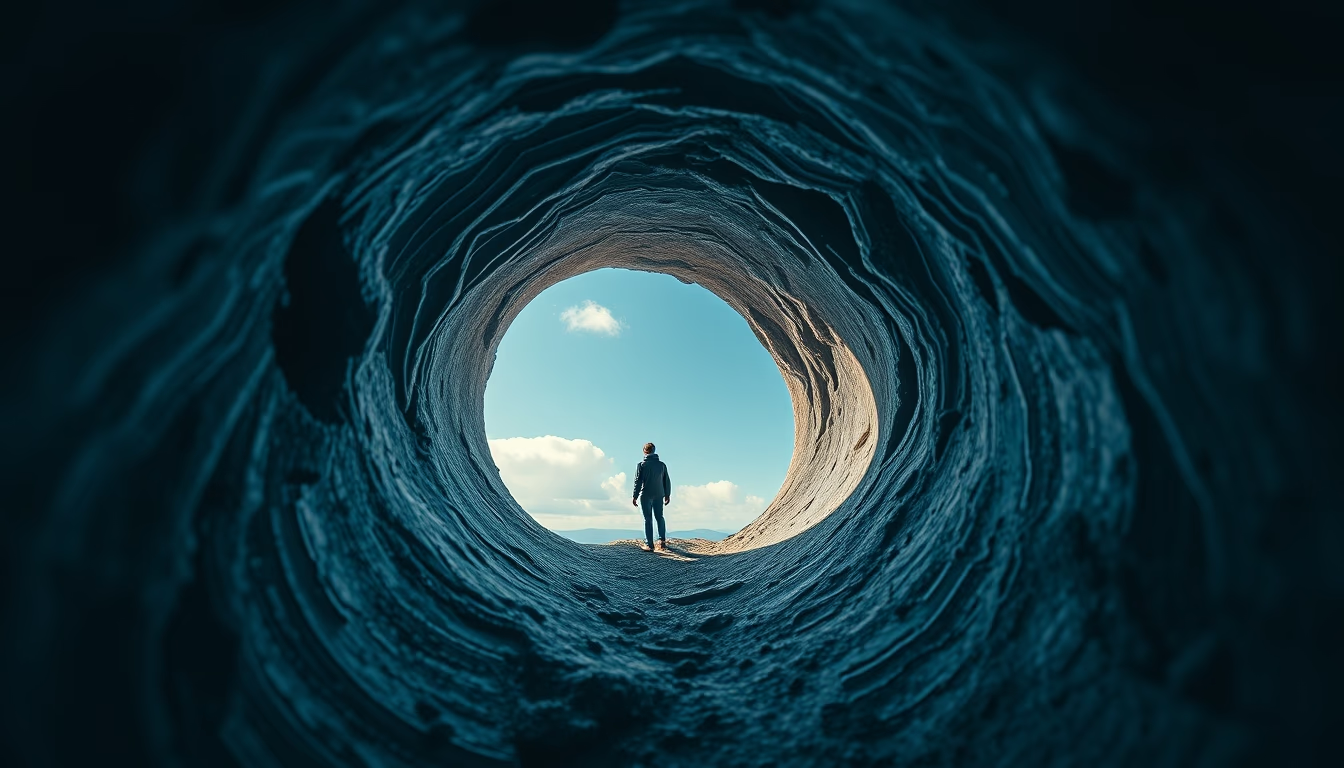
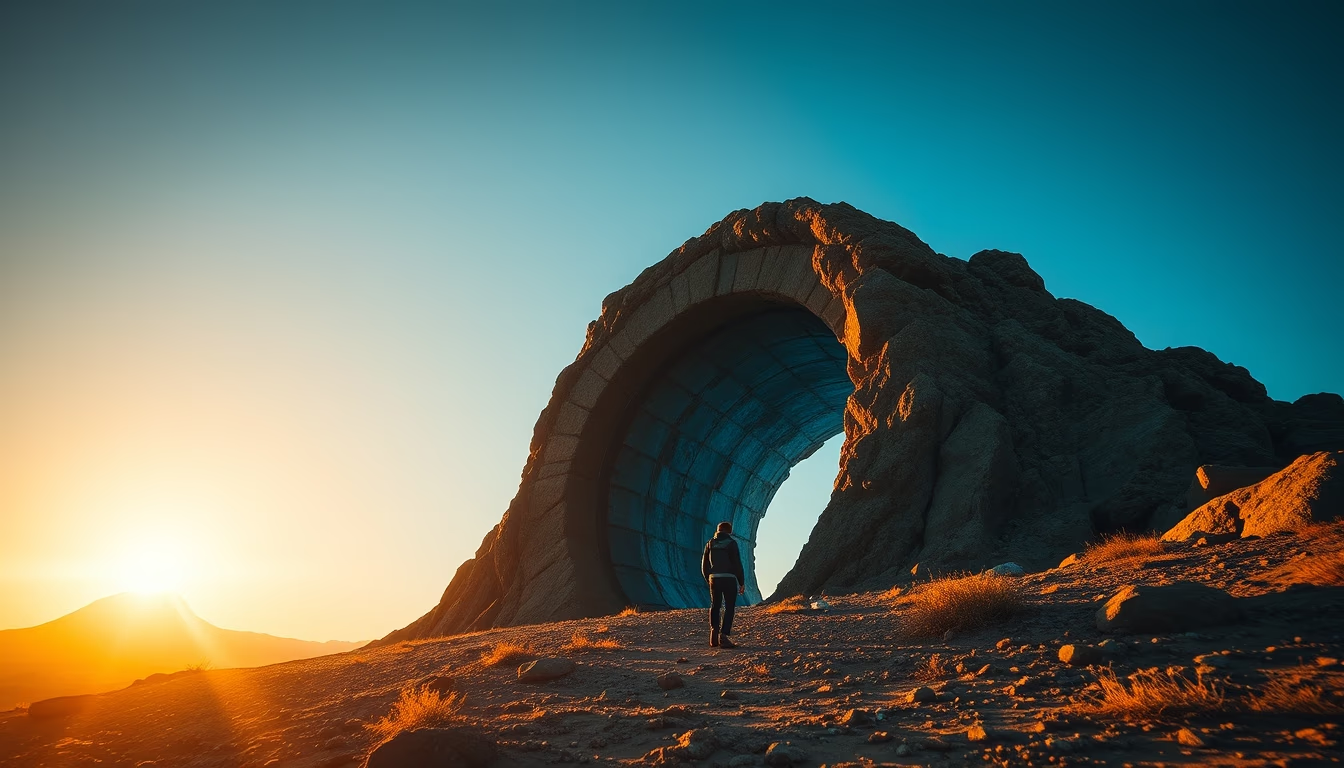
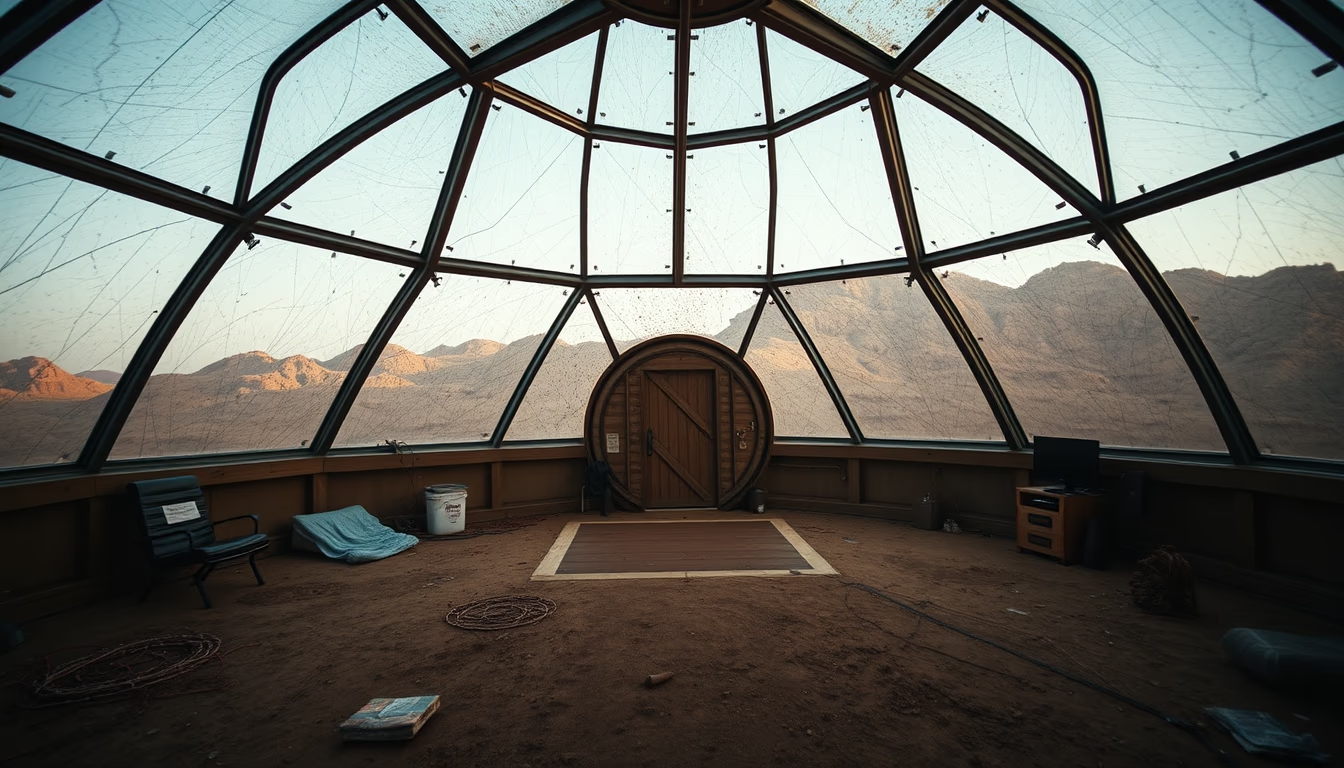
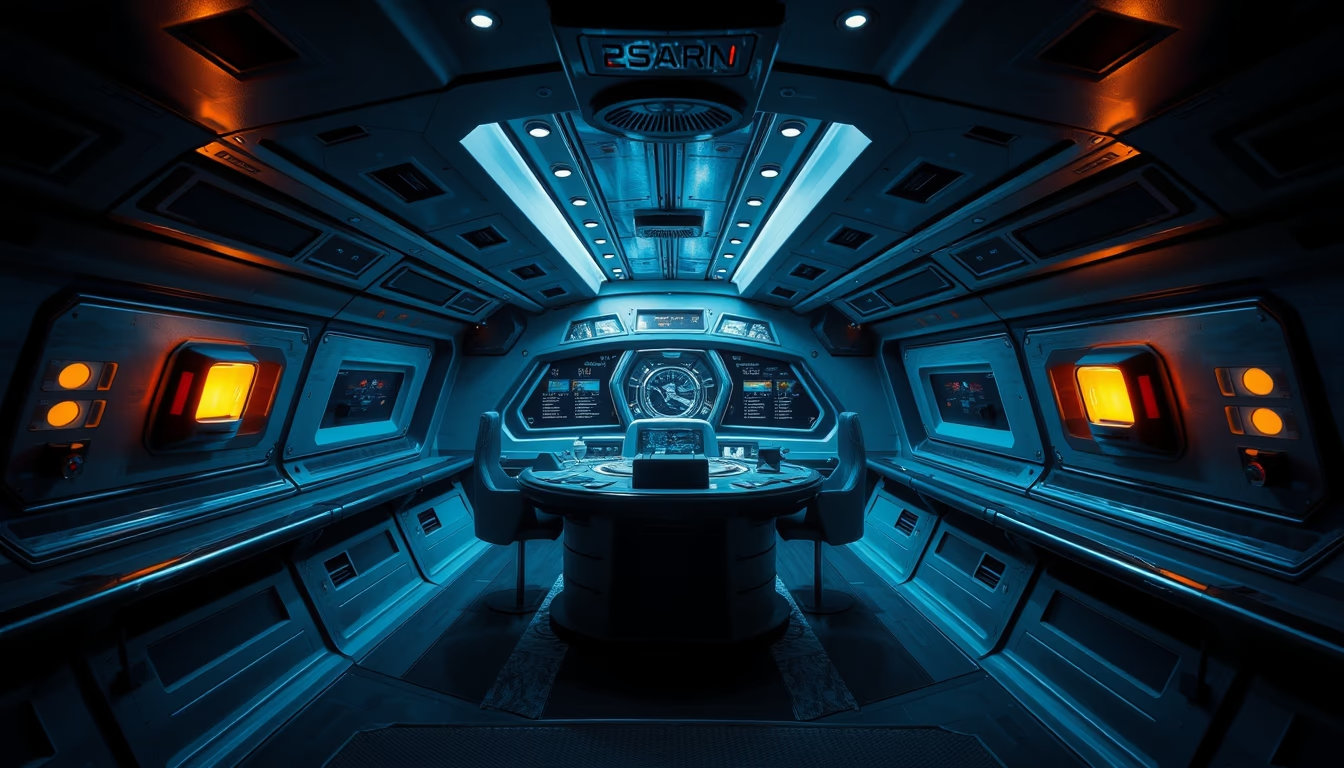
The concept of a blue wormhole portal refers to astrophysical theories of shortcuts through spacetime, predicted by Einstein and developed by physicists like Kip Thorne.
About this subject
A wormhole is a theoretical solution to Einstein's field equations in general relativity, functioning as a tunnel connecting two distant points in the universe, potentially enabling interstellar travel or even time travel. The concept was formalized in 1935 by Albert Einstein and Nathan Rosen, resulting in the Einstein-Rosen bridge, which describes a connection between two black holes. However, traversable wormholes, which would allow passage in both directions, require exotic matter with negative energy to keep the portal open, something not yet observed experimentally.
In modern astrophysics, wormholes remain purely hypothetical but are the subject of intense theoretical study. Physicists like John Wheeler and Kip Thorne have explored their properties, including the possibility of stabilizing them with quantum fields. The blue color often used in artistic representations has no direct scientific basis but is chosen to associate the phenomenon with high energy and radiation, similar to relativistic jets or pulsars. In computer simulations, colors are added to highlight extreme curvatures of spacetime.
Public interest in wormholes surged with the film Interstellar (2014), where a spherical blue wormhole serves as a portal to another galaxy. Kip Thorne's scientific consultancy ensured that the depiction followed plausible physical principles, albeit with artistic liberties. Currently, astronomers search for indirect signatures of wormholes, such as microlensing patterns or anomalies in gravitational waves, but no confirmed detection has been made to date.
Frequently Asked Questions
What is a wormhole?
It is a theoretical solution in general relativity that connects two distant points in spacetime, like a shortcut. It can be visualized as a tunnel with two mouths connected by a throat.
Does a blue wormhole actually exist in nature?
There is no observational evidence of wormholes in nature. The blue color is a common artistic representation, without scientific basis, used to suggest high energy or exotic phenomena.
How do scientists study wormholes if they are theoretical?
Through mathematical models and computer simulations. They also search for possible indirect signatures, such as distortions in light from distant stars or anomalous signals in gravitational waves.
Direct URL
https://pub-c7d6a6ea828543ac903a74a341ccb2e1.r2.dev/imagens/wormhole-portal-blue-documentary-nature-style-fresh6.avifHow to credit
Include a visible link back to UtilizAí. Copy one of the snippets below:
<a href="https://xn--utiliza-eza.com/en/midia/imagens/wormhole-portal-blue-documentary-nature-style-fresh6">Wormhole portal blue</a> by <a href="https://xn--utiliza-eza.com">UtilizAí</a>, licensed under <a href="https://creativecommons.org/licenses/by/4.0/">CC BY 4.0</a>.
[Wormhole portal blue](https://xn--utiliza-eza.com/en/midia/imagens/wormhole-portal-blue-documentary-nature-style-fresh6) by [UtilizAí](https://xn--utiliza-eza.com), CC BY 4.0
License: CC-BY-4.0