Alien landscape concept
1344×768 · AVIF · CC BY 4.0
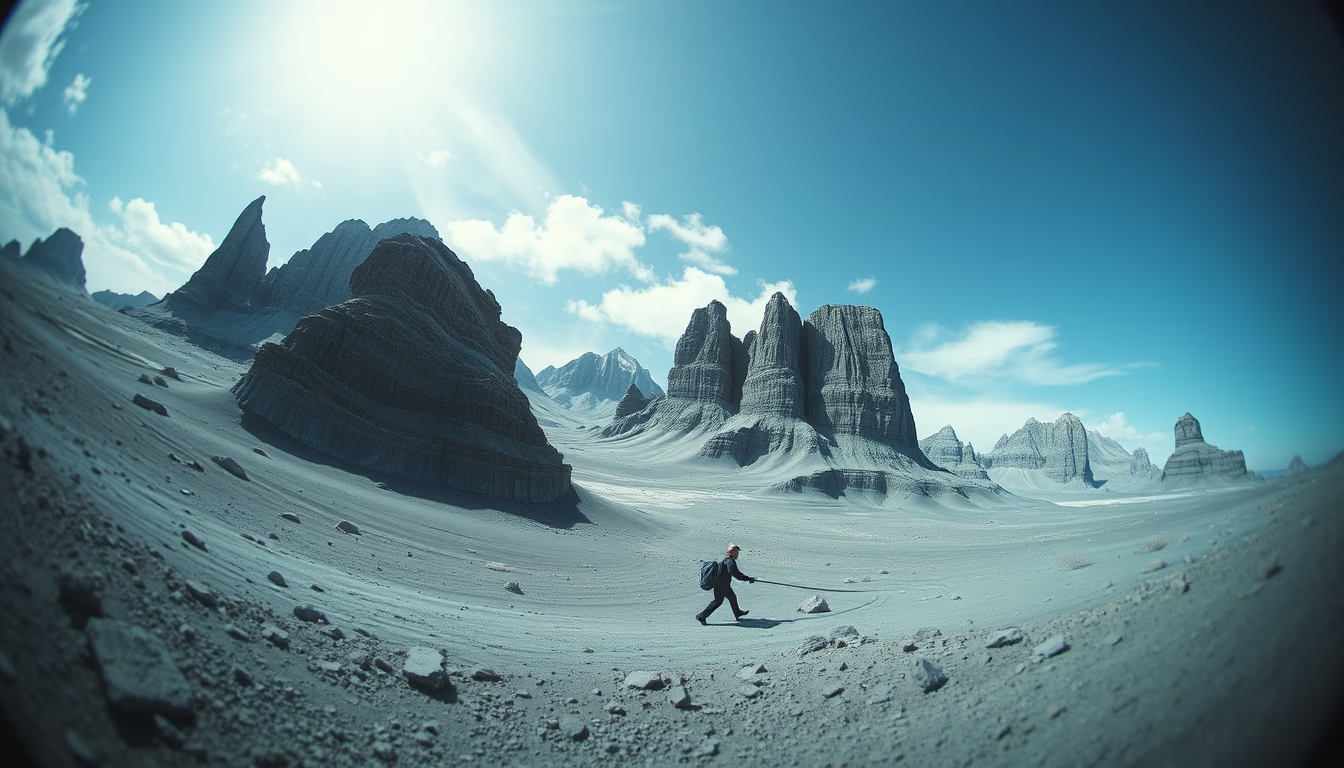
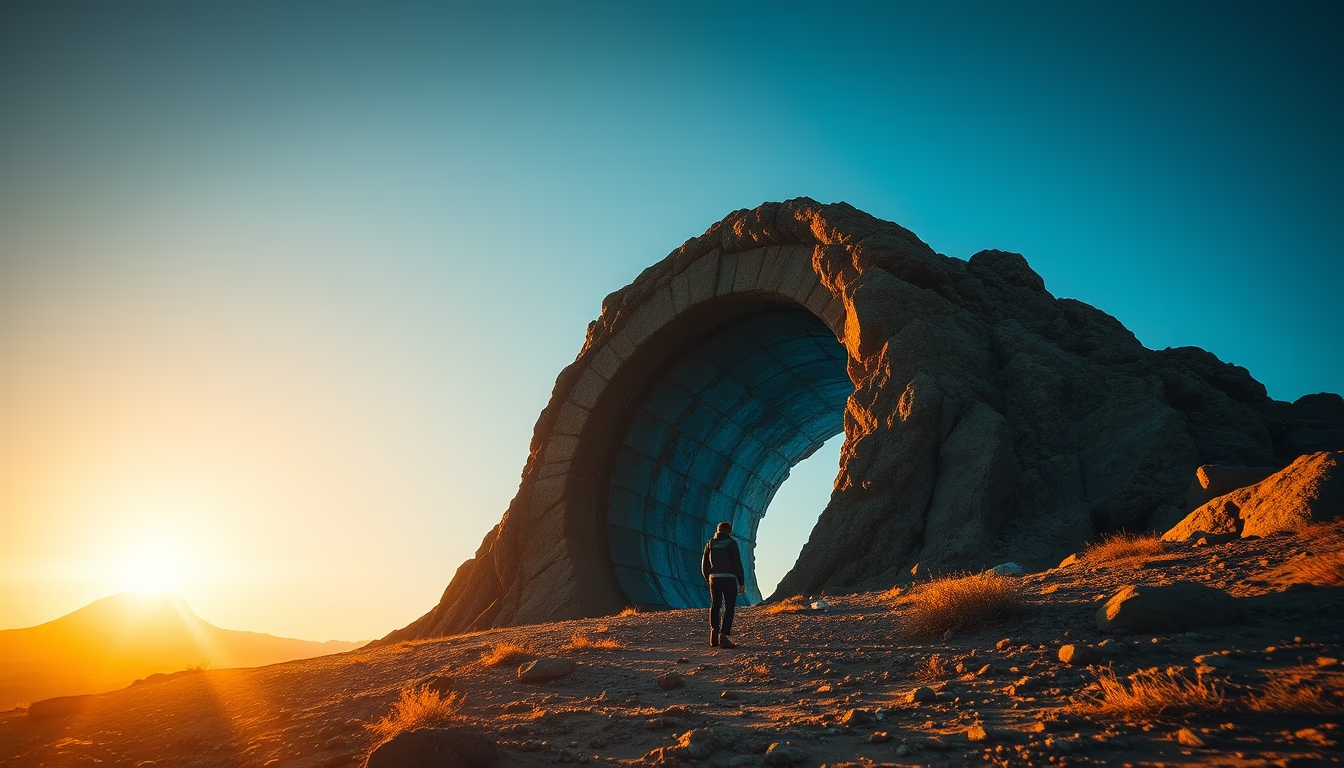
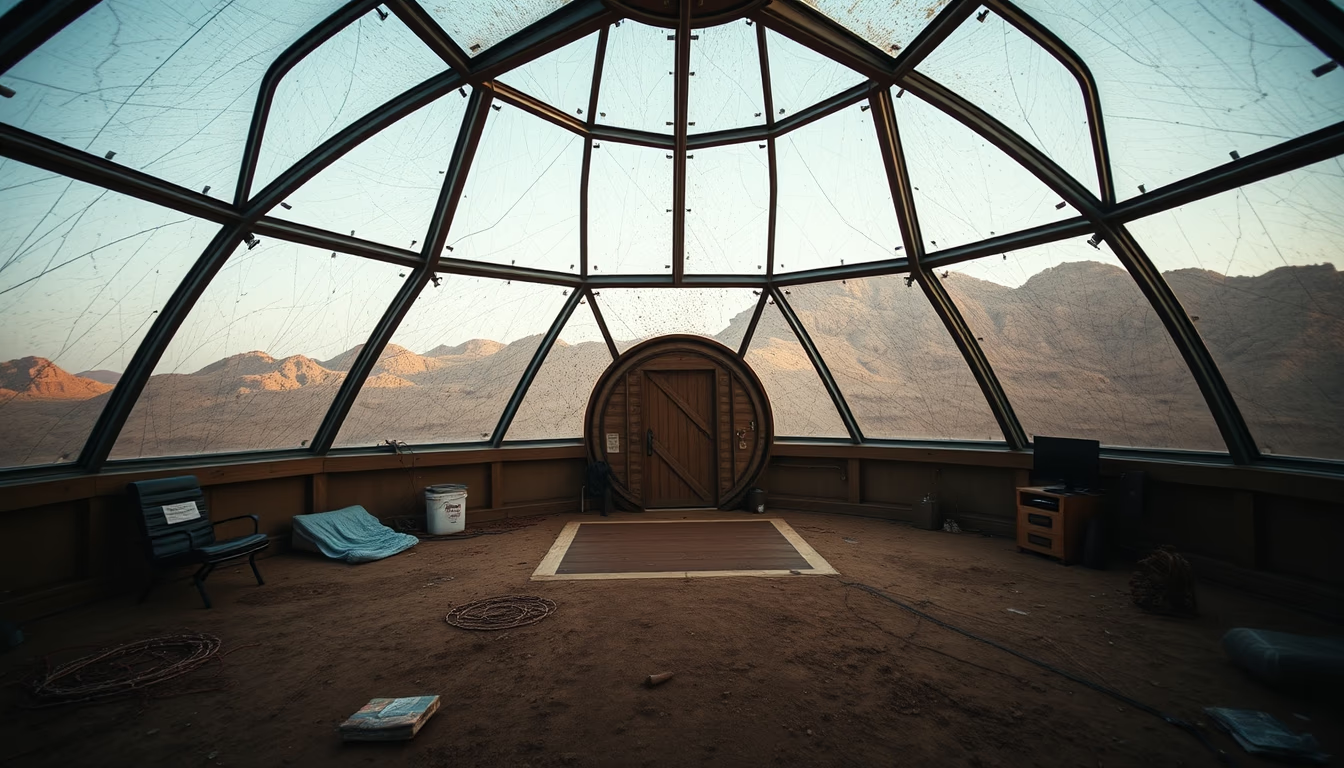
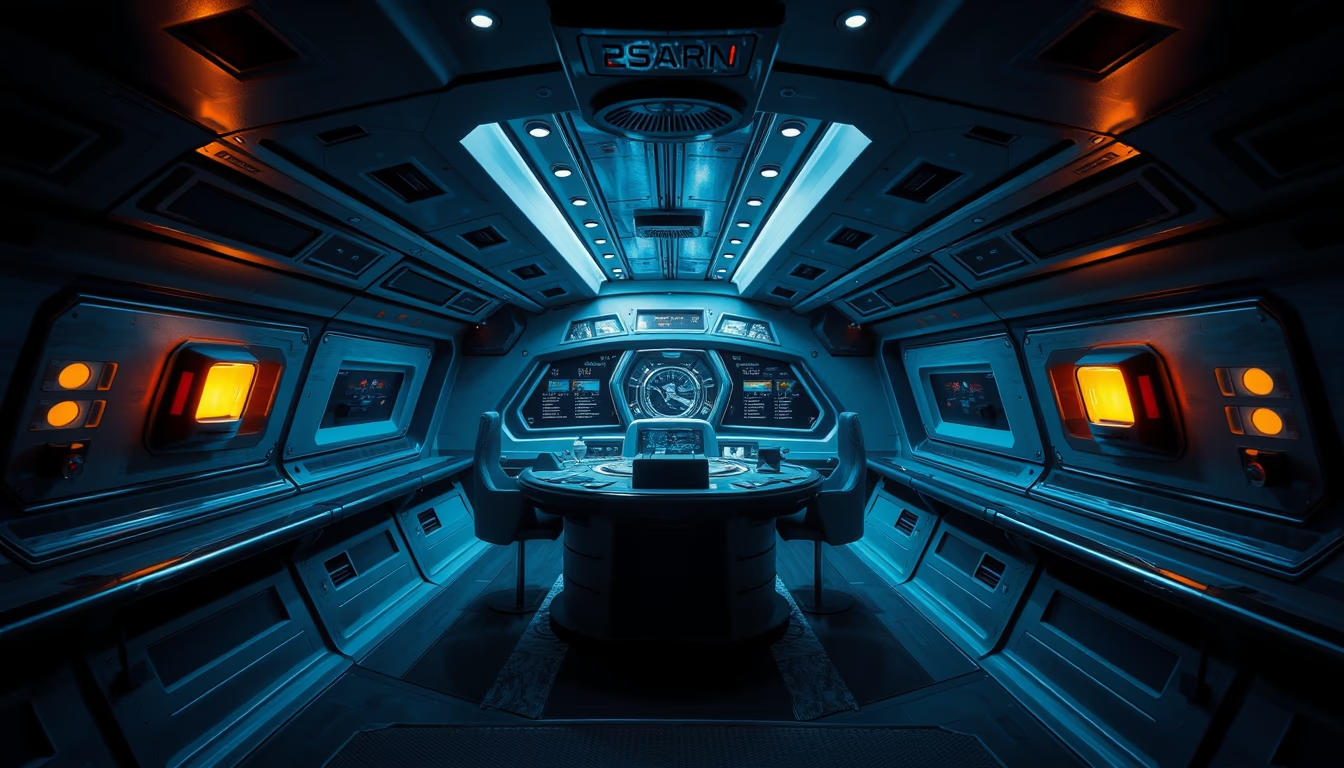
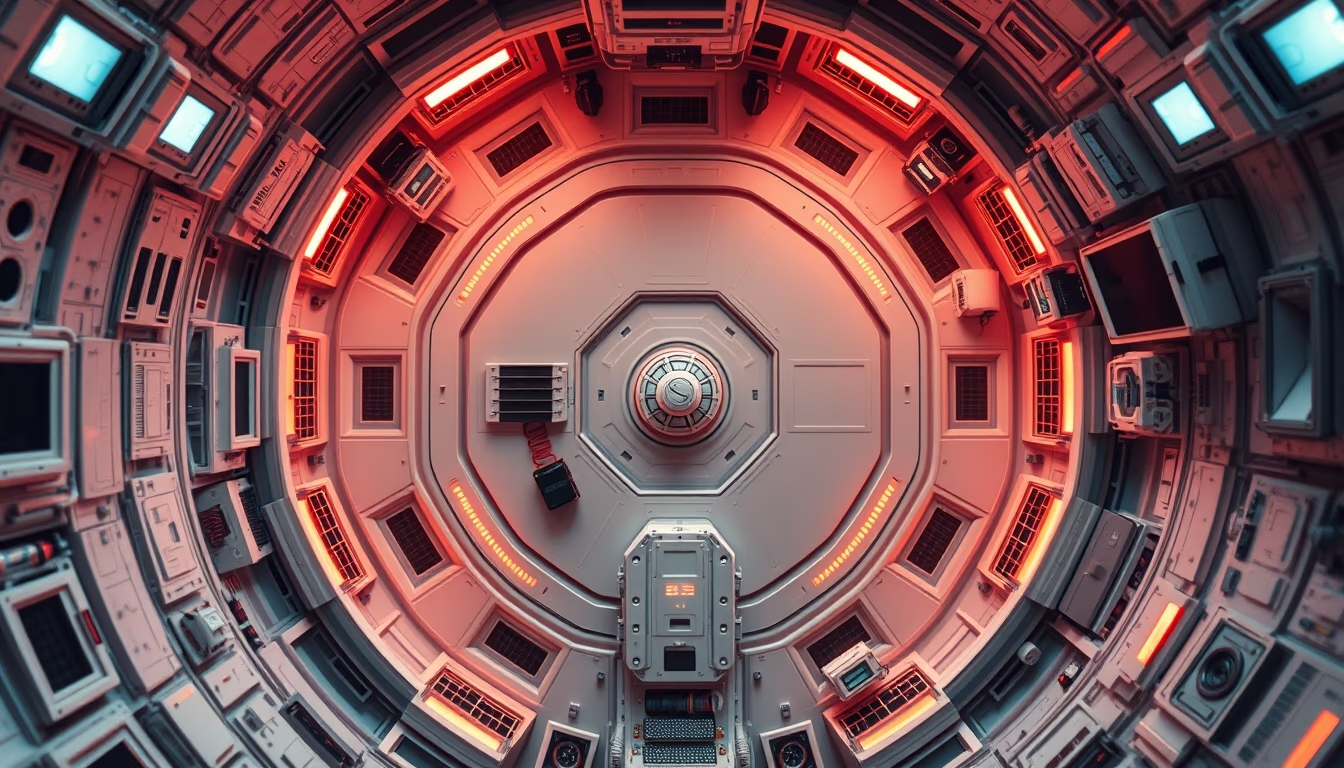
Alien landscapes are iconic elements of science fiction, blending artistic creativity with scientific speculation about extraterrestrial worlds.
About this subject
Alien landscapes are imaginary settings depicting extraterrestrial worlds, often explored in films, books, and games. Classics like Dune, with its giant dune deserts, or Pandora in Avatar, with bioluminescent forests, set visual standards. These landscapes combine artistic creativity with scientific concepts, such as exotic atmospheres, different gravity, and alternative chemistry.
Common elements include unusual sky colors, like red or green, irregular rock formations, non-terrestrial vegetation, and nearby celestial bodies. Artists draw inspiration from Earth's natural phenomena: deserts, volcanoes, caves, and auroras. For instance, Bolivia's salt flats or Yellowstone's geysers serve as references for textures and colors.
A scientific approach involves the study of exoplanets. Kepler-186f, a rocky planet in the habitable zone, inspires scenes with red vegetation due to different starlight. Atmospheres rich in methane or ammonia produce landscapes with orange hazes. Artists collaborate with astrobiologists to create plausible worlds, like those in Interstellar, which used realistic black holes.
Culturally, alien landscapes reflect our fears and hopes. They represent the unknown and the possibility of life beyond Earth. Beyond entertainment, these concepts spark interest in astronomy and space exploration, showing how art can dialogue with science.
Frequently Asked Questions
How do artists create realistic alien landscapes?
Artists research exoplanets and extreme conditions on Earth, combining scientific data with imagination. Techniques like digital painting, 3D modeling, and astronomical references are used to create visually coherent scenes.
Which exoplanets are most inspiring for alien landscapes?
Kepler-186f, with its theoretical red vegetation, and Trappist-1e, with possible oceans, are popular. Planets with hydrogen atmospheres or habitable moons also inspire unique settings.
Why do alien landscapes often have unnatural colors?
Unnatural colors result from different atmospheres and starlight. For example, a red dwarf star may give orange hues, while a blue star intensifies cool tones. Atmospheric chemistry also plays a role, such as green skies from high chlorine concentration.
Direct URL
https://pub-c7d6a6ea828543ac903a74a341ccb2e1.r2.dev/imagens/alien-landscape-concept-fish-eye-wide-angle-fresh18.avifHow to credit
Include a visible link back to UtilizAí. Copy one of the snippets below:
<a href="https://xn--utiliza-eza.com/en/midia/imagens/alien-landscape-concept-fish-eye-wide-angle-fresh18">Alien landscape concept</a> by <a href="https://xn--utiliza-eza.com">UtilizAí</a>, licensed under <a href="https://creativecommons.org/licenses/by/4.0/">CC BY 4.0</a>.
[Alien landscape concept](https://xn--utiliza-eza.com/en/midia/imagens/alien-landscape-concept-fish-eye-wide-angle-fresh18) by [UtilizAí](https://xn--utiliza-eza.com), CC BY 4.0
License: CC-BY-4.0