Martian colony dome
1344×768 · AVIF · CC BY 4.0
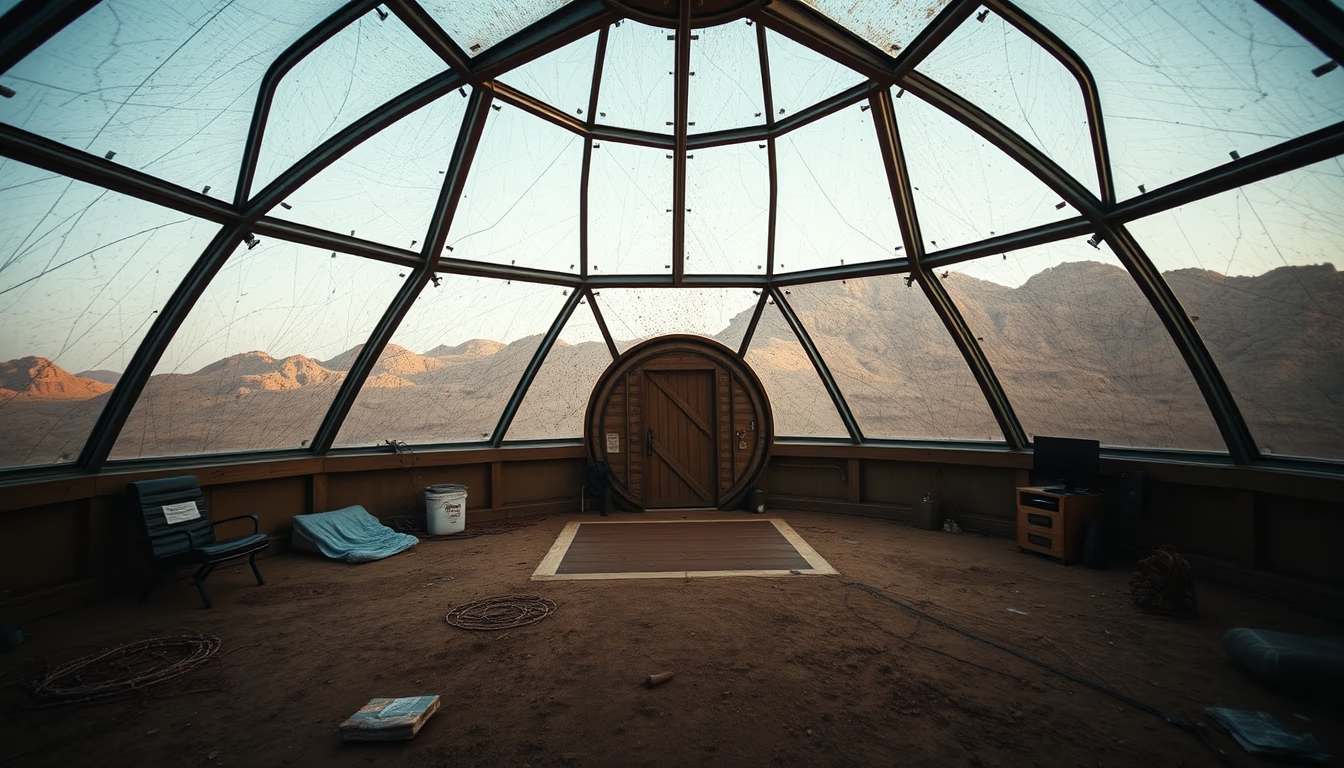
Domes for Mars colonies are pressurized structures that shield humans from the thin Martian atmosphere and cosmic radiation, essential for exploring the Red Planet.
About this subject
Domes for Martian colonies are conceptualized as pressurized habitats enabling human survival on Mars. The Martian surface has an atmospheric pressure less than 1% of Earth's, composed mainly of carbon dioxide (95%), with average temperatures of -60°C. These domes must withstand extreme pressure differences, maintain breathable oxygen, and shield against solar and cosmic radiation, as Mars lacks a global magnetic field. Engineering concepts include inflatable structures covered with Martian regolith (soil) for shielding, or rigid domes made from composite materials transported from Earth. Projects like Lockheed Martin's Mars Base Camp and NASA's concept of 3D-printed habitats using local soil explore these ideas. Additionally, domes can house greenhouses for food production, using artificial lighting and closed-loop water cycles. Martian colonization requires domes or underground habitats to mitigate radiation risks and dust storms, which can last months. Companies like SpaceX, with the Starship spacecraft, plan to send humans to Mars in the 2030s, and domes would be integral to early bases. Research into bioregeneration and in-situ resource utilization (ISRU) is vital for making these habitats self-sustaining. Although challenging, technological advances make such domes a real possibility for human expansion into the Solar System.
Frequently Asked Questions
Why are domes necessary for colonies on Mars?
Domes provide a pressurized environment with breathable oxygen, protection from cosmic radiation and extreme temperatures, and house life support systems. Without them, humans could not survive on the Martian surface.
What materials can be used to build domes on Mars?
Inflatable materials covered with Martian regolith (soil) for radiation shielding, or rigid structures made of reinforced polymers or metal transported from Earth can be used. 3D printing using Martian soil is also a research option by NASA.
How do Martian domes compare to terrestrial habitats?
Unlike terrestrial habitats, Martian domes must handle much higher internal pressure than external, intense radiation without a protective magnetic field, and global dust storms. They require highly efficient air and water recycling systems.
Direct URL
https://pub-c7d6a6ea828543ac903a74a341ccb2e1.r2.dev/imagens/martian-colony-dome-documentary-photography-fresh18.avifHow to credit
Include a visible link back to UtilizAí. Copy one of the snippets below:
<a href="https://xn--utiliza-eza.com/en/midia/imagens/martian-colony-dome-documentary-photography-fresh18">Martian colony dome</a> by <a href="https://xn--utiliza-eza.com">UtilizAí</a>, licensed under <a href="https://creativecommons.org/licenses/by/4.0/">CC BY 4.0</a>.
[Martian colony dome](https://xn--utiliza-eza.com/en/midia/imagens/martian-colony-dome-documentary-photography-fresh18) by [UtilizAí](https://xn--utiliza-eza.com), CC BY 4.0
License: CC-BY-4.0