Woodturning chisel detail
1344×768 · AVIF · CC BY 4.0
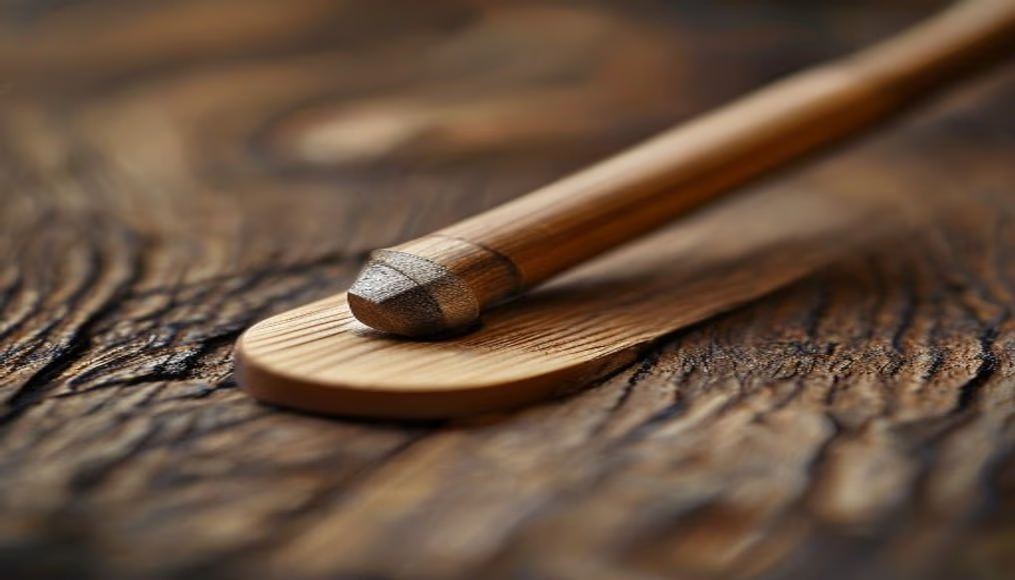
The woodturning chisel is a specialized tool for lathe work, essential for shaping symmetrical pieces with artisanal precision.
About this subject
The woodturning chisel is a cutting tool used on mechanical or manual lathes to shape cylindrical pieces such as table legs, walking sticks, bowls, and vases. Unlike common chisels, these tools have long handles that allow firm support against the tool rest, ensuring control during the wood's rotation. The blade is typically made of high-speed steel (HSS) or tungsten carbide, hardened to withstand high temperatures and maintain a sharp edge longer.
There are several profiles of woodturning chisels, each with a specific function. The roughing gouge removes large volumes of wood; the spindle gouge creates details and contours; the parting tool separates the piece from the lathe; and the scraper smooths the surface. The geometry of the bevel and the attack angle vary according to the application. In green woodturning, the tool needs frequent sharpening due to the abrasiveness of the sap.
Historically, woodturning dates back to ancient Egypt, but modern chisels took shape during the Industrial Revolution with the standardization of steels. In Brazil, the technique is traditional in northeastern craftsmanship, such as making mortars and wooden spoons, as well as in fine joinery in the South. Choosing the right chisel directly influences finish and safety: an incorrect angle can cause grab and accidents. Therefore, turning courses teach manual sharpening with a grinder and reading wood grain.
Fun fact: the tilt-shift effect in tool photography does not change the chisel's function but highlights its geometric details, simulating a miniature scene. The image with selective focus on a 12 mm wide chisel shows the polished bevel and the growth rings of the wood in the background, revealing the interaction between steel and cellulose.
Frequently Asked Questions
What is the difference between a woodturning chisel and a regular chisel?
A woodturning chisel has a long handle and a specific bevel angle for resting on the lathe tool rest, while a regular chisel is shorter and used with a hammer. The cutting angles are also different to withstand rotational forces.
How do you choose the right chisel for each turning stage?
For roughing, use a semieliptical roughing gouge. For details, choose a spindle gouge with a thinner bevel. For parting, use a parting tool. For finishing, a scraper with a slight curve works best.
What causes grab in woodturning and how to avoid it?
Grab occurs when the chisel catches the wood due to an improper attack angle or a dull tool. To avoid it, keep the bevel in contact with the wood, use angles between 30° and 45°, and sharpen the tool regularly.
Direct URL
https://pub-c7d6a6ea828543ac903a74a341ccb2e1.r2.dev/imagens/woodturning-chisel-detail-tilt-shift-miniature-p0.avifHow to credit
Include a visible link back to UtilizAí. Copy one of the snippets below:
<a href="https://xn--utiliza-eza.com/en/midia/imagens/woodturning-chisel-detail-tilt-shift-miniature-p0">Woodturning chisel detail</a> by <a href="https://xn--utiliza-eza.com">UtilizAí</a>, licensed under <a href="https://creativecommons.org/licenses/by/4.0/">CC BY 4.0</a>.
[Woodturning chisel detail](https://xn--utiliza-eza.com/en/midia/imagens/woodturning-chisel-detail-tilt-shift-miniature-p0) by [UtilizAí](https://xn--utiliza-eza.com), CC BY 4.0
License: CC-BY-4.0