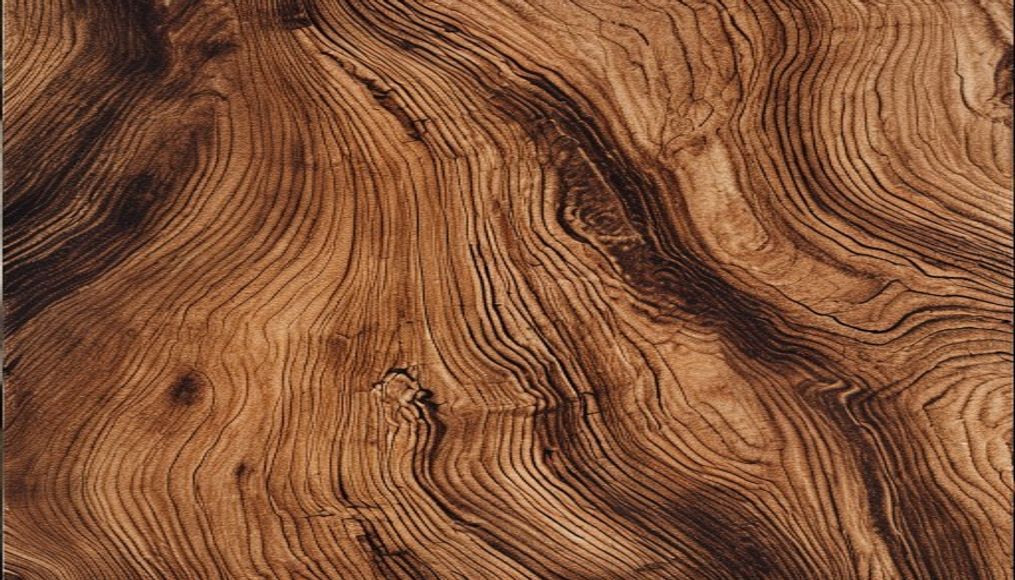
Tree rings cross section
1344×768 · JPG · CC BY 4.0
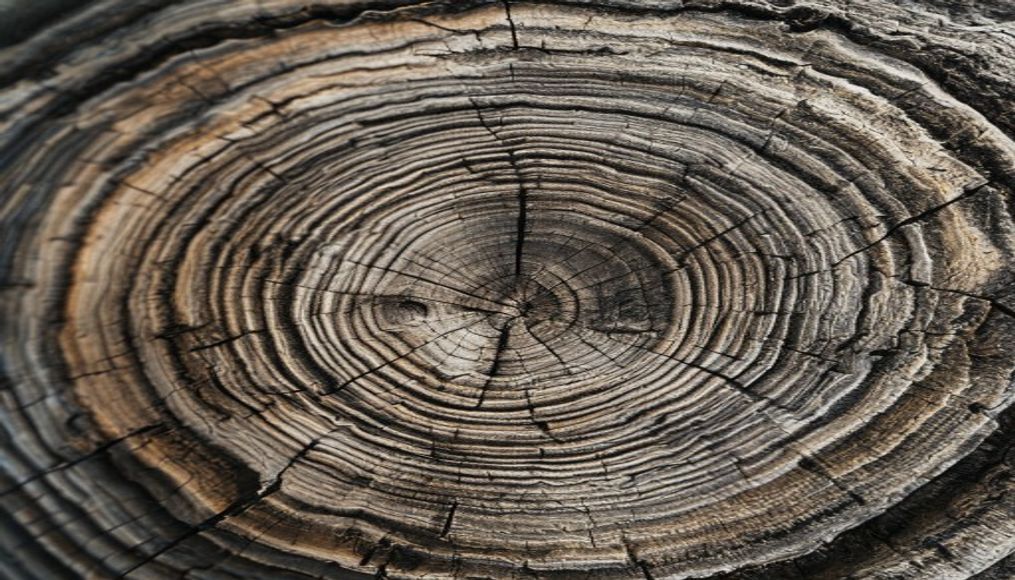
Tree growth rings, visible in cross sections, record decades of climatic and environmental history.
About this subject
Tree growth rings, also called annual rings, are concentric layers formed by the vascular cambium of trees. Each ring represents one year of life, with a light part (earlywood, fast spring growth) and a dark part (latewood, slower summer/autumn growth). Ring width varies with environmental conditions: favorable years produce wide rings; drought, severe cold, or competition produce narrow rings.
Dendrochronology is the science of dating and analyzing these rings. Developed by American astronomer Andrew Ellicott Douglass in the early 20th century, it allows reconstruction of past climates, dating of wooden artifacts (such as Stradivarius violins or ancient structures), and study of events like volcanic eruptions or forest fires. In temperate regions, rings are annual, but in the tropics they may be less distinct, requiring special techniques.
In the context of global climate change, rings provide millennial records of temperature and precipitation. For example, bristlecone pine (Pinus longaeva) ring sequences in North America span over 8,000 years, helping calibrate climate models. Additionally, ring dating (dendrochronology) aids in calibrating radiocarbon dating because it provides an absolute timescale.
Interestingly, ring thickness can also reflect atmospheric pollution. Studies show that in urban or industrial areas, trees may develop thinner rings due to pollutant stress. Analysis of stable isotopes within rings allows reconstruction of past atmospheric compositions, such as CO2 levels.
Frequently Asked Questions
How are tree growth rings formed?
The vascular cambium produces xylem cells inward and phloem outward. In spring, larger thin-walled cells form earlywood (light); in summer/autumn, smaller thick-walled cells form latewood (dark). Each year, a light-dark pair makes one ring.
Why are tree rings important for science?
Dendrochronology uses rings to date wood, reconstruct past climates, and calibrate radiocarbon dating. It is vital for archaeology, climatology, and environmental history, reaching back thousands of years.
Can tree rings be seen in tropical trees?
Yes, but not always annual. In tropical climates with a dry season, trees form annual rings. In regions without marked seasonality, rings may be less distinct, requiring techniques like X-ray densitometry.
Direct URL
https://pub-c7d6a6ea828543ac903a74a341ccb2e1.r2.dev/imagens/tree-rings-cross-section-national-geographic-style-p4.jpgHow to credit
Include a visible link back to UtilizAí. Copy one of the snippets below:
<a href="https://xn--utiliza-eza.com/en/midia/imagens/tree-rings-cross-section-national-geographic-style-p4">Tree rings cross section</a> by <a href="https://xn--utiliza-eza.com">UtilizAí</a>, licensed under <a href="https://creativecommons.org/licenses/by/4.0/">CC BY 4.0</a>.
[Tree rings cross section](https://xn--utiliza-eza.com/en/midia/imagens/tree-rings-cross-section-national-geographic-style-p4) by [UtilizAí](https://xn--utiliza-eza.com), CC BY 4.0
License: CC-BY-4.0