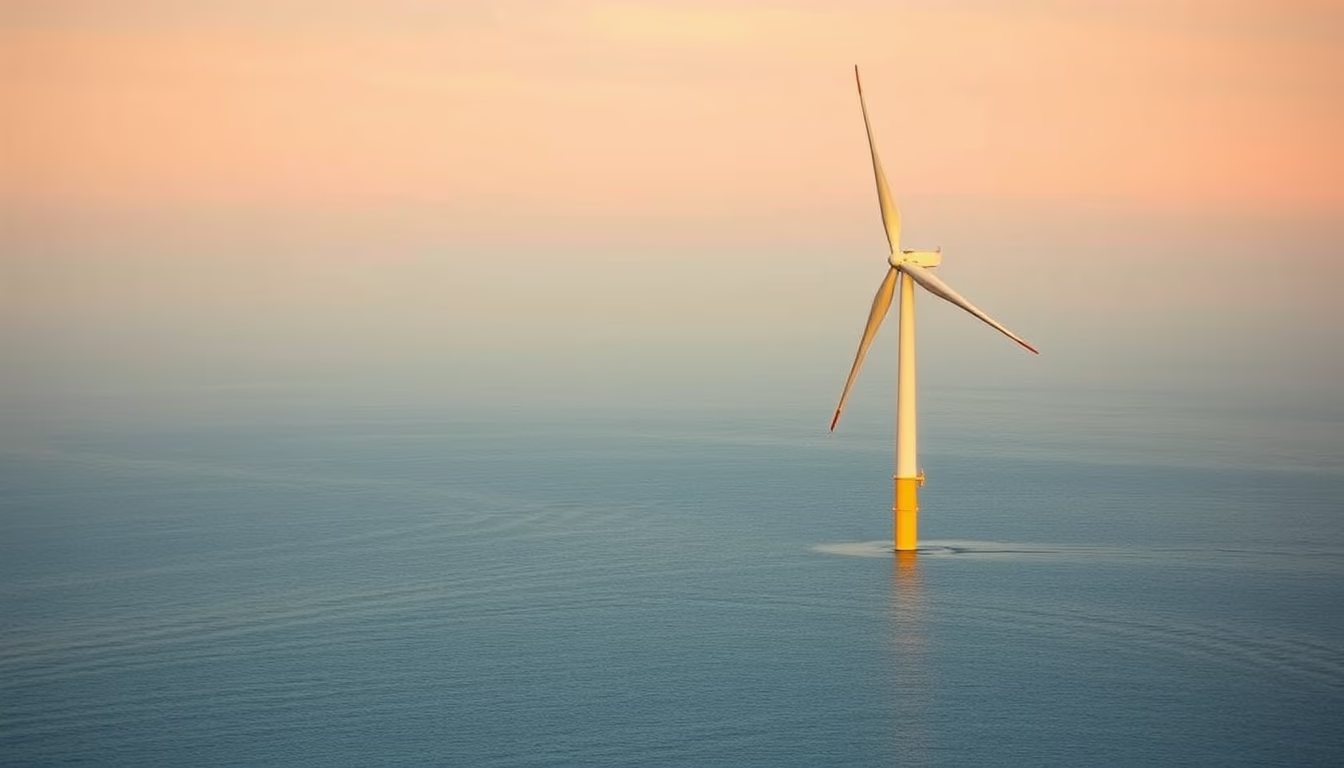
Wind turbine offshore
1344×768 · AVIF · CC BY 4.0
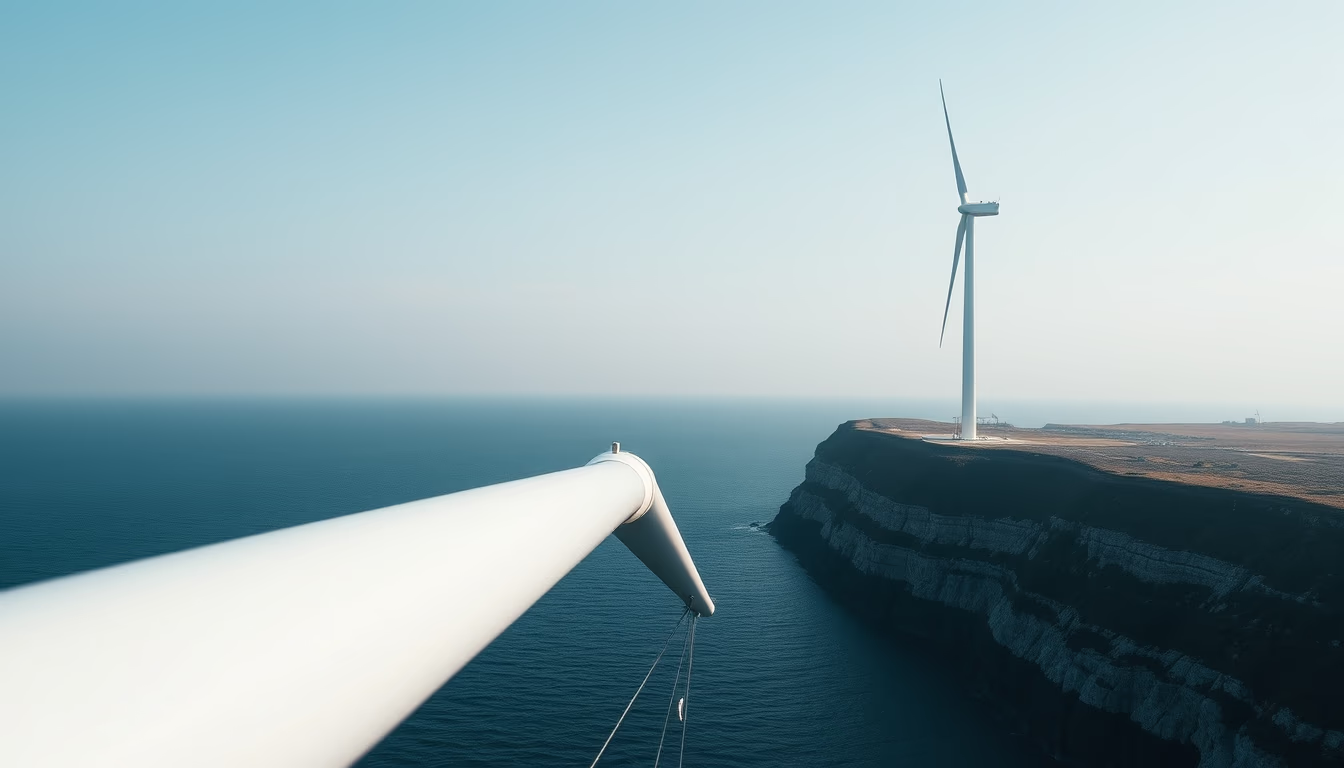
Offshore wind turbines harness sea winds to generate electricity. Learn how they work, their benefits, and Brazil's potential for this clean energy source.
About this subject
Offshore wind turbines are wind generators installed in open sea, typically more than 10 kilometers from coastlines, where winds are stronger and more consistent. They can be fixed to the seabed using monopile foundations or steel jackets, or mounted on anchored floating platforms, a key technology for deep waters. Modern turbines have capacities between 8 and 15 megawatts, with towers exceeding 150 meters in height and blades over 80 meters long. Leading countries in installed capacity include the United Kingdom, China, and Germany, with farms like Hornsea (12 GW planned) and Dogger Bank (3.6 GW operational).
The main advantage of offshore wind is its higher capacity factor, reaching 50% or more, thanks to the steadiness of ocean winds. Additionally, offshore turbines reduce visual and noise impacts on human populations. However, installation and maintenance costs are high, requiring specialized vessels and robust port infrastructure. Power transmission to shore is done via submarine high-voltage cables, with losses minimized by conversion to direct current.
Brazil has one of the greatest offshore wind potentials in the world, estimated at over 700 GW by the Energy Research Office. The Brazilian coast, especially the Northeast and South regions, offers strong and steady winds. In 2022, Law 14.391 was enacted, establishing the legal framework for offshore wind generation, allowing maritime areas to be leased for exploration. Currently, over 70 projects are in the environmental licensing phase, totaling about 180 GW of requested capacity. The first commercial operations are expected by 2026, boosting the supply chain and creating jobs.
Interesting facts: the largest operating offshore turbine is the GE Haliade-X, with 14 MW and 107-meter blades. Floating platforms enable installations in water depths exceeding 60 meters, opening new frontiers in the South Atlantic. The levelized cost of offshore energy has dropped 60% in the last decade, making it competitive with fossil fuels in many markets. The trend for 2026 includes even larger turbines, above 20 MW, and integration with green hydrogen produced from offshore electricity.
Frequently Asked Questions
What is the difference between onshore and offshore wind energy?
Onshore wind is installed on land, usually in rural or mountainous areas. Offshore wind is installed at sea, taking advantage of stronger and more consistent winds, with a higher capacity factor and less visual impact, but with higher installation and maintenance costs.
Which are the leading countries in offshore wind energy?
The United Kingdom, China, Germany, Denmark, and the Netherlands lead global installed capacity. The UK operates the largest farm, Dogger Bank, while China is rapidly expanding its fleet, including 16 MW turbines.
Does Brazil have operational offshore wind farms?
Not yet. Over 70 projects are in the environmental licensing phase, with a requested capacity exceeding 180 GW. The first commercial operations are expected by 2026, especially in the Northeast region.
Direct URL
https://pub-c7d6a6ea828543ac903a74a341ccb2e1.r2.dev/imagens/wind-turbine-offshore-minimalist-composition-p1.avifHow to credit
Include a visible link back to UtilizAí. Copy one of the snippets below:
<a href="https://xn--utiliza-eza.com/en/midia/imagens/wind-turbine-offshore-minimalist-composition-p1">Wind turbine offshore</a> by <a href="https://xn--utiliza-eza.com">UtilizAí</a>, licensed under <a href="https://creativecommons.org/licenses/by/4.0/">CC BY 4.0</a>.
[Wind turbine offshore](https://xn--utiliza-eza.com/en/midia/imagens/wind-turbine-offshore-minimalist-composition-p1) by [UtilizAí](https://xn--utiliza-eza.com), CC BY 4.0
License: CC-BY-4.0