Wind turbine offshore
1344×768 · AVIF · CC BY 4.0
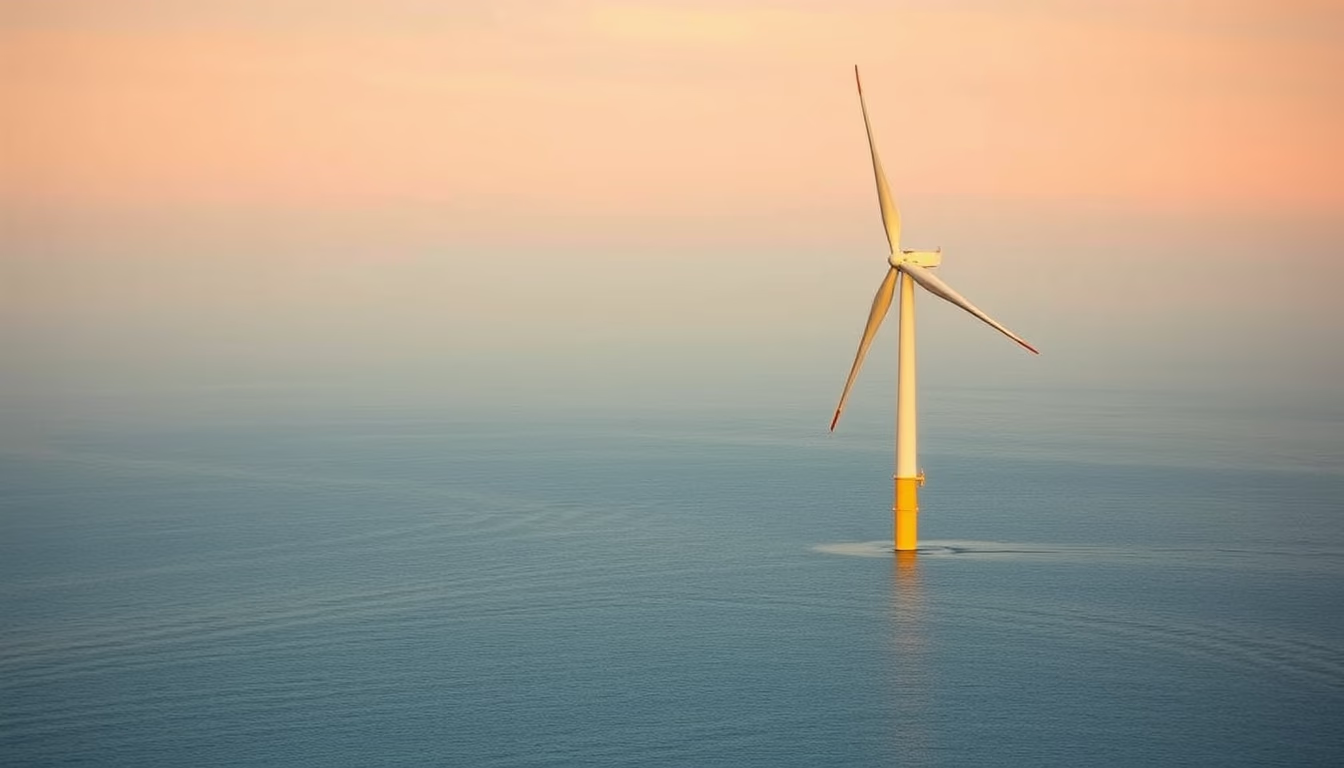
Offshore wind turbines convert wind into clean energy at sea, with growing capacity and installation challenges.
About this subject
Offshore wind turbines are large structures installed at sea, typically in areas with strong and consistent winds, such as the North Sea, the eastern coast of the United States, and the coast of China. They convert the kinetic energy of wind into electricity using generators coupled with blades that can exceed 100 meters in length. The global installed capacity of this energy source surpassed 60 GW in 2023, and projections indicate growth to over 200 GW by 2030, driven by decarbonization policies.
Technology has evolved rapidly: early 1-2 MW offshore turbines gave way to 12-15 MW models with rotor diameters exceeding 200 meters. Installation at sea requires specialized vessels and fixed or floating foundations, depending on water depth. Countries such as Denmark, the United Kingdom, and Germany lead; but Asia (China, Taiwan, Japan) and the United States are expanding quickly. Brazil, despite low current capacity, has an estimated offshore wind potential of over 700 GW, mainly in the Northeast and South regions.
Besides energy benefits, offshore turbines face challenges such as high installation and maintenance costs, impact on seabirds and navigation, and the need for submarine transmission infrastructure. Offshore wind is considered key to the energy transition, with advantages like higher capacity factors (average 40-50%) compared to onshore turbines (20-30%). Innovations such as floating turbines allow exploitation of deeper waters, expanding global potential.
Frequently Asked Questions
What is the largest offshore wind turbine ever built?
As of 2023, the largest is the Vestas V236-15.0 MW, with 115.5-meter blades and a rotor diameter of 236 meters, capable of generating 80 GWh per year, enough to supply about 20,000 European households.
Do offshore wind turbines pollute the environment?
Operation emits no pollutants, but installation can cause underwater noise affecting marine mammals. There is also a risk of bird collisions. Mitigation measures, such as monitoring and temporary shutdown, are applied.
Why is offshore wind energy more expensive than onshore?
Costs of marine foundations, submarine cables, specialized vessel installation, and offshore maintenance make offshore 2-3 times more expensive. However, technology cost reductions and economies of scale are narrowing the gap.
Direct URL
https://pub-c7d6a6ea828543ac903a74a341ccb2e1.r2.dev/imagens/wind-turbine-offshore-national-geographic-style-p6.avifHow to credit
Include a visible link back to UtilizAí. Copy one of the snippets below:
<a href="https://xn--utiliza-eza.com/en/midia/imagens/wind-turbine-offshore-national-geographic-style-p6">Wind turbine offshore</a> by <a href="https://xn--utiliza-eza.com">UtilizAí</a>, licensed under <a href="https://creativecommons.org/licenses/by/4.0/">CC BY 4.0</a>.
[Wind turbine offshore](https://xn--utiliza-eza.com/en/midia/imagens/wind-turbine-offshore-national-geographic-style-p6) by [UtilizAí](https://xn--utiliza-eza.com), CC BY 4.0
License: CC-BY-4.0