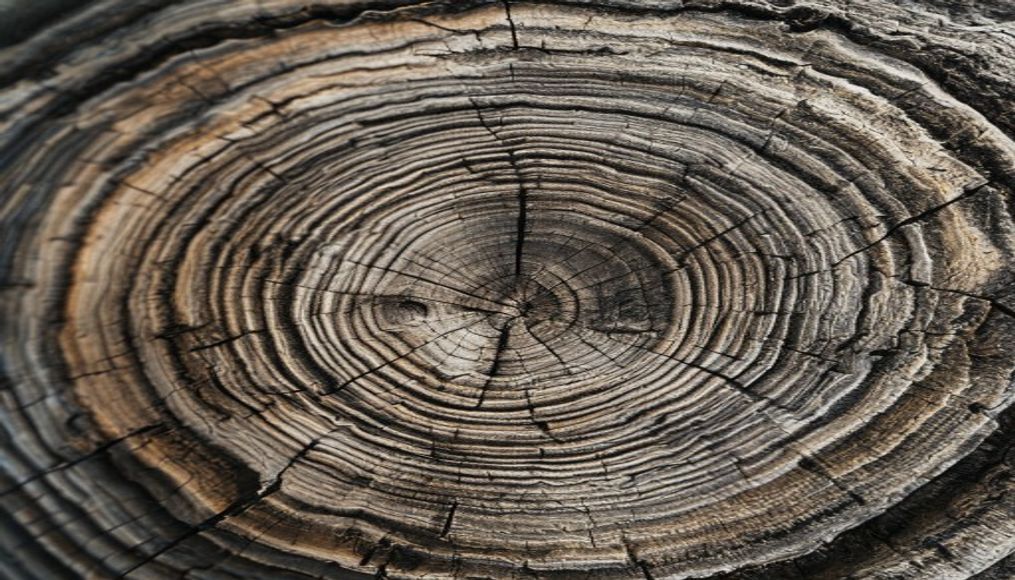
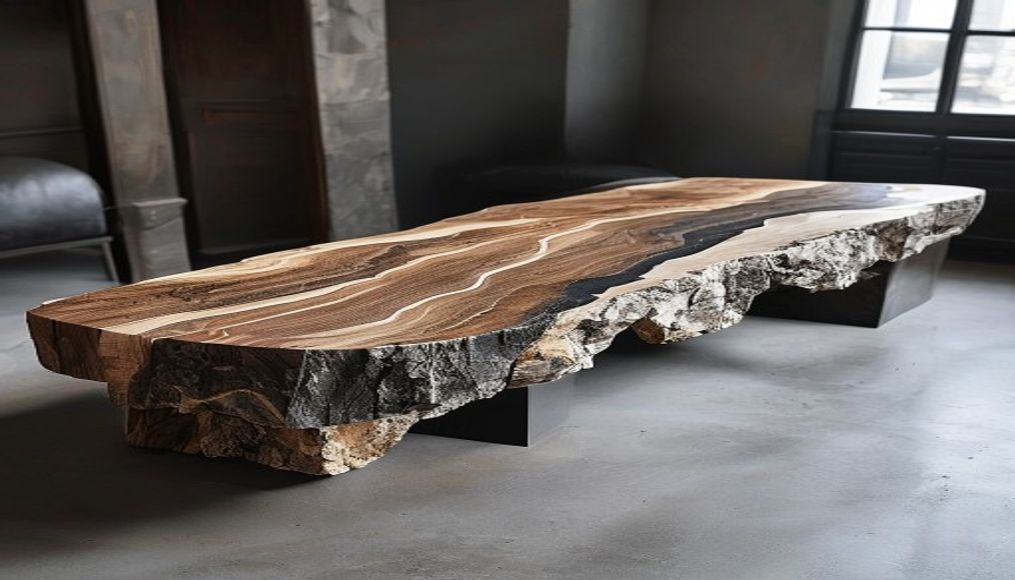
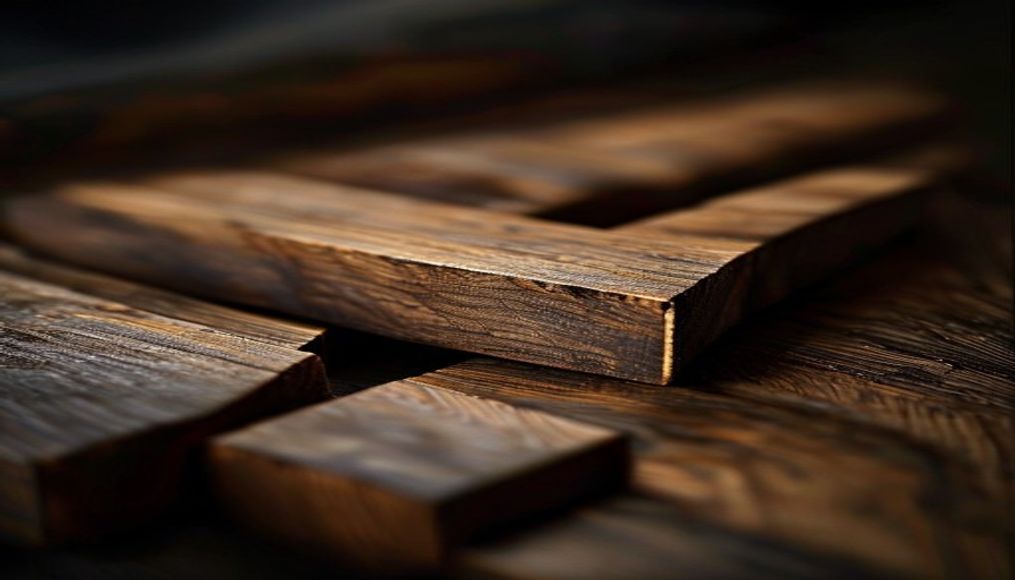
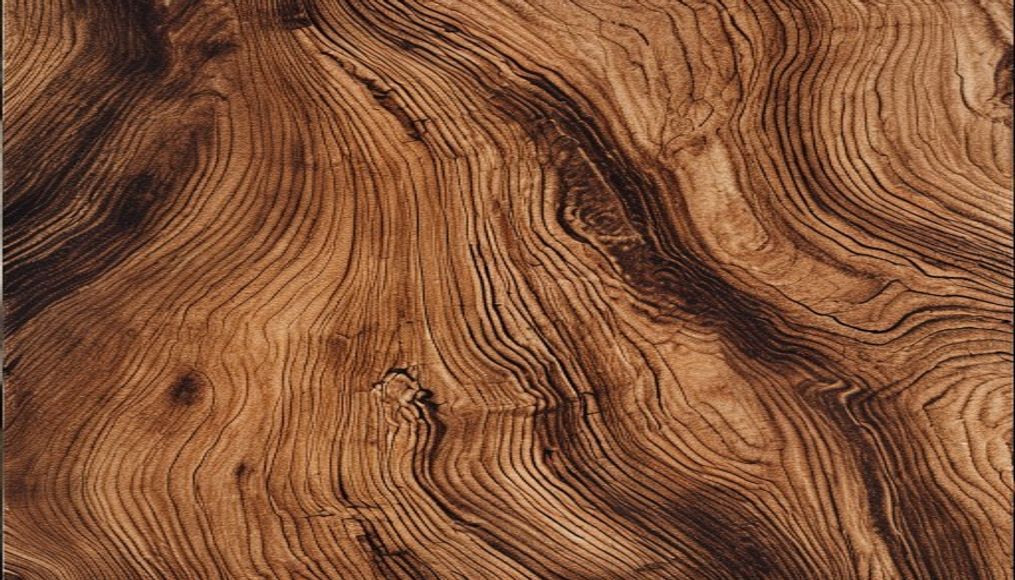
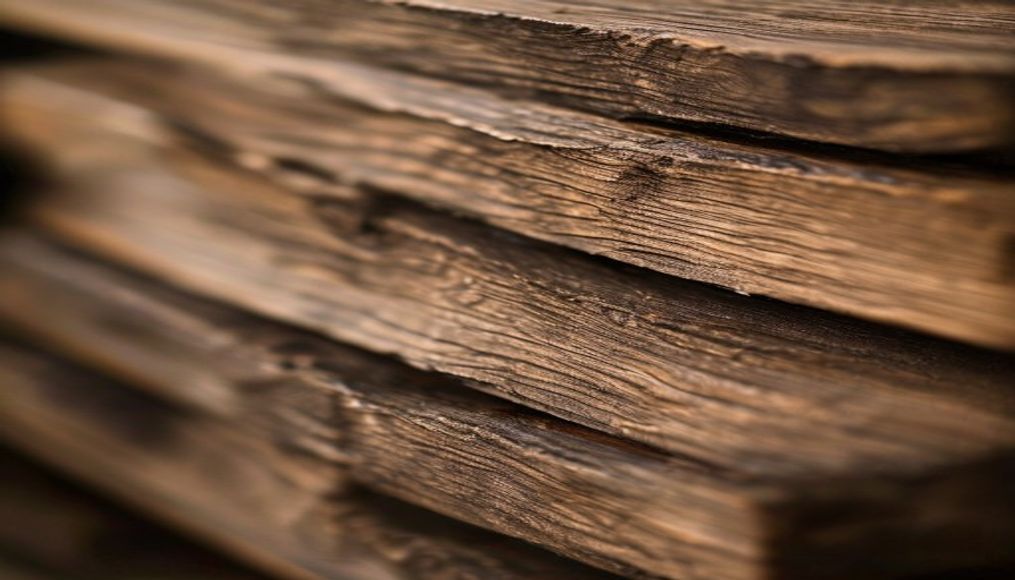
Walnut grain pattern
1344×768 · AVIF · CC BY 4.0
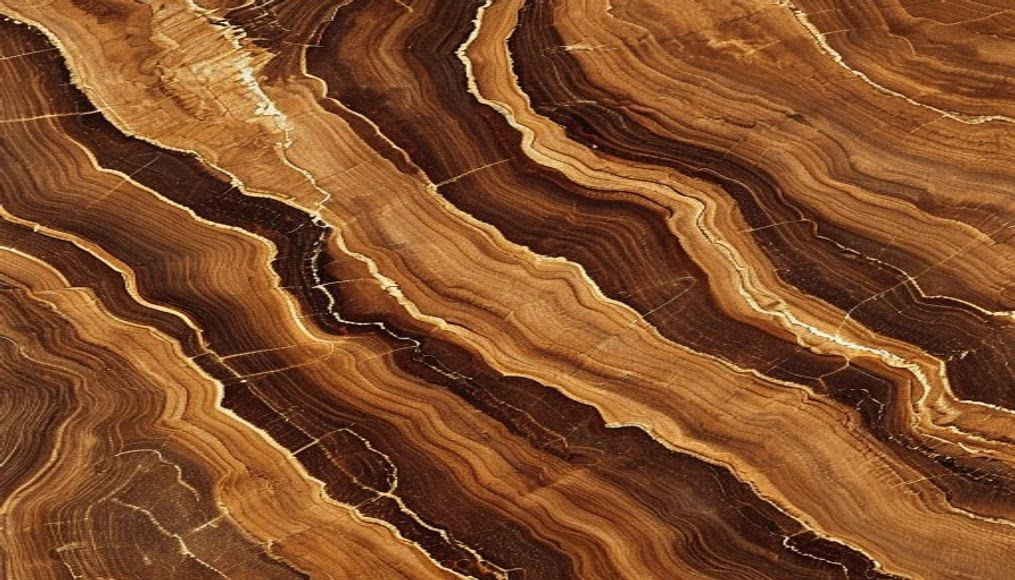
Walnut grain displays dark, wavy lines that make it essential in luxury woodworking.
About this subject
The walnut grain pattern is one of the most admired in woodworking worldwide. The wood comes mainly from species like Juglans nigra (black walnut) and Juglans regia (English walnut), showing a color range from light brown to dark chocolate, often with purplish undertones. The grain can be straight, but what makes walnut special are the figured patterns such as curly, burl, and fiddleback, formed by irregularities in annual ring growth and the distribution of wood vessels.
This wood is widely used in fine furniture, decorative panels, musical instruments (like pianos and guitars), and gunstocks. Black walnut, native to North America, is particularly prized for its strength and beauty. In woodworking, walnut is considered a noble wood, with reasonable dimensional stability and ease for carving and turning. Figured patterns like burl are rare and extremely expensive, reserved for high-end pieces.
Historically, walnut has been used since antiquity by Egyptians and Romans. In Renaissance Europe, it was the preferred wood for church and palace furniture. Interestingly, English walnut is one of the few woods that darkens with light exposure, developing a patina over time. Additionally, walnut trees produce edible nuts, making them cultivated for both timber and food.
Frequently Asked Questions
What causes the figured patterns in walnut grain?
Figured patterns like curly, burl, and fiddleback are caused by irregularities in the tree's growth, such as mechanical stress, fungal attacks, or genetic mutations. These disruptions rearrange the fiber and vessel bundles, creating visible patterns in the wood.
Is walnut wood expensive?
Yes, walnut is relatively expensive due to its beauty and rarity. Figured patterns can cost many times more than plain walnut, with burl being especially costly due to its scarcity from trunk growths.
Is walnut resistant to scratches and moisture?
Walnut has good hardness and impact resistance, but it is susceptible to scratches and moisture if not properly sealed. Using varnishes or oils to protect the surface and avoiding prolonged water contact is recommended.
Direct URL
https://pub-c7d6a6ea828543ac903a74a341ccb2e1.r2.dev/imagens/walnut-grain-pattern-cinematic-wide-shot-p0.avifHow to credit
Include a visible link back to UtilizAí. Copy one of the snippets below:
<a href="https://xn--utiliza-eza.com/en/midia/imagens/walnut-grain-pattern-cinematic-wide-shot-p0">Walnut grain pattern</a> by <a href="https://xn--utiliza-eza.com">UtilizAí</a>, licensed under <a href="https://creativecommons.org/licenses/by/4.0/">CC BY 4.0</a>.
[Walnut grain pattern](https://xn--utiliza-eza.com/en/midia/imagens/walnut-grain-pattern-cinematic-wide-shot-p0) by [UtilizAí](https://xn--utiliza-eza.com), CC BY 4.0
License: CC-BY-4.0