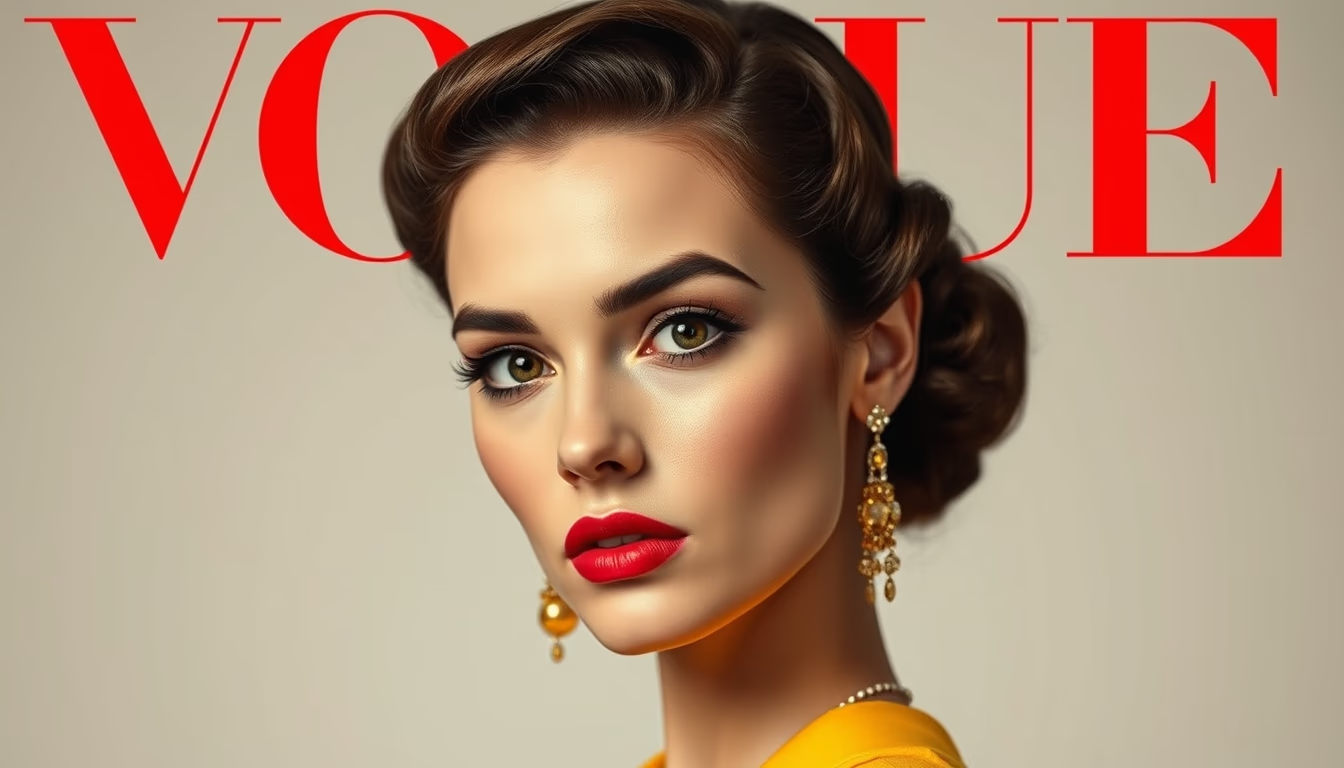
Vogue 1950s cover
1344×768 · AVIF · CC BY 4.0
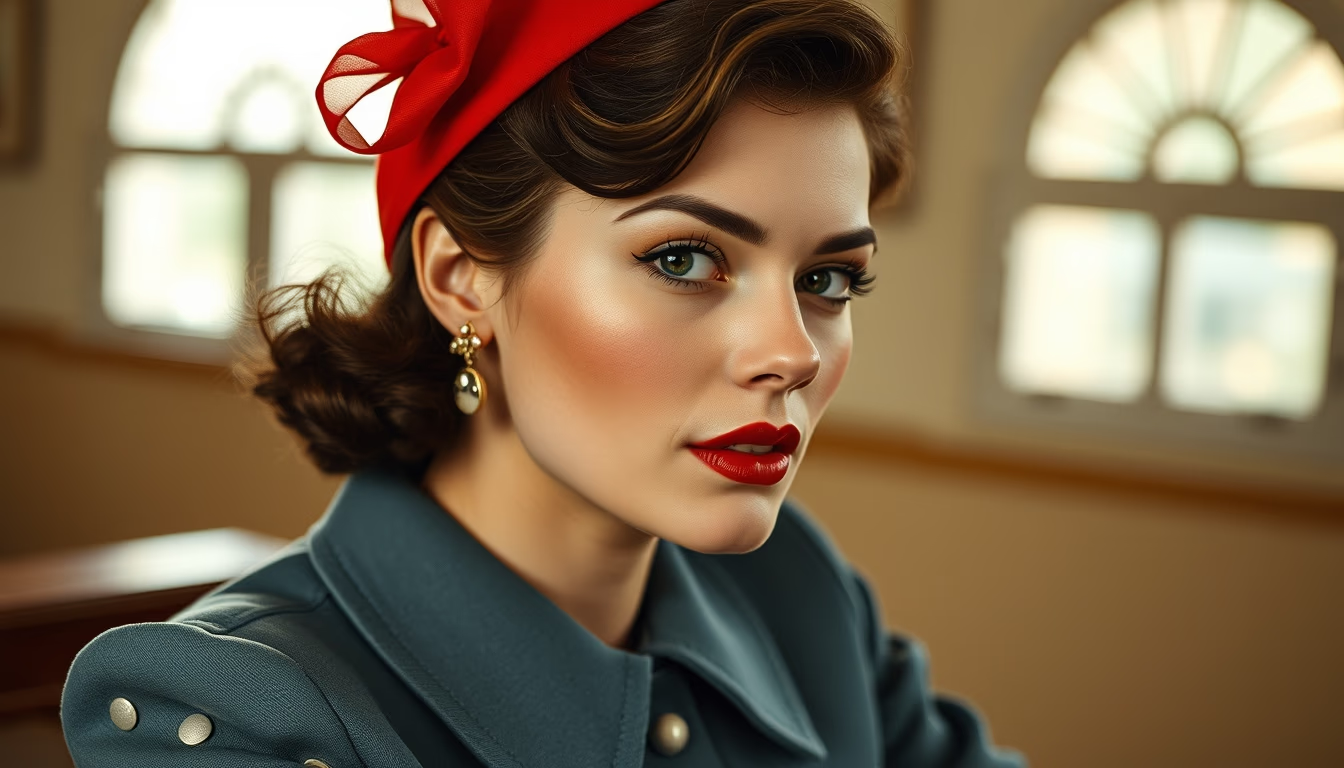
The Vogue 1950s cover reflects post-war elegance and glamour, with illustrations and photographs that defined the fashion of the era.
About this subject
Vogue, founded in 1892, became the leading international fashion barometer. During the 1950s, the magazine underwent a significant visual transformation, gradually shifting from illustrations to photography. Covers by Irving Penn and Richard Avedon captured Christian Dior's New Look silhouette, which dominated the decade with nipped waists and full skirts. These images not only sold clothes but projected an aspirational lifestyle for the American and European middle class.
The post-war historical context directly influenced editorial content. Economic prosperity and the rediscovery of luxury boosted fashion consumption. Vogue began featuring fashion editorials in exotic locations, with models like Dovima and Suzy Parker. The typical 1950s cover showed a model in a sophisticated pose, often with an elegant hat or gloves, against neutral backgrounds or minimalist sets.
Beyond fashion, 1950s Vogue also covered art, culture, and society. Writers like Truman Capote and artists like Salvador Dalí contributed to the magazine. Each cover was carefully composed to convey refinement and modernity. To this day, these covers serve as benchmarks for graphic and advertising design, influencing contemporary creators.
Frequently Asked Questions
What was the predominant style on Vogue covers in the 1950s?
The predominant style was Christian Dior's New Look, with nipped waists and full skirts, combined with elegant accessories like hats and gloves. Covers often featured models in sophisticated poses against minimalist backgrounds.
Who were some iconic photographers who worked for Vogue in the decade?
Irving Penn and Richard Avedon were two of the most influential photographers. Penn was known for minimalist portraits and still lifes, while Avedon revolutionized fashion photography with movement and unusual locations.
How did Vogue covers reflect the social changes of the era?
The 1950s cover reflected post-war optimism and the rediscovery of luxury, with an aspirational aesthetic aimed at the middle class. It also began to include greater model diversity and cultural themes such as art and literature.
Direct URL
https://pub-c7d6a6ea828543ac903a74a341ccb2e1.r2.dev/imagens/vogue-1950s-cover-documentary-photography-fresh16.avifHow to credit
Include a visible link back to UtilizAí. Copy one of the snippets below:
<a href="https://xn--utiliza-eza.com/en/midia/imagens/vogue-1950s-cover-documentary-photography-fresh16">Vogue 1950s cover</a> by <a href="https://xn--utiliza-eza.com">UtilizAí</a>, licensed under <a href="https://creativecommons.org/licenses/by/4.0/">CC BY 4.0</a>.
[Vogue 1950s cover](https://xn--utiliza-eza.com/en/midia/imagens/vogue-1950s-cover-documentary-photography-fresh16) by [UtilizAí](https://xn--utiliza-eza.com), CC BY 4.0
License: CC-BY-4.0