Viking longship replica
1344×768 · AVIF · CC BY 4.0
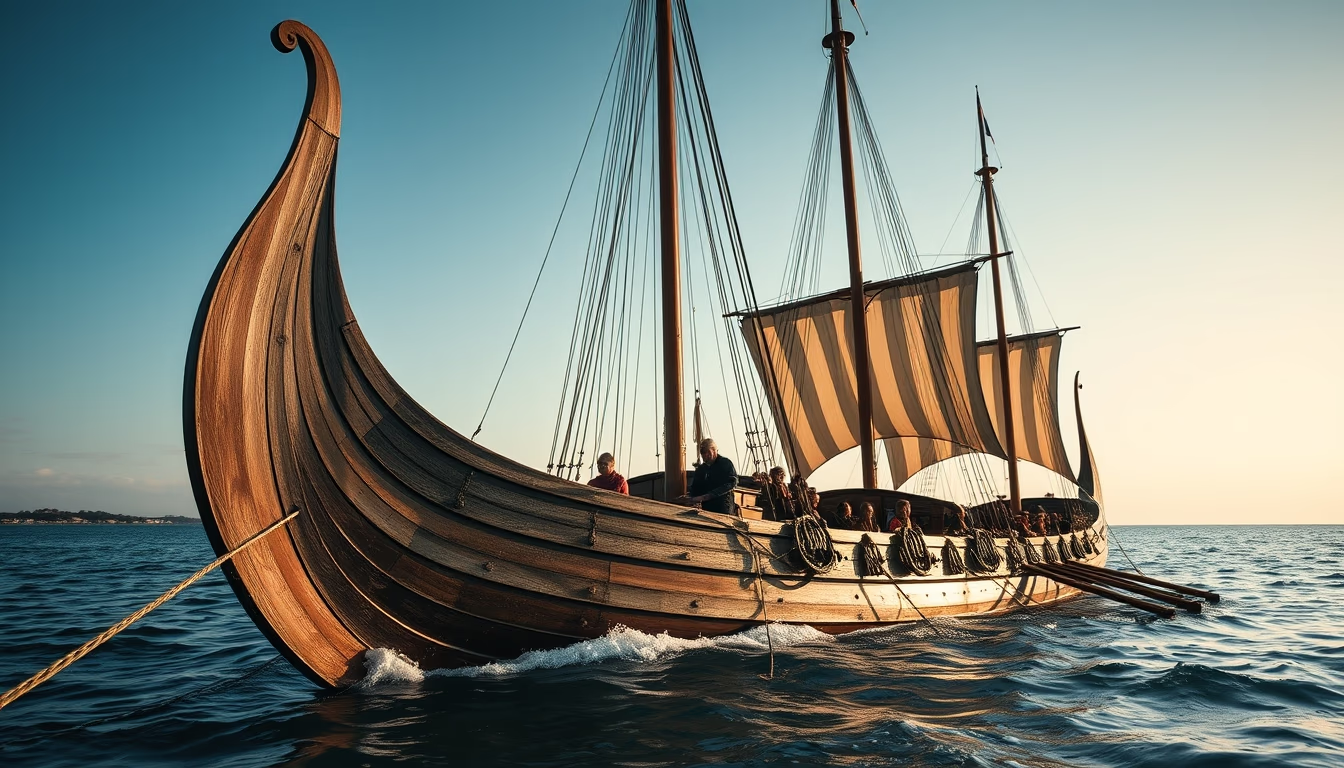
A replica Viking longship, built with traditional techniques, reveals the naval engineering of the Scandinavians who dominated the seas from the 8th to the 11th century.
About this subject
Viking longships, known as 'longships' or 'drakkars', were the peak of naval technology during the Viking Age (793-1066 AD). They combined speed, flexibility, and the ability to navigate both open sea and shallow rivers, enabling raids, trade, and exploration. Modern replicas, like the one shown here, are built using historical methods: overlapping oak planks (clinker), iron rivets, and a single square sail made of wool. The most famous sailable replica, 'Havhingsten fra Glendalough' (Sea Stallion from Glendalough), was launched in Denmark in 2004 and measures 30 meters in length, with capacity for 60 rowers.
These vessels were symbols of power and status. Viking chieftains were often buried with their ships, as in the famous Gokstad burial in Norway, where a 23-meter ship was preserved in clay since the 9th century. Building replicas is not just an archaeological exercise; it helps understand real sailing conditions. In 2007, a replica named 'Sea Stallion' sailed from Denmark to Dublin, Ireland, covering 1,500 km, proving that Vikings could cross the North Atlantic. The oak wood was treated with pine tar for waterproofing, and linen or wool fibers for sails were dyed with natural pigments.
Interestingly, the hull design, with a shallow keel and symmetrical bow and stern, allowed the ship to reverse direction quickly without turning, a tactical advantage in river battles. Modern replicas also reveal ergonomic details: the oars varied in length and position to balance the crew's strength. Today, museums in Scandinavia display these replicas at annual Viking festivals, such as the Moesgaard Viking Moot in Denmark, where visitors can row and learn about life on board.
The legacy of longships extends beyond archaeology. They have inspired modern yacht designs and even the shape of some rescue boats. The replica depicted, likely in a museum or historical event, stands as a testament to the skill and daring of Norse seafarers, who reached Constantinople, Greenland, and North America centuries before Columbus.
Frequently Asked Questions
How did the Vikings build their ships?
The Vikings used the clinker technique, with overlapping oak planks fastened by iron rivets. The hull was waterproofed with pine tar and moss. The keel was carved from a single tree, and the sail was made of wool or linen.
What are replica Viking longships used for?
Replicas are faithful reconstructions based on archaeological finds like the Gokstad or Oseberg ships. They are used for navigation research, museum displays, Viking festivals, and testing hypotheses about ocean-crossing capabilities.
What was the typical size of a Viking longship?
Longships ranged from 20 to 30 meters in length, with a beam of about 5 meters. The largest found, 'Roskilde 6', measured 36 meters. They could carry 30 to 80 warriors, depending on size.
Direct URL
https://pub-c7d6a6ea828543ac903a74a341ccb2e1.r2.dev/imagens/viking-longship-replica-national-geographic-style-p0.avifHow to credit
Include a visible link back to UtilizAí. Copy one of the snippets below:
<a href="https://xn--utiliza-eza.com/en/midia/imagens/viking-longship-replica-national-geographic-style-p0">Viking longship replica</a> by <a href="https://xn--utiliza-eza.com">UtilizAí</a>, licensed under <a href="https://creativecommons.org/licenses/by/4.0/">CC BY 4.0</a>.
[Viking longship replica](https://xn--utiliza-eza.com/en/midia/imagens/viking-longship-replica-national-geographic-style-p0) by [UtilizAí](https://xn--utiliza-eza.com), CC BY 4.0
License: CC-BY-4.0