Viking longship replica
1344×768 · AVIF · CC BY 4.0
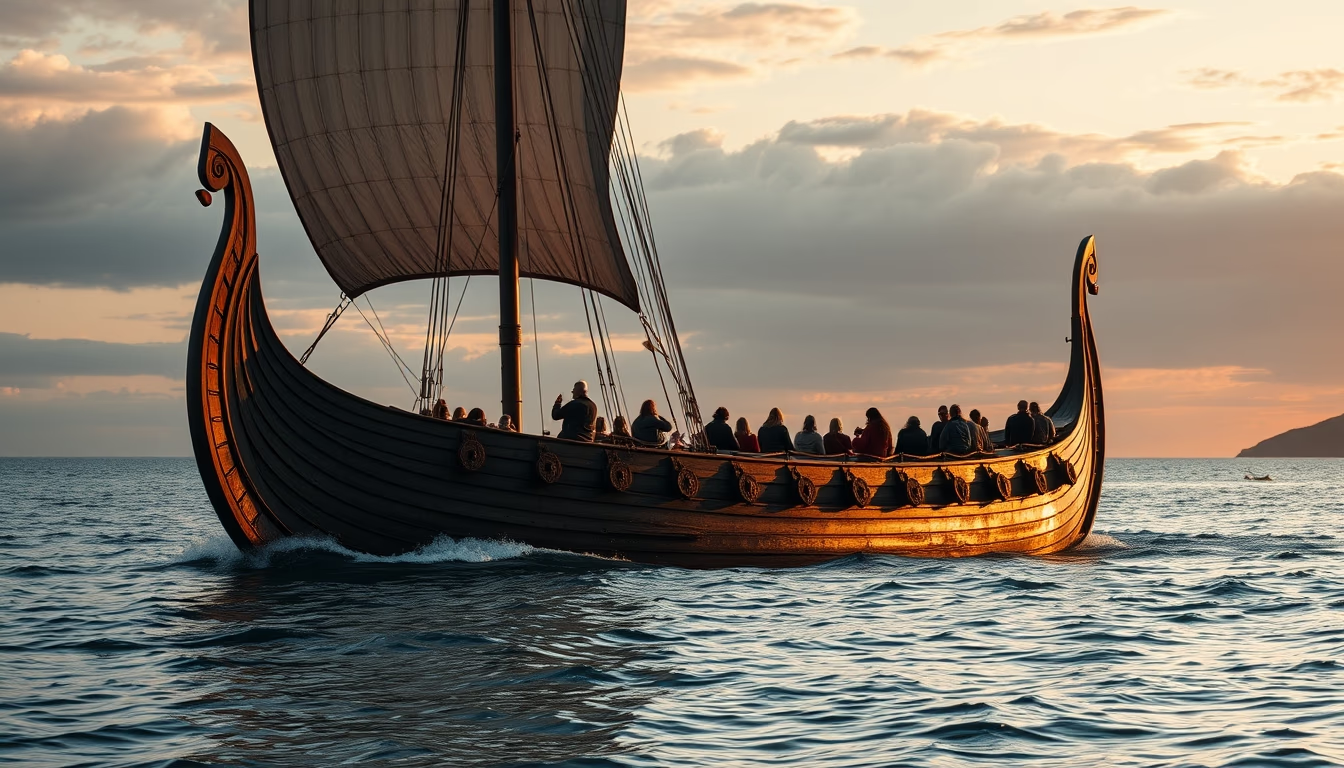
Replica of a Viking longship, the emblematic vessel of the Viking Age that revolutionized navigation and raids across Europe from the 8th to 11th centuries.
About this subject
Viking longships, also known as drakkars, were clinker-built vessels with long, narrow hulls designed for speed and agility in both open seas and shallow rivers. Constructed from overlapping oak planks, these ships were lightweight and flexible, reaching speeds of up to 15 knots. The iconic high curved prow, often carved with dragon or serpent heads, served as a psychological weapon against enemies and as a symbol of Norse power.
These ships were vital to Viking expeditions that, from the sacking of Lindisfarne in 793 to the Battle of Stamford Bridge in 1066, ranged from Greenland to Constantinople. Their shallow draft allowed surprise raids on monasteries and villages along European coasts, while also facilitating trade with the East via Russian rivers. Some larger vessels could carry up to 60 rowers and an additional 30 crew members.
Despite their warlike reputation, longships were also used for peaceful purposes such as transporting settlers, livestock, and goods. Modern replica building keeps the Norse shipbuilding tradition alive; replicas participate in Viking festivals across Scandinavia. One famous example is the Danish 'Havhingsten fra Glendalough' (Sea Stallion from Glendalough), a 30-meter replica that crossed the Atlantic in 2007.
Frequently Asked Questions
How did Vikings build their longships?
Longships were built using overlapping oak planks (clinker technique) fastened with iron rivets. The hull was reinforced with internal ribs and caulked with wool or moss soaked in pitch to make it watertight.
What was the typical speed of a Viking longship?
Under favorable conditions, a longship could reach 5-10 knots under oars and up to 15 knots under sail. The combination of oars and a square sail allowed sailing even against the wind.
Did Viking longships have a rudder?
Yes, they used a side-mounted steering oar (styra) on the starboard side, controlled by a tiller. This system provided superior maneuverability in shallow waters and rivers.
Direct URL
https://pub-c7d6a6ea828543ac903a74a341ccb2e1.r2.dev/imagens/viking-longship-replica-cinematic-wide-shot-p11.avifHow to credit
Include a visible link back to UtilizAí. Copy one of the snippets below:
<a href="https://xn--utiliza-eza.com/en/midia/imagens/viking-longship-replica-cinematic-wide-shot-p11">Viking longship replica</a> by <a href="https://xn--utiliza-eza.com">UtilizAí</a>, licensed under <a href="https://creativecommons.org/licenses/by/4.0/">CC BY 4.0</a>.
[Viking longship replica](https://xn--utiliza-eza.com/en/midia/imagens/viking-longship-replica-cinematic-wide-shot-p11) by [UtilizAí](https://xn--utiliza-eza.com), CC BY 4.0
License: CC-BY-4.0