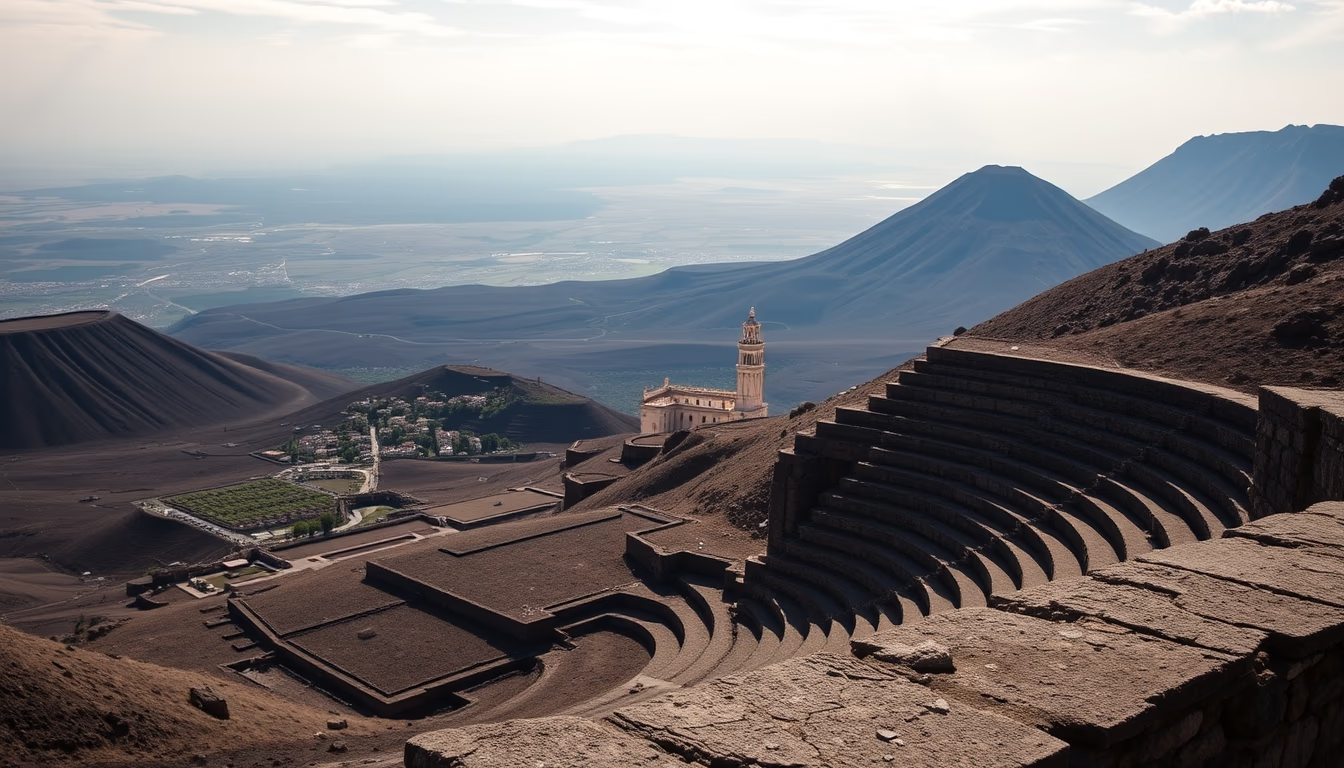
Vesuvius pompeii view
1344×768 · AVIF · CC BY 4.0
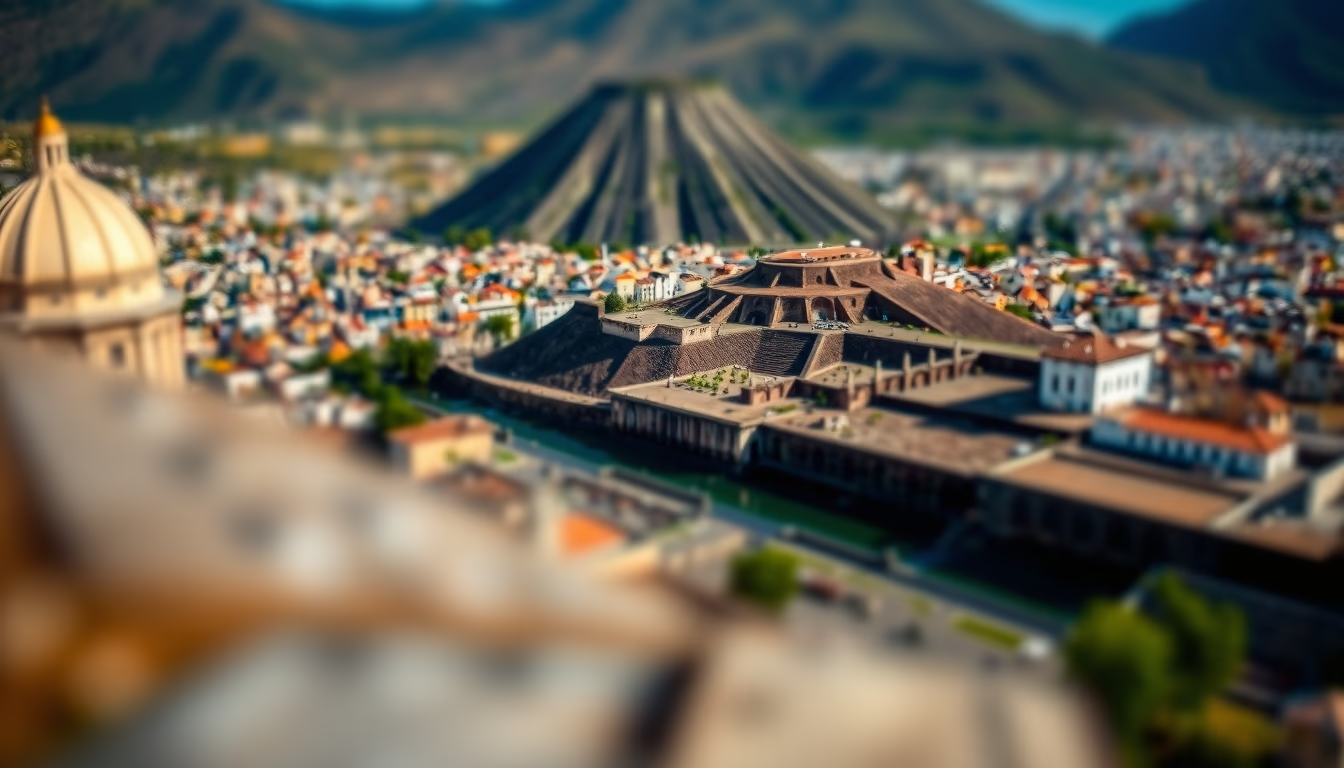
Mount Vesuvius is one of the most famous volcanoes in the world, known for the 79 AD eruption that destroyed Pompeii and Herculaneum.
About this subject
Mount Vesuvius is a stratovolcano located on the Gulf of Naples in Italy. It is the only active volcano on the European mainland and lies within Vesuvius National Park. Its most famous eruption occurred in 79 AD, when a violent explosion blanketed the Roman cities of Pompeii and Herculaneum with a thick layer of ash and pumice. This event was witnessed and documented by Pliny the Younger, whose letters provide a detailed account of the catastrophe. An estimated 10,000 to 20,000 people died, and the cities remained buried for centuries, preserving buildings, objects, and even bodies in their fleeing poses.
Today, Vesuvius is considered one of the most dangerous volcanoes in the world due to the high population density around it. About 3 million people live in the immediate danger zone, including the city of Naples. The volcano is constantly monitored by the Vesuvius Observatory, which uses seismographs and sensors to detect signs of activity. The last eruption occurred in 1944 during World War II, causing significant damage to nearby villages. Since then, the volcano has been in a state of rest, but experts warn that a new eruption is inevitable at some point in the future.
The name Vesuvius derives from the Latin Vesuvius, possibly related to the word vesta meaning fire, or the Oscan term fesf meaning smoke. The mountain has a distinctive double summit: Monte Somma, an ancient partially collapsed cone, and Gran Cono, the current active cone. The volcanic landscape is rich in fumaroles and solidified lava fields. Vesuvius National Park, established in 1995, protects local flora and fauna and offers hiking trails for visitors who wish to explore the crater. The view from the top spans the Gulf of Naples, the Sorrento Peninsula, and on clear days, the island of Capri.
Beyond the 79 AD eruption, Vesuvius has had other significant eruptions, such as those in 1631, 1794, and 1906. The 1631 eruption was particularly devastating, killing about 4,000 people and altering the region's landscape. Geological studies indicate that the volcano has gone through cycles of activity and repose over millennia. Excavations at Pompeii, which began in the 18th century, revolutionized knowledge of ancient Roman life, revealing frescoes, mosaics, and everyday objects perfectly preserved. Today, the Pompeii archaeological site is a UNESCO World Heritage site and attracts millions of tourists annually.
Frequently Asked Questions
What was the most famous eruption of Vesuvius?
The most famous eruption was in 79 AD, which destroyed the Roman cities of Pompeii and Herculaneum, burying them under ash and pumice.
Is Vesuvius still active?
Yes, Vesuvius is an active volcano, but it is currently dormant. The last eruption occurred in 1944.
How many people died in the 79 AD eruption?
An estimated 10,000 to 20,000 people died, although the exact number is uncertain.
Direct URL
https://pub-c7d6a6ea828543ac903a74a341ccb2e1.r2.dev/imagens/vesuvius-pompeii-view-tilt-shift-miniature-fresh8.avifHow to credit
Include a visible link back to UtilizAí. Copy one of the snippets below:
<a href="https://xn--utiliza-eza.com/en/midia/imagens/vesuvius-pompeii-view-tilt-shift-miniature-fresh8">Vesuvius pompeii view</a> by <a href="https://xn--utiliza-eza.com">UtilizAí</a>, licensed under <a href="https://creativecommons.org/licenses/by/4.0/">CC BY 4.0</a>.
[Vesuvius pompeii view](https://xn--utiliza-eza.com/en/midia/imagens/vesuvius-pompeii-view-tilt-shift-miniature-fresh8) by [UtilizAí](https://xn--utiliza-eza.com), CC BY 4.0
License: CC-BY-4.0