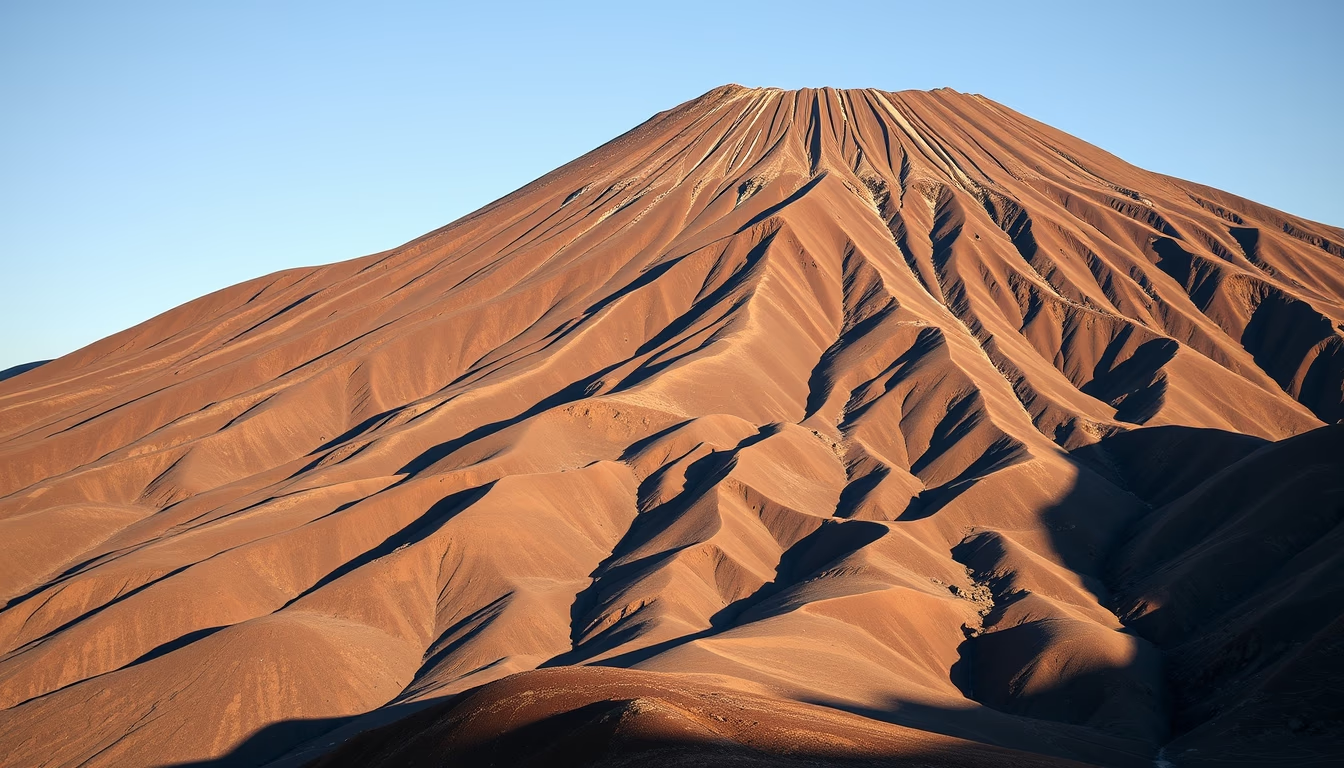
Kilauea hawaii lava flow
1344×768 · AVIF · CC BY 4.0
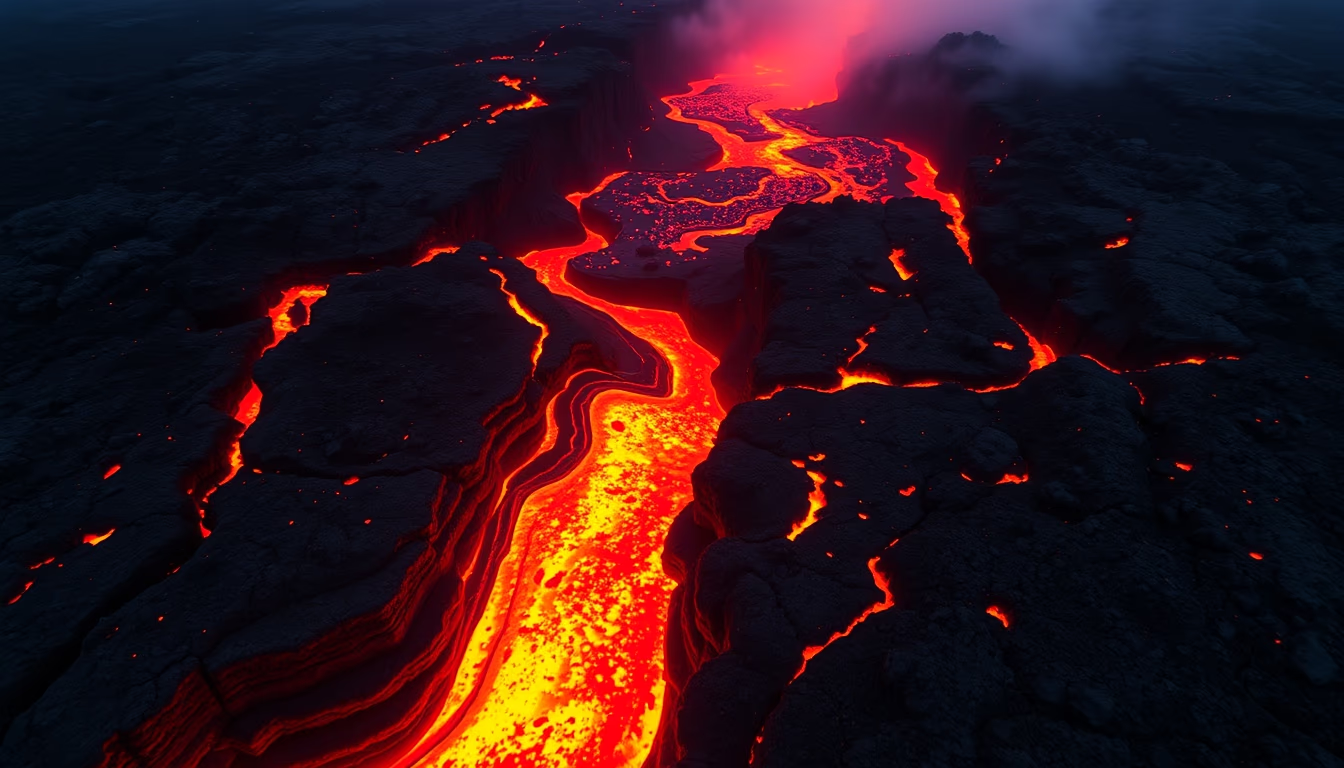
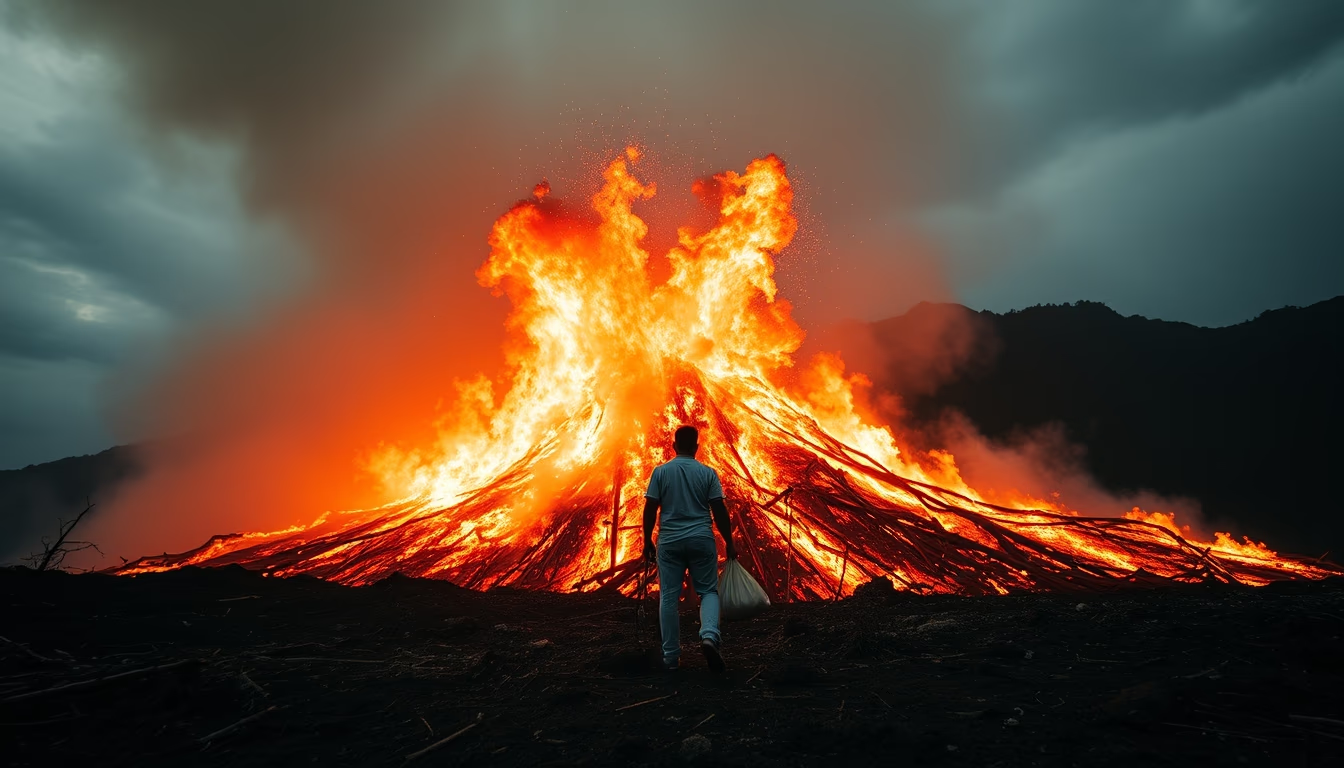
Kilauea volcano in Hawaii is one of the most active volcanoes on Earth, with lava flows that shape the landscape and local culture.
About this subject
Kilauea is a shield volcano located on the Big Island of Hawaii, within Hawaii Volcanoes National Park. Its nearly continuous eruption since 1983, with pauses, has produced basaltic lava flows that advance slowly toward the ocean, creating new land and fueling Hawaiian legends. The goddess Pele, who dwells in Kilauea, is revered as the creator of the islands, and eruptions are considered sacred events.
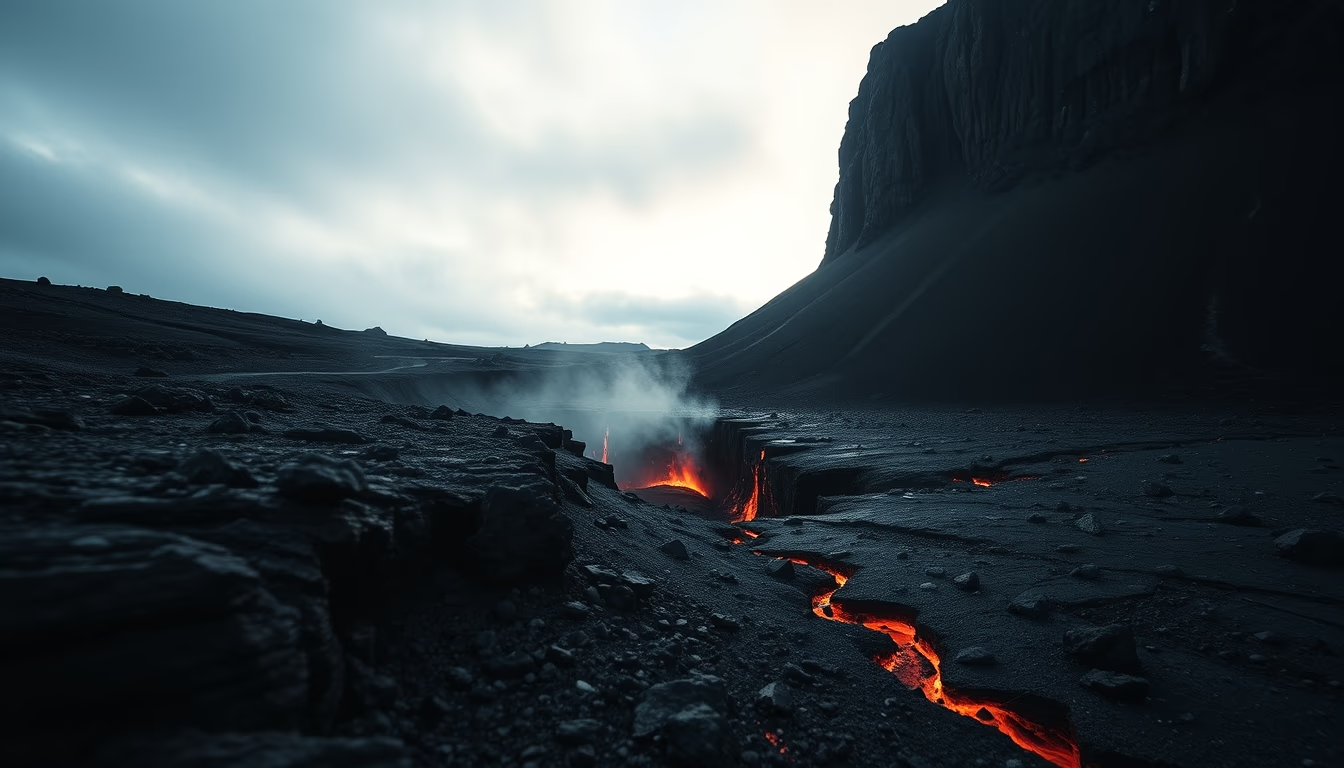
Kilauea's lava flows are mainly of the pahoehoe (smooth) and aa (rough) types, with temperatures between 1100°C and 1200°C. The most recent eruption, which began in September 2021 within Halemaʻumaʻu crater, created an active lava lake, drawing scientists and tourists. Geological studies show that Kilauea is about 300,000 years old, relatively young, and its activity is linked to the Hawaiian hotspot, a mantle plume.
Culturally, Kilauea is a site for offerings and rituals. Native Hawaiians collect solidified lava for carvings and believe that Pele protects the island. At the same time, lava flows pose risks: they destroyed hundreds of homes in past eruptions, such as in 2018 when the lower East Rift Zone eruption devastated neighborhoods and altered the coastline. This duality of creation and destruction makes Kilauea a powerful symbol of natural force.
Scientifically, Kilauea is continuously monitored by the Hawaiian Volcano Observatory (HVO) using seismographs, GPS, and satellite imagery to forecast eruptions. Lava flows through underground tubes, traveling kilometers before emerging, and upon entering the ocean, releases acidic steam and forms new rock platforms. This constant process adds area to the island and renews the ecosystem, with pioneer plants colonizing the volcanic soil.
Frequently Asked Questions
Is Kilauea currently erupting?
Yes, since September 2021, Kilauea has been erupting within Halemaʻumaʻu crater, with an active lava lake. Its status is monitored daily by the Hawaiian Volcano Observatory.
Is it safe to visit Kilauea to see lava?
Yes, Hawaii Volcanoes National Park offers safe viewing points, but access may be limited due to volcanic gas emissions and unstable terrain. It is essential to follow ranger instructions.
What is the difference between pahoehoe and aa lava?
Pahoehoe lava has a smooth, ropy surface, while aa is rough and fragmented with jagged blocks. Both have the same composition but differ in cooling rate and viscosity.
Direct URL
https://pub-c7d6a6ea828543ac903a74a341ccb2e1.r2.dev/imagens/kilauea-hawaii-lava-flow-fine-art-photography-fresh17.avifHow to credit
Include a visible link back to UtilizAí. Copy one of the snippets below:
<a href="https://xn--utiliza-eza.com/en/midia/imagens/kilauea-hawaii-lava-flow-fine-art-photography-fresh17">Kilauea hawaii lava flow</a> by <a href="https://xn--utiliza-eza.com">UtilizAí</a>, licensed under <a href="https://creativecommons.org/licenses/by/4.0/">CC BY 4.0</a>.
[Kilauea hawaii lava flow](https://xn--utiliza-eza.com/en/midia/imagens/kilauea-hawaii-lava-flow-fine-art-photography-fresh17) by [UtilizAí](https://xn--utiliza-eza.com), CC BY 4.0
License: CC-BY-4.0