Vesuvius pompeii view
1344×768 · AVIF · CC BY 4.0
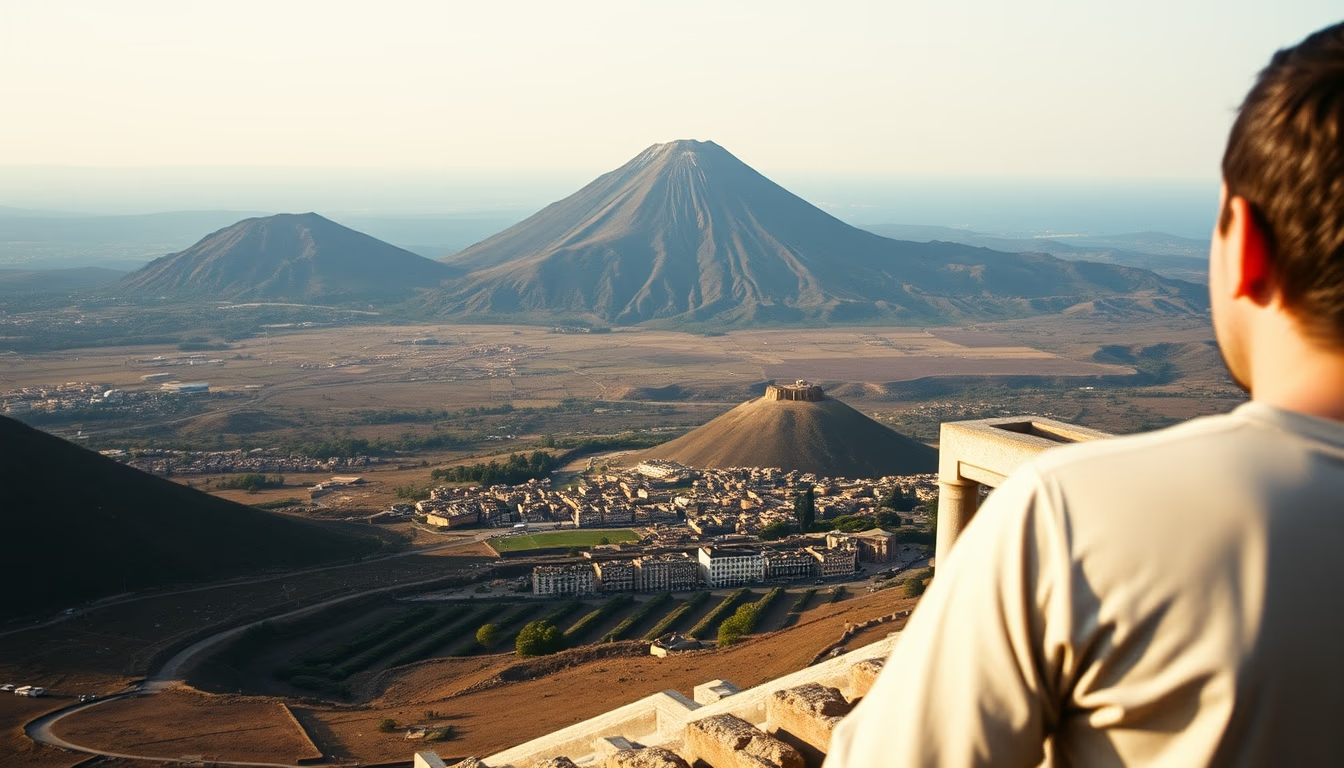
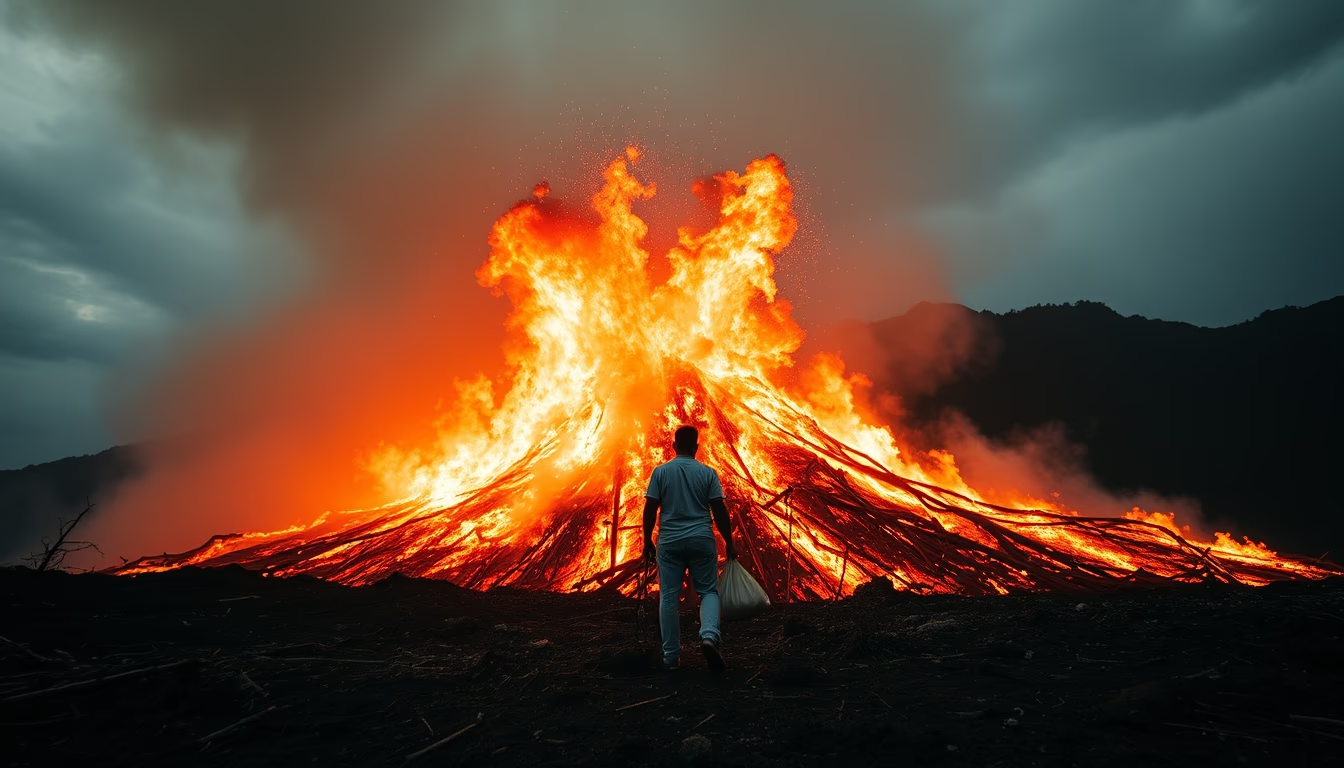
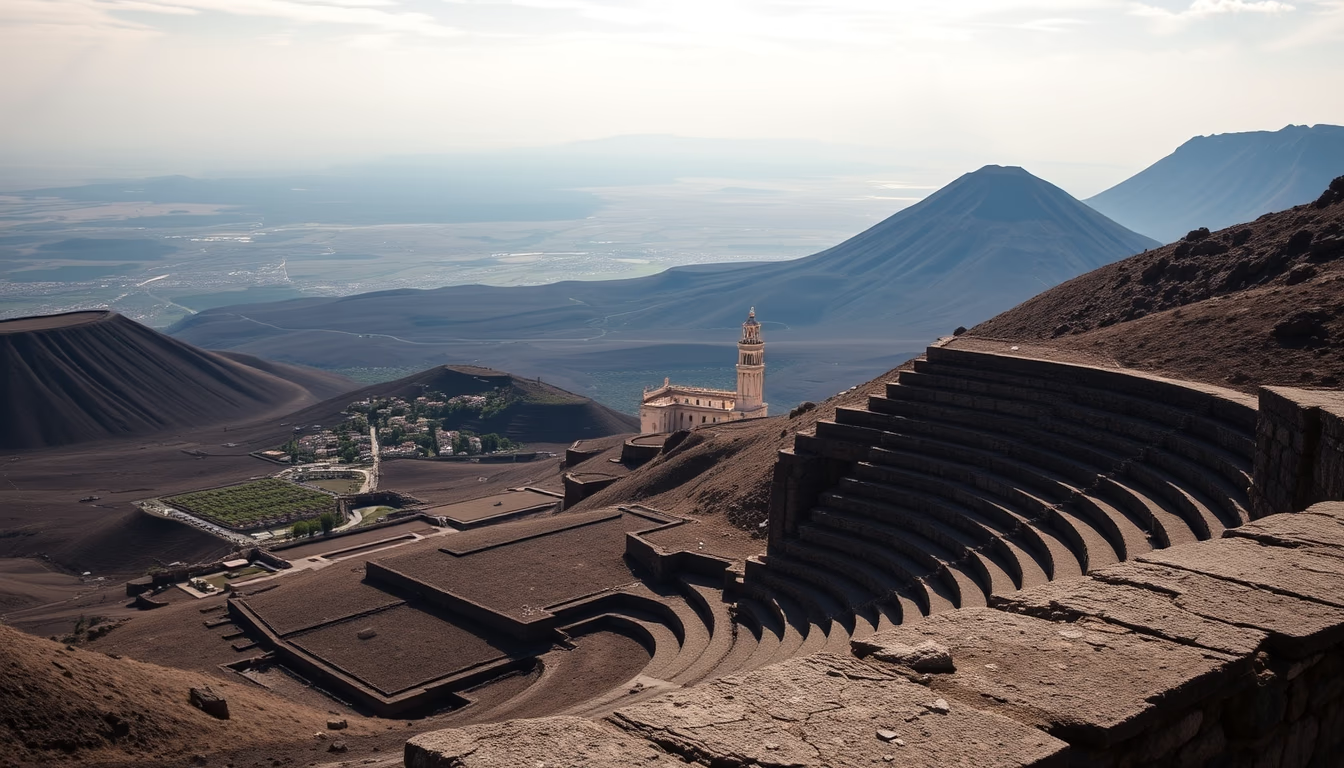
Mount Vesuvius, the volcano that destroyed Pompeii in 79 AD, looms behind the ruins of the Roman city, one of the world's most visited archaeological sites.
About this subject
Mount Vesuvius is an active volcano in the Campania region of Italy, about 9 km from Naples. Its most famous eruption occurred on August 24, 79 AD, when a pyroclastic cloud buried the Roman cities of Pompeii, Herculaneum, Stabiae, and Oplontis. The event was documented by Pliny the Younger, who described the column of ash and pumice. The eruption released energy equivalent to 100,000 Hiroshima atomic bombs, killing thousands. Ash preserved streets, houses, frescoes, and bodies in fleeing poses, providing a unique snapshot of 1st-century Roman life.
Today, Vesuvius is a UNESCO World Heritage Site and part of Vesuvius National Park, established in 1995. The volcano stands about 1,281 meters high, though its height varies with eruptions. The crater is roughly 450 meters in diameter. Although dormant since 1944, it is considered one of the world's most dangerous volcanoes due to the dense population around it, with over 3 million people living in the risk zone. The slopes are fertile, with vineyards producing grapes for Lacryma Christi wine, and the landscape is marked by contrasts between green plantations and dark volcanic soil.
The view of Vesuvius from Pompeii is iconic. The ruins, such as the Forum, the Amphitheatre, and the House of the Faun, offer a panorama where the volcano dominates the background. This perspective connects visitors to the historical drama and the power of nature. The site attracts about 2.5 million tourists annually, who walk along ancient basalt streets and imagine the day of the eruption. Local guides often point to Vesuvius as a constant reminder of the geological force that shaped the region.
Beyond historical value, Vesuvius serves as a laboratory for volcanologists. Studies of past eruptions help predict future risks. The 79 AD eruption is classified as Plinian, with an eruptive column up to 33 km high. Ash fell as far as Egypt and Syria. Pompeii, rediscovered in the 16th century and systematically excavated from 1748, continues to reveal new finds. In 2020, archaeologists unearthed a thermopolium (snack bar) with colorful frescoes and food remains, showing how volcanic ash preserved everyday Roman life.
Frequently Asked Questions
What caused the destruction of Pompeii?
The eruption of Mount Vesuvius in 79 AD, which released a pyroclastic cloud of ash, gases, and pumice, burying the city and killing its inhabitants.
Is Mount Vesuvius still active?
Yes, it is active but dormant since 1944. It is constantly monitored by the Vesuvius Observatory due to the risk it poses to the densely populated area.
Can you visit Vesuvius?
Yes, Vesuvius National Park allows visits to the crater via guided trails. Access is controlled and requires a ticket, but offers panoramic views of the Gulf of Naples.
Direct URL
https://pub-c7d6a6ea828543ac903a74a341ccb2e1.r2.dev/imagens/vesuvius-pompeii-view-film-grain-authentic-fresh2.avifHow to credit
Include a visible link back to UtilizAí. Copy one of the snippets below:
<a href="https://xn--utiliza-eza.com/en/midia/imagens/vesuvius-pompeii-view-film-grain-authentic-fresh2">Vesuvius pompeii view</a> by <a href="https://xn--utiliza-eza.com">UtilizAí</a>, licensed under <a href="https://creativecommons.org/licenses/by/4.0/">CC BY 4.0</a>.
[Vesuvius pompeii view](https://xn--utiliza-eza.com/en/midia/imagens/vesuvius-pompeii-view-film-grain-authentic-fresh2) by [UtilizAí](https://xn--utiliza-eza.com), CC BY 4.0
License: CC-BY-4.0