Tree rings cross section
1344×768 · AVIF · CC BY 4.0
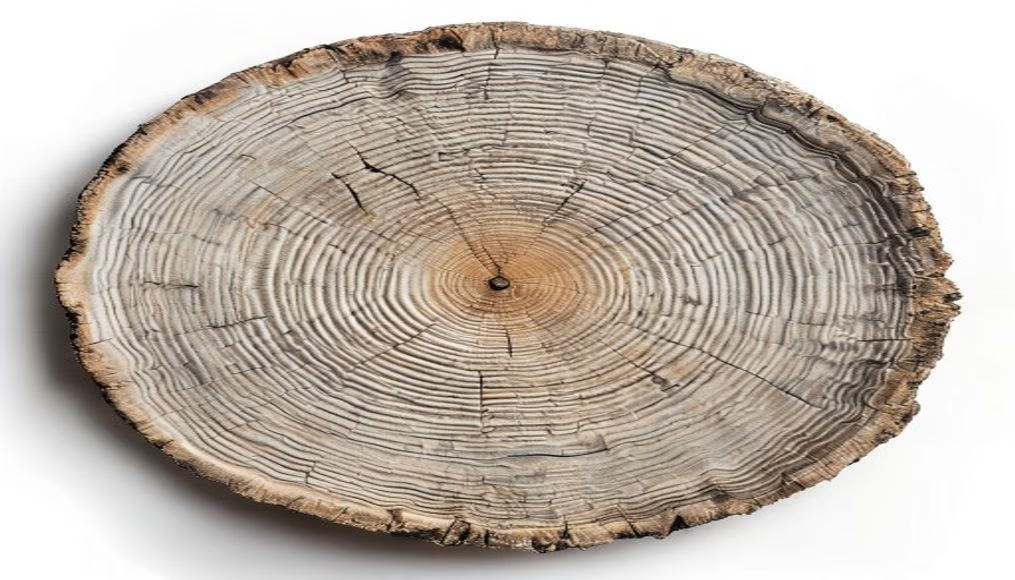
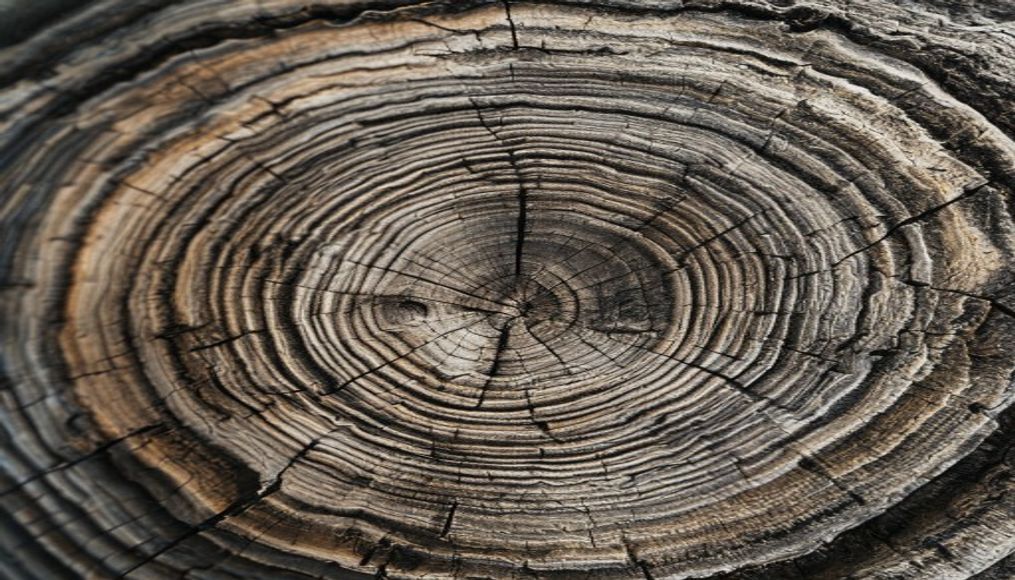
Cross-section of a tree trunk reveals growth rings recording climate history and tree age, essential for dendrochronological studies.
About this subject
Each ring visible in a cross-section of a tree trunk corresponds to one year of growth. In temperate climates, rings are formed by the alternation between springwood (large, light-colored cells) and summerwood (dense, dark cells). Ring width varies with environmental conditions: wet and sunny years produce wide rings, while droughts or frosts create narrow ones. This allows scientists to reconstruct climate histories spanning hundreds or thousands of years, a technique called dendrochronology.
Beyond dating wooden objects (e.g., beams in historical buildings), rings reveal events such as forest fires (scars), insect attacks, and even volcanic eruptions that reduced global sunlight. In Brazil, species like ipê and araucária also form rings, but in humid tropical climates seasonality is less pronounced, requiring isotopic analysis for differentiation.
Slow-growing trees (narrow rings) produce denser, stronger wood, prized in fine woodworking and musical instruments. The ring pattern influences the aesthetics of decorative veneers used in furniture and paneling. Radial, tangential, or cross-sectional cuts reveal unique patterns, concentric rings in cross-section are the most recognizable.
Fun fact: the study of rings from submerged or fossilized trees helps calibrate radiocarbon dating, providing an absolute chronology for the last 12,000 years. The European oak ring sequence, for example, forms a continuous reference since the Ice Age.
Frequently Asked Questions
How are tree growth rings formed?
In temperate climates, trees produce large, light-colored cells in spring (fast growth) and smaller, dark cells in summer (slow growth), forming one ring per year.
What is dendrochronology used for?
It is used to date wooden objects, reconstruct past climates, calibrate radiocarbon dating, and study events such as fires and volcanic eruptions.
Do tropical trees also form rings?
Yes, but in regions without a defined dry season, rings may be less distinct. In Brazil, species like ipê and mahogany display rings, though they require specialized reading techniques.
Direct URL
https://pub-c7d6a6ea828543ac903a74a341ccb2e1.r2.dev/imagens/tree-rings-cross-section-commercial-product-photography-p2.avifHow to credit
Include a visible link back to UtilizAí. Copy one of the snippets below:
<a href="https://xn--utiliza-eza.com/en/midia/imagens/tree-rings-cross-section-commercial-product-photography-p2">Tree rings cross section</a> by <a href="https://xn--utiliza-eza.com">UtilizAí</a>, licensed under <a href="https://creativecommons.org/licenses/by/4.0/">CC BY 4.0</a>.
[Tree rings cross section](https://xn--utiliza-eza.com/en/midia/imagens/tree-rings-cross-section-commercial-product-photography-p2) by [UtilizAí](https://xn--utiliza-eza.com), CC BY 4.0
License: CC-BY-4.0