Starry night van gogh style
1344×768 · AVIF · CC BY 4.0
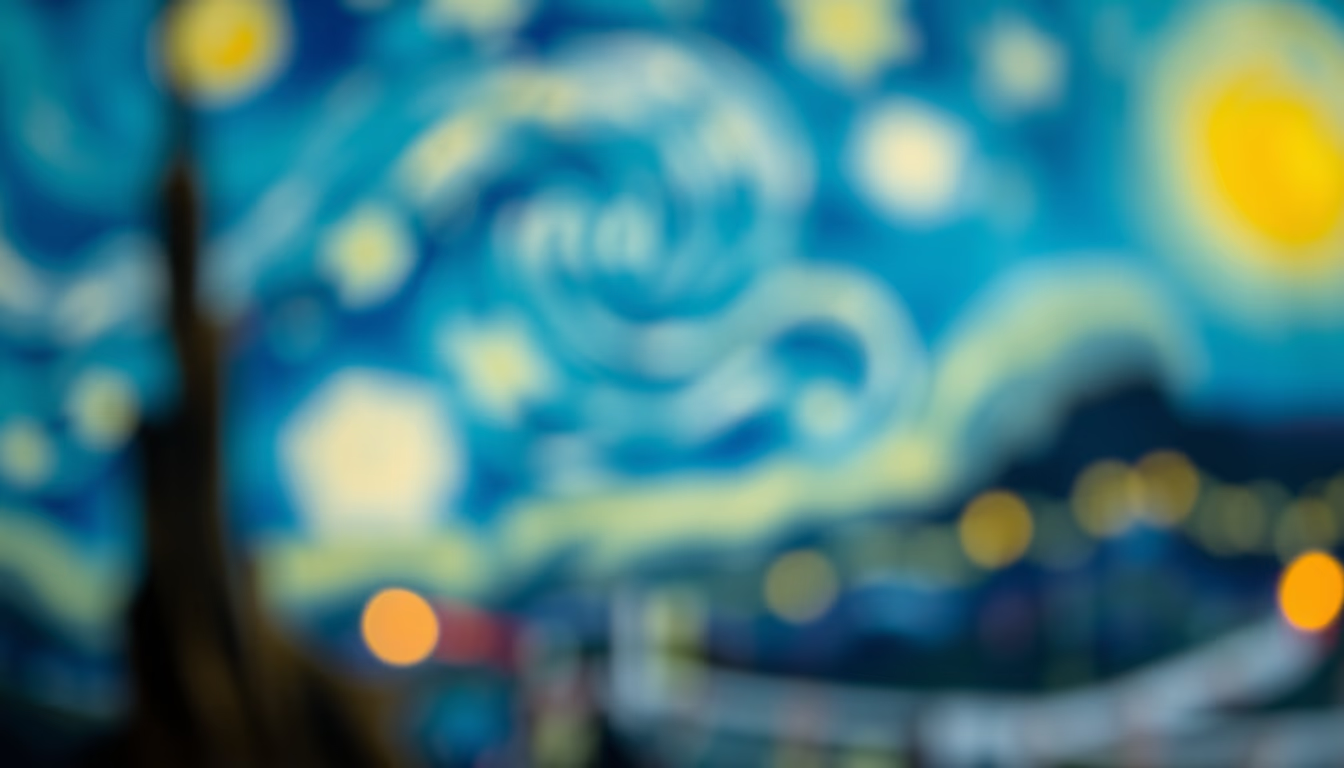
The Starry Night by Vincent van Gogh is one of the most iconic post-impressionist paintings, renowned for its swirling brushstrokes and vibrant colors that convey intense emotion.
About this subject
Vincent van Gogh painted The Starry Night in June 1889 while a patient at the asylum of Saint-Rémy-de-Provence in southern France. The work depicts the view from his bedroom window at dawn, which van Gogh transformed into an imaginative night scene with a turbulent sky full of swirling stars, a bright crescent moon, and a quiet village below. The cypress tree in the foreground, often linked to death and eternity, anchors the composition. The painting reflects the artist's emotional state as he sought solace in nature and art, while also revealing his fascination with the infinite and the cosmos.
Van Gogh's technique is characterized by thick, short brushstrokes of oil paint applied in heavy layers, creating a textured surface known as impasto. Colors are intense and unnatural: deep blues contrast with luminous yellows and whites. The circular motion of the brushstrokes in the sky, inspired by Japanese prints and observations of atmospheric swirls, gives the canvas a sense of dynamism and energy. Van Gogh also employed complementary contrasts to heighten visual impact, such as blue against the orange of the stars.
Culturally, The Starry Night has become a universal symbol of modern art, reproduced on posters, clothing, and objects. The painting has influenced musicians, filmmakers, and visual artists, and remains a frequent subject of academic study. The tilt-shift technique, which blurs parts of an image to simulate a miniature scene, offers an interesting reinterpretation: by applying the effect to a van Gogh work, the viewer perceives the landscape as if it were a scale model, highlighting the expressionist and almost theatrical nature of the original composition. This modern reinterpretation brings the public closer to the work in a playful way and invites a fresh appreciation of its details.
Frequently Asked Questions
Where and when did Van Gogh paint The Starry Night?
Van Gogh painted The Starry Night in June 1889 at the asylum of Saint-Rémy-de-Provence, France, during his voluntary stay.
What technique did Van Gogh use in the painting?
Van Gogh used short, thick oil paint strokes in impasto, contrasting colors, and circular motion to create texture and expressiveness, influenced by post-impressionism and Japanese art.
What is the tilt-shift effect and how does it relate to The Starry Night?
The tilt-shift effect is a photographic technique that blurs parts of an image to simulate a miniature scene. Applied to The Starry Night, it enhances the painting's expressionist and theatrical character, turning it into a kind of diorama.
Direct URL
https://pub-c7d6a6ea828543ac903a74a341ccb2e1.r2.dev/imagens/starry-night-van-gogh-style-tilt-shift-miniature-p7.avifHow to credit
Include a visible link back to UtilizAí. Copy one of the snippets below:
<a href="https://xn--utiliza-eza.com/en/midia/imagens/starry-night-van-gogh-style-tilt-shift-miniature-p7">Starry night van gogh style</a> by <a href="https://xn--utiliza-eza.com">UtilizAí</a>, licensed under <a href="https://creativecommons.org/licenses/by/4.0/">CC BY 4.0</a>.
[Starry night van gogh style](https://xn--utiliza-eza.com/en/midia/imagens/starry-night-van-gogh-style-tilt-shift-miniature-p7) by [UtilizAí](https://xn--utiliza-eza.com), CC BY 4.0
License: CC-BY-4.0