Starry night van gogh style
1344×768 · AVIF · CC BY 4.0
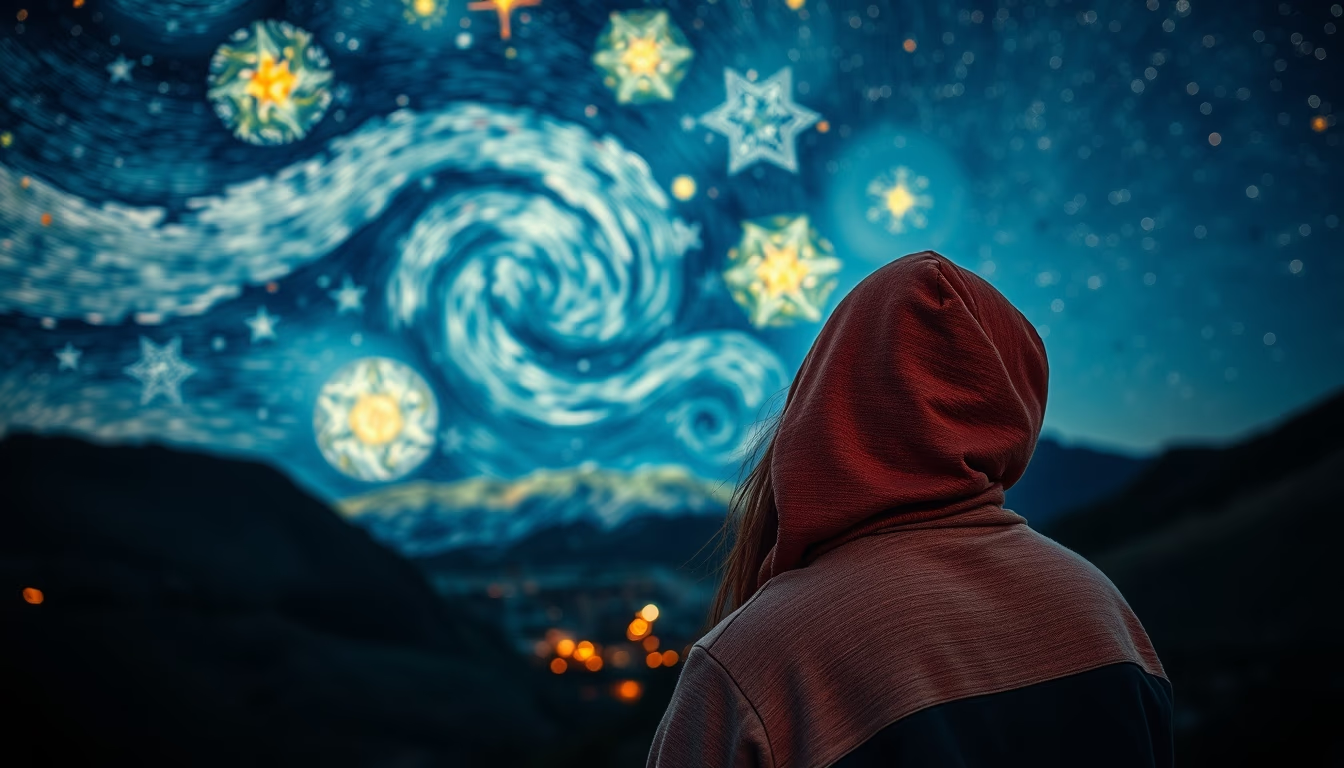
A long exposure photograph recreating the visual style of Vincent van Gogh's iconic 'Starry Night', blending modern technique with Post-Impressionist aesthetics.
About this subject
The painting 'Starry Night' (1889) is one of Vincent van Gogh's most recognized works, created during his stay at the asylum in Saint-Rémy-de-Provence. The canvas shows the view from his bedroom window, with a turbulent night sky filled with dynamic spirals and vibrant colors. Van Gogh used short, sinuous brushstrokes, characteristic of Post-Impressionism, to convey emotion and movement. The artwork has influenced generations of artists and become a cultural icon, frequently parodied and referenced in pop culture.
Long exposure photography is a technique that uses prolonged shutter speeds to capture movement, such as clouds or stars, creating smooth, fluid effects. To recreate the style of 'Starry Night', photographers adjust the camera for exposures of several seconds or minutes, deliberately moving the equipment to mimic van Gogh's wavy brushstrokes. The result is images with light trails and distortions that evoke the energy of the original painting.
The emulation process requires technical skill: the photographer must control aperture, ISO, and shutter speed, and use neutral density filters to allow longer exposures during daylight. Many artists combine digital cameras with post-processing to intensify colors and contrasts, approaching van Gogh's yellow-blue palette. This practice highlights how contemporary technology can pay homage to classic works, pushing the boundaries of artistic photography.
The connection between van Gogh and long exposure photography goes beyond aesthetics: both aim to capture the passage of time and the subjective perception of reality. While van Gogh painted his nocturnal visions with visceral emotion, the modern photographer uses optical science to record what is invisible to the naked eye. This intersection of manual and mechanical art reveals the human capacity to reinterpret the world, uniting centuries of visual history into a single image.
Frequently Asked Questions
What is Van Gogh's 'Starry Night' painting?
It is an 1889 Post-Impressionist work painted by Vincent van Gogh at the Saint-Rémy asylum. It depicts a turbulent night sky over an imaginary village, using expressive brushstrokes and intense colors.
How can long exposure photography imitate Van Gogh's style?
By moving the camera during the exposure, the photographer creates light trails and distortions that recall the curved, dynamic brushstrokes of 'Starry Night'. Techniques like panning and intentional zoom are also used.
Why is 'Starry Night' so important in art history?
The work represents the peak of Van Gogh's unique style, combining personal emotion with technical innovation. It influenced movements like Expressionism and became a symbol of the artist's struggle with mental illness.
Direct URL
https://pub-c7d6a6ea828543ac903a74a341ccb2e1.r2.dev/imagens/starry-night-van-gogh-style-long-exposure-p4.avifHow to credit
Include a visible link back to UtilizAí. Copy one of the snippets below:
<a href="https://xn--utiliza-eza.com/en/midia/imagens/starry-night-van-gogh-style-long-exposure-p4">Starry night van gogh style</a> by <a href="https://xn--utiliza-eza.com">UtilizAí</a>, licensed under <a href="https://creativecommons.org/licenses/by/4.0/">CC BY 4.0</a>.
[Starry night van gogh style](https://xn--utiliza-eza.com/en/midia/imagens/starry-night-van-gogh-style-long-exposure-p4) by [UtilizAí](https://xn--utiliza-eza.com), CC BY 4.0
License: CC-BY-4.0