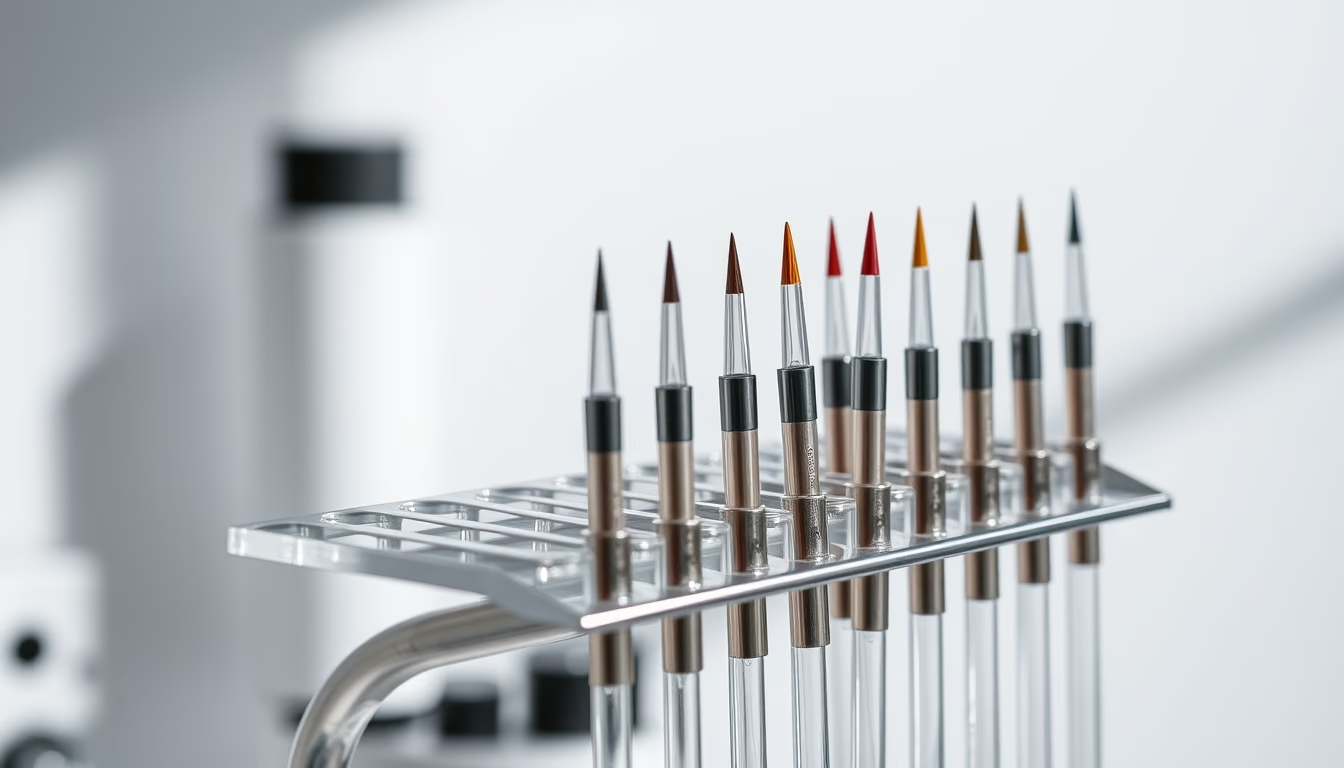
Spectrophotometer cuvettes
1344×768 · AVIF · CC BY 4.0
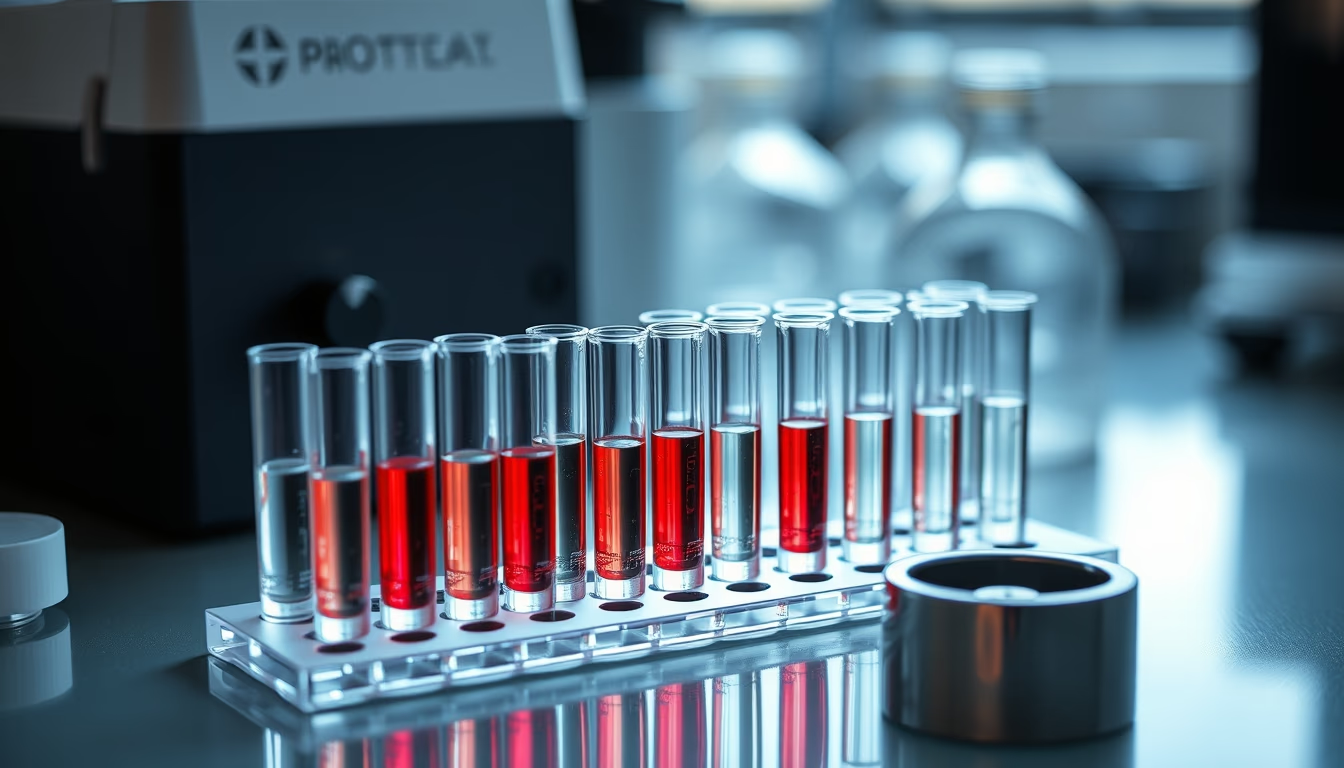
Cubetas de espectrofotômetro são recipientes de alta precisão usados para medir absorbância de amostras líquidas em análises químicas e biológicas.
Sobre o tema
Cubetas de espectrofotômetro, também chamadas de células ou cuvetes, são acessórios indispensáveis em laboratórios de química, bioquímica e biologia molecular. Fabricadas em materiais como quartzo, vidro ou polímeros ópticos (poliestireno, polimetilmetacrilato), cada tipo atende a faixas específicas de comprimento de onda. Cubetas de quartzo, por exemplo, são transparentes na região do ultravioleta (UV), enquanto as de vidro funcionam bem no visível (VIS) e as de plástico são descartáveis para ensaios rápidos.
A precisão das medições depende diretamente da qualidade da cubeta. A distância interna entre as faces paralelas, o caminho óptico, é padronizada em 10 mm na maioria dos espectrofotômetros, mas existem versões com 5 mm, 2 mm ou até 1 mm para amostras muito concentradas ou com alta absorção. Arranhões, manchas ou sujidades nas faces ópticas causam dispersão da luz e erros nos resultados, por isso a limpeza com solventes adequados é crucial.
No espectrofotômetro, a cubeta é posicionada no feixe de luz monocromática. A luz atravessa a amostra e parte é absorvida conforme a Lei de Beer-Lambert, relação linear entre concentração e absorbância. Para garantir essa linearidade, a cubeta deve estar perfeitamente alinhada e livre de bolhas. Em análises quantitativas, é comum usar uma cubeta de referência contendo apenas o solvente (branco) para zerar o equipamento antes de ler as amostras.
Cubetas de quartzo, por serem mais caras, requerem manuseio cuidadoso e nunca devem ser secadas em estufa ou lavadas com ácidos fortes. Já as cubetas de plástico descartável evitam contaminação cruzada e são ideais para rotinas de alto volume, como ensaios de ELISA ou cinéticas enzimáticas. Independentemente do material, o volume mínimo de amostra varia entre 0,5 mL e 2 mL, embora existam microcubetas para volumes abaixo de 100 µL, reduzindo o consumo de reagentes.
Perguntas frequentes
Qual a diferença entre cubetas de quartzo e de vidro?
Cubetas de quartzo são transparentes na faixa do UV (190-400 nm), enquanto as de vidro só funcionam a partir de ~320 nm. O quartzo é mais caro e resistente a temperaturas elevadas; o vidro é mais barato e adequado para medidas no visível.
Como limpar cubetas de espectrofotômetro corretamente?
Enxágue com água deionizada ou solvente orgânico (etanol, acetona) conforme a amostra. Use detergente neutro para sujidades persistentes, evitando abrasivos. Nunca seque em estufa; deixe secar ao ar ou com jato de ar comprimido. Para cubetas de quartzo, evite ácidos fluorídrico ou sulfúrico concentrado.
Posso usar cubetas de plástico para medições no UV?
Não. Plásticos comuns (poliestireno, PMMA) absorvem na faixa UV, bloqueando a luz. Só cubetas de quartzo ou polímeros especiais (como UV-grade methacrylate) funcionam abaixo de 300 nm. Sempre verifique a especificação do fabricante.
URL direta
https://pub-c7d6a6ea828543ac903a74a341ccb2e1.r2.dev/imagens/spectrophotometer-cuvettes-documentary-photography-fresh8.avifComo creditar
Inclua um link visível de volta pro UtilizAí. Copie um dos snippets abaixo:
<a href="https://xn--utiliza-eza.com/midia/imagens/spectrophotometer-cuvettes-documentary-photography-fresh8">Spectrophotometer cuvettes</a> by <a href="https://xn--utiliza-eza.com">UtilizAí</a>, licensed under <a href="https://creativecommons.org/licenses/by/4.0/">CC BY 4.0</a>.
[Spectrophotometer cuvettes](https://xn--utiliza-eza.com/midia/imagens/spectrophotometer-cuvettes-documentary-photography-fresh8) by [UtilizAí](https://xn--utiliza-eza.com), CC BY 4.0
Licença: CC-BY-4.0