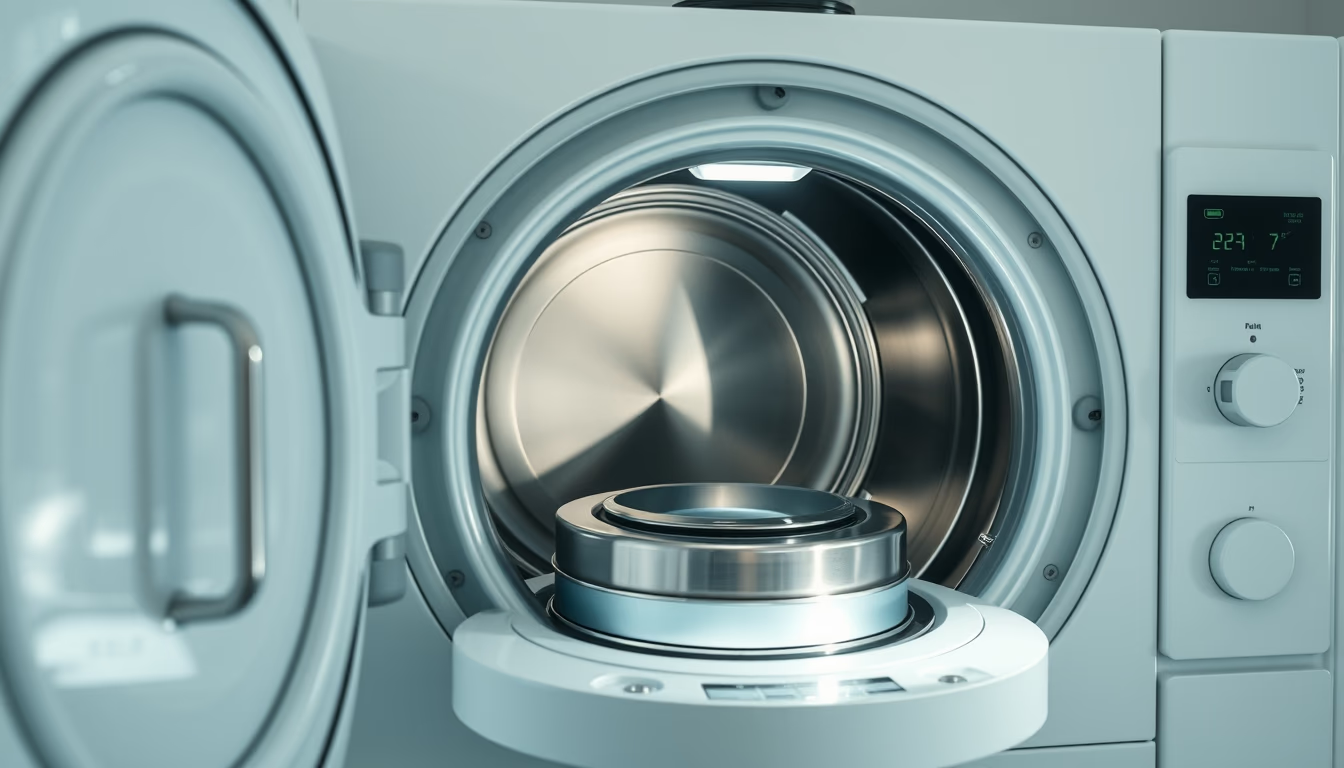
Fume hood chemistry
1344×768 · AVIF · CC BY 4.0

Fume hoods are essential equipment in chemistry laboratories to protect users from toxic fumes and hazardous reactions.
About this subject
The fume hood, also known as a laboratory chemical hood or exhaust hood, is a local ventilation device that removes hazardous vapors, gases, and dust from the workspace. Its operating principle relies on drawing contaminated air through a front opening, which is then filtered or expelled outside. Fume hoods are essential in chemistry, pharmacy, biology labs, and industries handling volatile or toxic substances. They prevent inhalation of carcinogens, corrosives, or flammables, ensuring operator and bystander safety.
There are various types, including forced draft, laminar flow, and recirculation hoods with activated carbon filters. The choice depends on chemical nature and usage frequency. Regulatory bodies like OSHA in the US and NR-9 in Brazil mandate adequate ventilation where chemical agents are emitted. The ABNT NBR 16370:2015 standard specifies requirements for these hoods in Brazil.
Regular maintenance is crucial: air flow rates, filter integrity, and alarm systems must be checked. A mis-calibrated hood can create a false sense of security. The sash height (front glass) influences containment effectiveness, and operators should keep it at the recommended position. In educational labs, students learn to handle substances inside the hood, embedding safety culture.
Modern designs incorporate flow sensors, audible alarms, and explosion-proof lighting. Portable fume hoods have also increased flexibility in temporary setups. However, even with advances, the hood does not replace personal protective equipment (PPE) like gloves and goggles. It remains a critical component in laboratory accident prevention.
Frequently Asked Questions
What is the difference between a fume hood and a laminar flow hood?
A fume hood exhausts contaminated air outside to protect the user, while a laminar flow hood filters air to prevent sample contamination. The former prioritizes operator safety, the latter protects sensitive materials.
How do you verify if a chemistry fume hood is working properly?
Check the air flow meter (anemometer), test the low-flow alarm, and inspect for exhaust blockages. Periodic containment tests using smoke or tracer gases are also recommended.
Is it mandatory to use a fume hood when handling strong acids?
Yes, concentrated acids like sulfuric and nitric release corrosive vapors, requiring a fume hood. Even dilute acids can be hazardous in large volumes, and the hood is the most effective control measure to prevent inhalation.
Direct URL
https://pub-c7d6a6ea828543ac903a74a341ccb2e1.r2.dev/imagens/fume-hood-chemistry-fine-art-photography-fresh18.avifHow to credit
Include a visible link back to UtilizAí. Copy one of the snippets below:
<a href="https://xn--utiliza-eza.com/en/midia/imagens/fume-hood-chemistry-fine-art-photography-fresh18">Fume hood chemistry</a> by <a href="https://xn--utiliza-eza.com">UtilizAí</a>, licensed under <a href="https://creativecommons.org/licenses/by/4.0/">CC BY 4.0</a>.
[Fume hood chemistry](https://xn--utiliza-eza.com/en/midia/imagens/fume-hood-chemistry-fine-art-photography-fresh18) by [UtilizAí](https://xn--utiliza-eza.com), CC BY 4.0
License: CC-BY-4.0