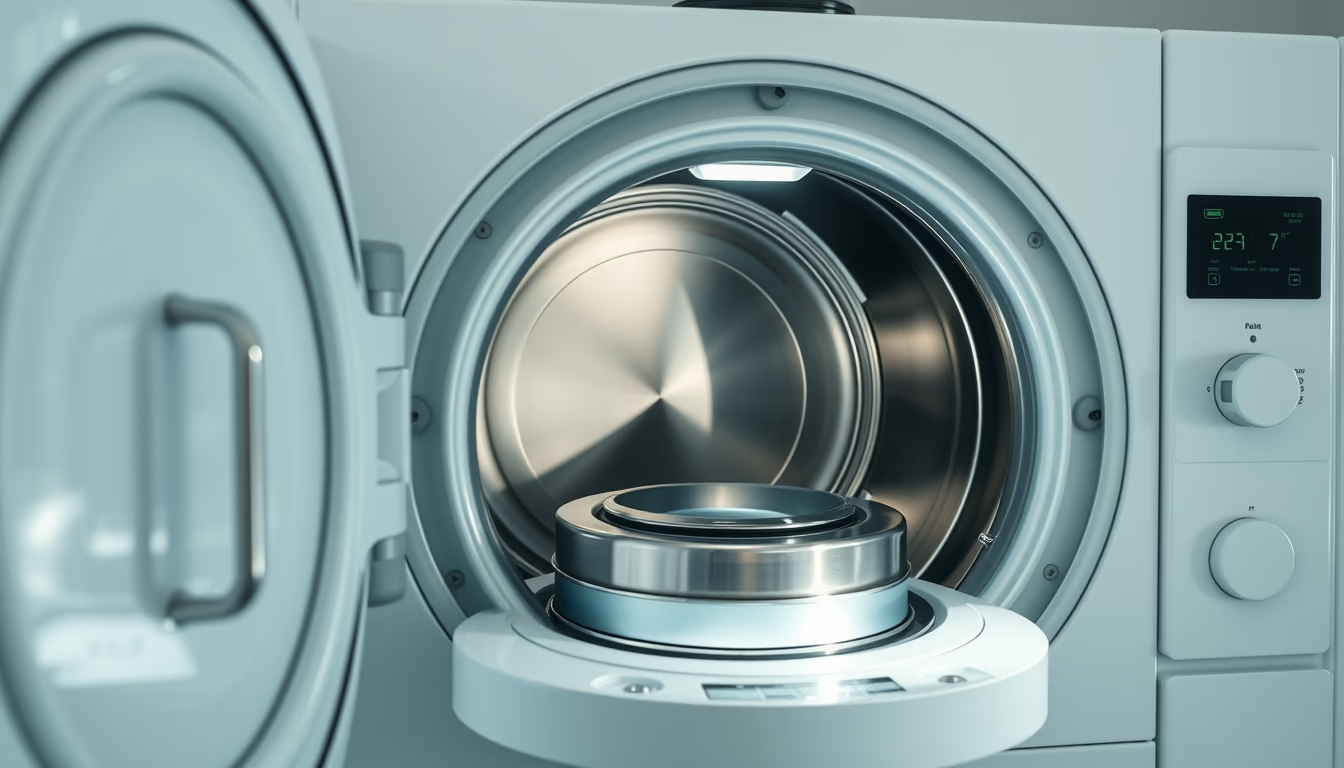
Rotovap evaporator
1344×768 · AVIF · CC BY 4.0

The rotovap evaporator, or rotary evaporator, is a laboratory device used for gentle removal of solvents through evaporation under vacuum.
About this subject
The rotary evaporator, commonly called rotovap, was invented by Swiss chemist Walter Büchi in the 1950s and revolutionized purification processes in organic chemistry laboratories. Its operating principle combines rotation of the sample flask, controlled heating, and partial vacuum to evaporate solvents at temperatures below their normal boiling points, preserving heat-sensitive compounds. The typical device consists of a motor that spins the flask immersed in a water bath, a condenser cooled by water or dry ice, and a vacuum system connected to a pump. During operation, the solvent evaporates, passes through the condenser where it liquefies and collects in a separate flask, while the solute remains in the original flask. This technique is widely used in organic synthesis, natural product extraction, and sample concentration. The rotovap's versatility allows handling volumes from milliliters to liters, and modern models include digital controls for temperature and rotation, as well as automation for efficient solvent recovery. Büchi's invention became standard in pharmaceutical, academic, and food industries, being essential for processes such as fractional distillation and recrystallization. Interestingly, "rotovap" is a trademark of the Swiss company Büchi, but has become a generic term for any rotary evaporator.
Frequently Asked Questions
What is the main advantage of the rotovap compared to simple distillation?
The main advantage is the ability to evaporate solvents at lower temperatures due to vacuum, which prevents decomposition of heat-sensitive compounds.
How to choose the appropriate water bath for the rotovap?
The water bath should be compatible with the solvent used and the desired temperature range, typically between 20°C and 100°C, and is heated by electrical resistance with precise control.
Can the rotovap be used to recover flammable solvents?
Yes, but requires special precautions such as safety barriers, proper vacuum system, and efficient condenser to avoid release of flammable vapors.
Direct URL
https://pub-c7d6a6ea828543ac903a74a341ccb2e1.r2.dev/imagens/rotovap-evaporator-documentary-nature-style-fresh18.avifHow to credit
Include a visible link back to UtilizAí. Copy one of the snippets below:
<a href="https://xn--utiliza-eza.com/en/midia/imagens/rotovap-evaporator-documentary-nature-style-fresh18">Rotovap evaporator</a> by <a href="https://xn--utiliza-eza.com">UtilizAí</a>, licensed under <a href="https://creativecommons.org/licenses/by/4.0/">CC BY 4.0</a>.
[Rotovap evaporator](https://xn--utiliza-eza.com/en/midia/imagens/rotovap-evaporator-documentary-nature-style-fresh18) by [UtilizAí](https://xn--utiliza-eza.com), CC BY 4.0
License: CC-BY-4.0