Spectrophotometer cuvettes
1344×768 · AVIF · CC BY 4.0
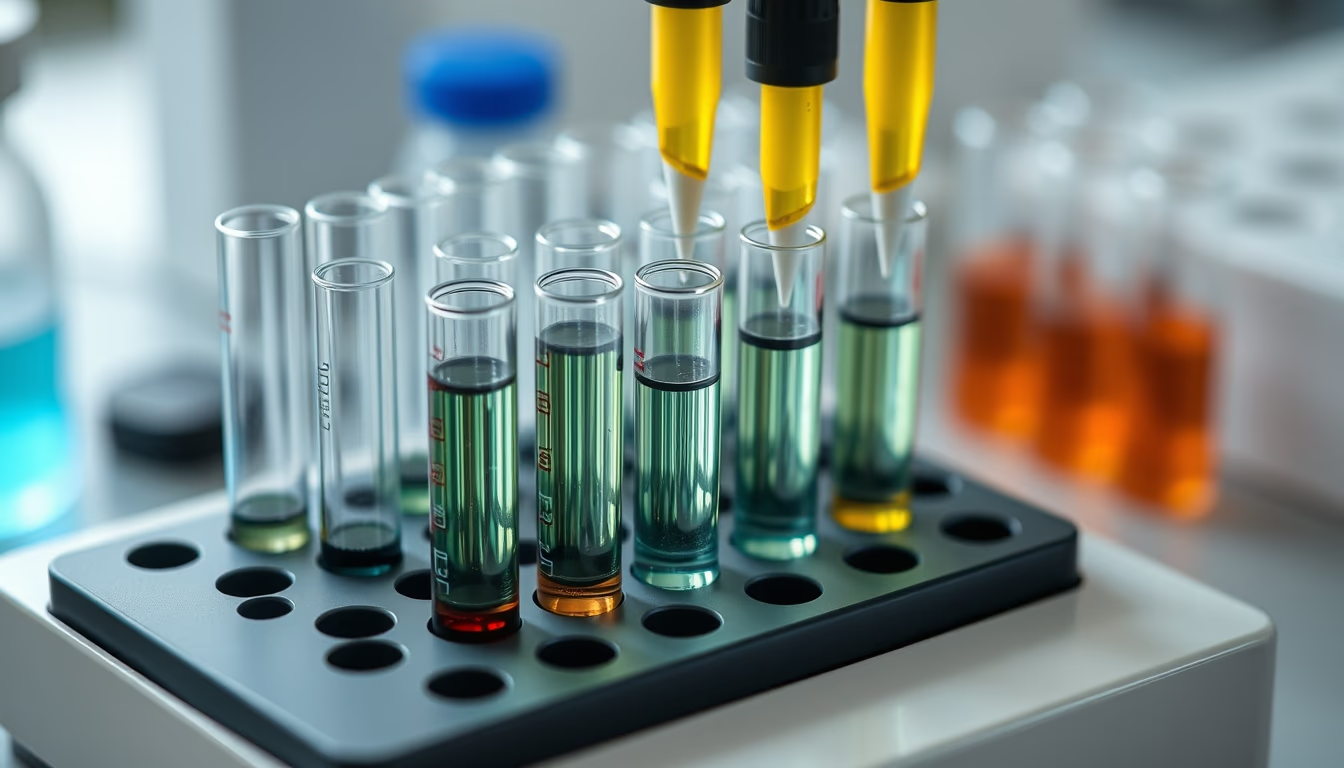
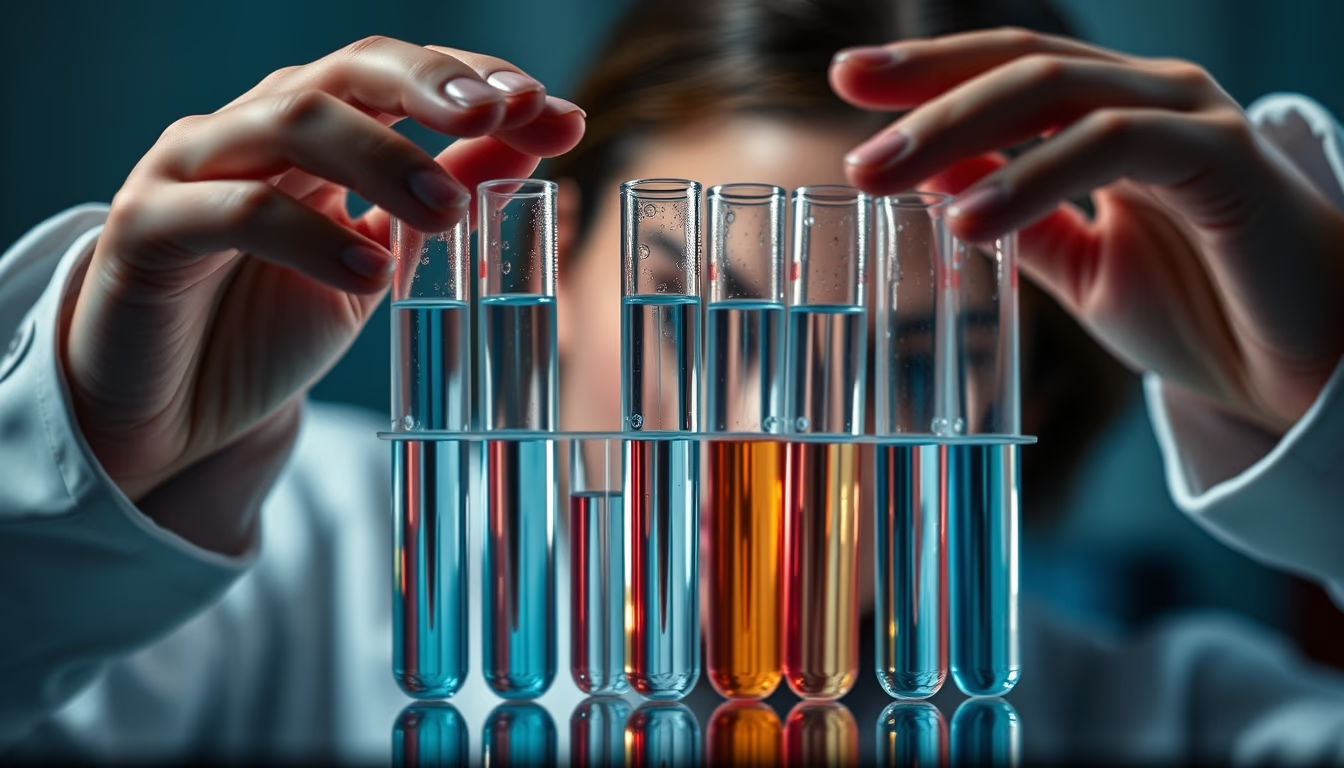
Spectrophotometer cuvettes are precise optical containers made of quartz, glass, or plastic, essential for quantitative absorbance measurements.
About this subject
Spectrophotometer cuvettes are small containers designed to hold liquid samples during absorbance or transmittance measurements at various wavelengths. The material determines the usable range: quartz cuvettes, made from fused silica, are transparent to ultraviolet (UV) and visible light, ideal for wavelengths below 380 nm. Glass optical cuvettes work well in the visible range (380-780 nm) but absorb UV. Plastic cuvettes (polystyrene or polymethyl methacrylate) are disposable and economical, but limited to visible light and less chemically resistant.
The accuracy of spectrophotometric analysis depends directly on cuvette quality. The standard optical path length is 1 cm, and the window surfaces must be free of scratches and stains to avoid light scattering. High-quality quartz cuvettes have transmittance above 80% at 200 nm, enabling detection of low analyte concentrations. In contrast, plastic cuvettes may exhibit autofluorescence and lower reproducibility, suitable for high-throughput routine assays.
Historically, the standardization of cuvette shape dates back to the development of commercial spectrophotometers in the 1940s. Major manufacturers like Hellma and Starna established strict tolerances for parallelism and flatness of optical faces. Improper cuvette choice can introduce systematic errors of up to 10%. Therefore, quality control and research labs often calibrate their cuvettes periodically with standard solutions.
A curiosity: microvolume cuvettes (holding only a few microliters) were developed to save expensive or limited samples, such as purified DNA or proteins. They use a raised window design, maintaining a 1 cm path length but reducing required volume to less than 50 μL.
Frequently Asked Questions
What is the difference between quartz and glass cuvettes?
Quartz cuvettes transmit UV and visible light, suitable for wavelengths below 380 nm. Glass cuvettes work only in the visible range (380-780 nm) and absorb UV, but are more economical.
Can disposable cuvettes be reused?
It is not recommended, as plastic can scratch, adsorb residues, and alter transmittance. Disposable cuvettes are designed for single use to ensure accuracy in routine assays.
How to clean spectrophotometer cuvettes?
Wash with distilled water and mild detergent, rinse thoroughly, and dry with compressed air or lint-free tissue. For quartz cuvettes, avoid strong alkaline cleaners that attack silica.
Direct URL
https://pub-c7d6a6ea828543ac903a74a341ccb2e1.r2.dev/imagens/spectrophotometer-cuvettes-documentary-nature-style-fresh17.avifHow to credit
Include a visible link back to UtilizAí. Copy one of the snippets below:
<a href="https://xn--utiliza-eza.com/en/midia/imagens/spectrophotometer-cuvettes-documentary-nature-style-fresh17">Spectrophotometer cuvettes</a> by <a href="https://xn--utiliza-eza.com">UtilizAí</a>, licensed under <a href="https://creativecommons.org/licenses/by/4.0/">CC BY 4.0</a>.
[Spectrophotometer cuvettes](https://xn--utiliza-eza.com/en/midia/imagens/spectrophotometer-cuvettes-documentary-nature-style-fresh17) by [UtilizAí](https://xn--utiliza-eza.com), CC BY 4.0
License: CC-BY-4.0