Space station futuristic
1344×768 · AVIF · CC BY 4.0
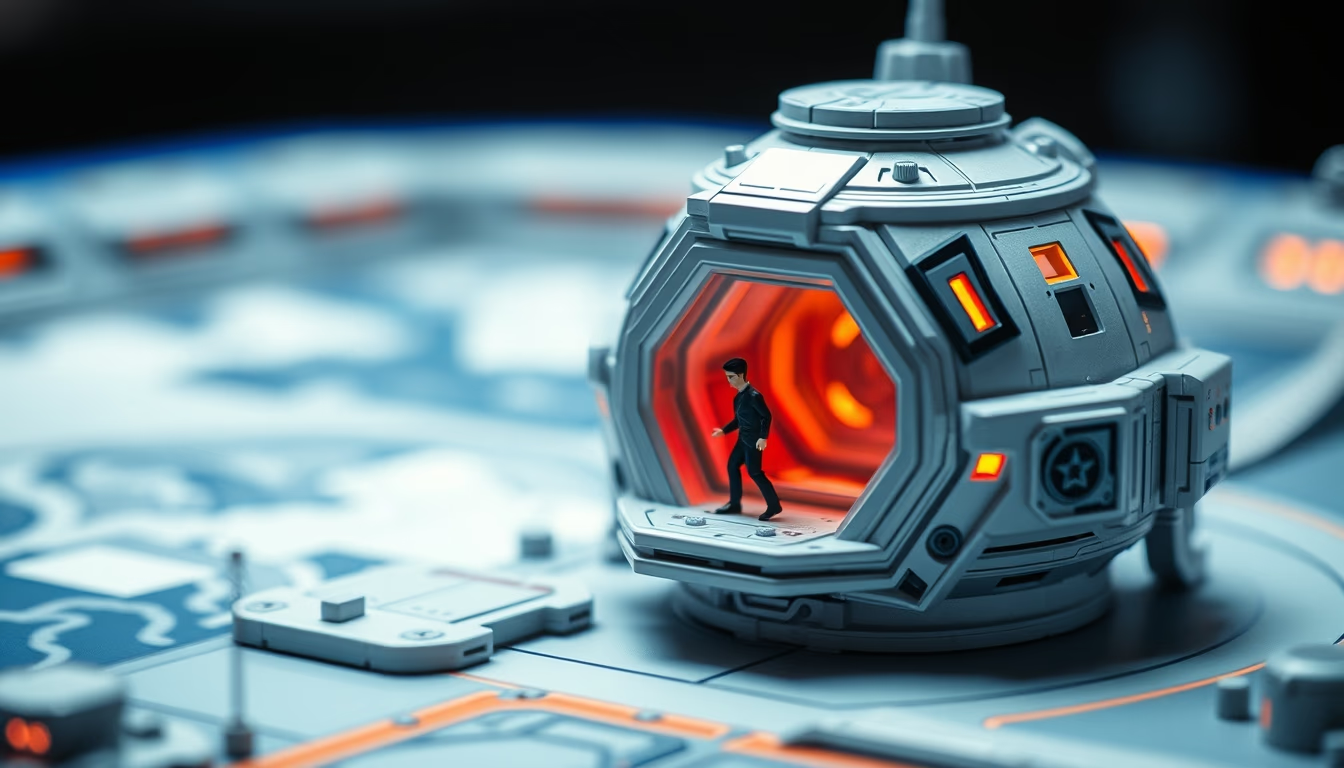
Futuristic space station captured with a tilt-shift miniature effect, blending science fiction and architectural realism.
About this subject
Futuristic space stations are a staple of science fiction, representing humanity's next step in exploration beyond Earth's orbit. They differ from real stations like the International Space Station (ISS), which has orbited Earth since 1998 and focuses on microgravity research. Conceptual projects envision self-sufficient habitats such as the O'Neill cylinders proposed in the 1970s, capable of housing thousands with artificial gravity generated by rotation.
The tilt-shift technique used in the image simulates a shallow depth of field, typical of miniature model photographs, making the station appear like a small-scale replica. This effect is achieved with specialized lenses or post-processing, shifting the focal plane to create a narrow sharp zone. The result tricks the brain into interpreting the scene as a tiny object, even though it represents something immense.
In pop culture, iconic space stations include Star Wars' Death Star, Star Trek's Deep Space Nine, and the Space Station V from 2001: A Space Odyssey. Each reflects distinct visions of the future: militaristic, diplomatic, or scientific. The image dialogues with this tradition, evoking both the hope of space colonization and the fascination with technologies yet to be realized.
Tilt-shift photography originated in architecture and landscapes, later adopted by hobbyists to create miniature illusions. By applying it to a futuristic space station, the artist plays with scale: what is vast and distant becomes close and playful. This fusion of the cosmic and the toy-like reinforces that, no matter how advanced our space dreams are, we still see them as models waiting to be built.
Frequently Asked Questions
What is the tilt-shift effect?
It is a photographic technique using lens movements of tilt and shift to control depth of field and perspective. When used to create a miniature effect, the image appears as a small-scale model.
How do real space stations differ from futuristic ones?
Real stations like the ISS are modular, in low Earth orbit, and rely on resupply. Futuristic ones, such as O'Neill cylinders, are massive structures with artificial gravity, agriculture, and closed-loop systems, designed for permanent habitats.
Why are space stations important in science fiction?
They symbolize technological progress and human expansion, serving as stages for political conflicts, scientific discoveries, and alien encounters. They are versatile settings that explore themes of isolation, cooperation, and survival.
Direct URL
https://pub-c7d6a6ea828543ac903a74a341ccb2e1.r2.dev/imagens/space-station-futuristic-tilt-shift-miniature-fresh0.avifHow to credit
Include a visible link back to UtilizAí. Copy one of the snippets below:
<a href="https://xn--utiliza-eza.com/en/midia/imagens/space-station-futuristic-tilt-shift-miniature-fresh0">Space station futuristic</a> by <a href="https://xn--utiliza-eza.com">UtilizAí</a>, licensed under <a href="https://creativecommons.org/licenses/by/4.0/">CC BY 4.0</a>.
[Space station futuristic](https://xn--utiliza-eza.com/en/midia/imagens/space-station-futuristic-tilt-shift-miniature-fresh0) by [UtilizAí](https://xn--utiliza-eza.com), CC BY 4.0
License: CC-BY-4.0