Space station futuristic
1344×768 · AVIF · CC BY 4.0

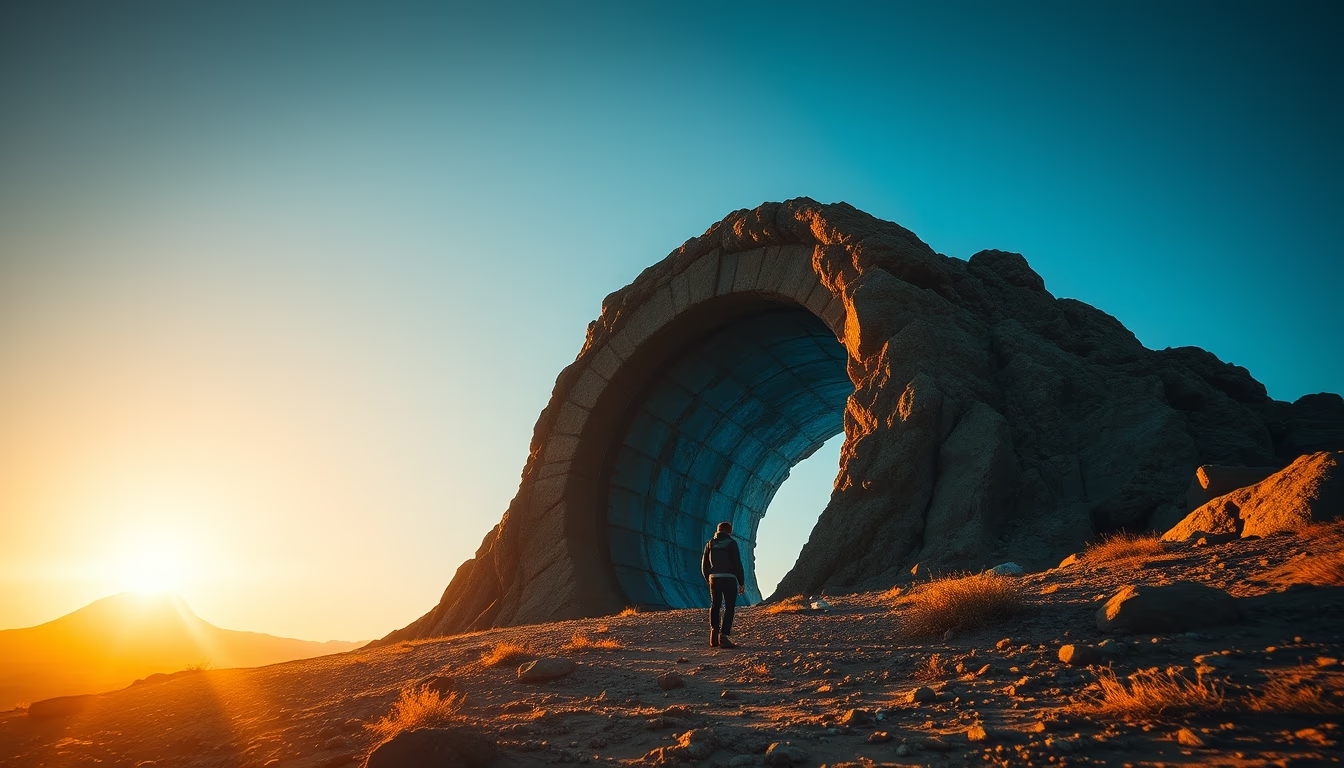
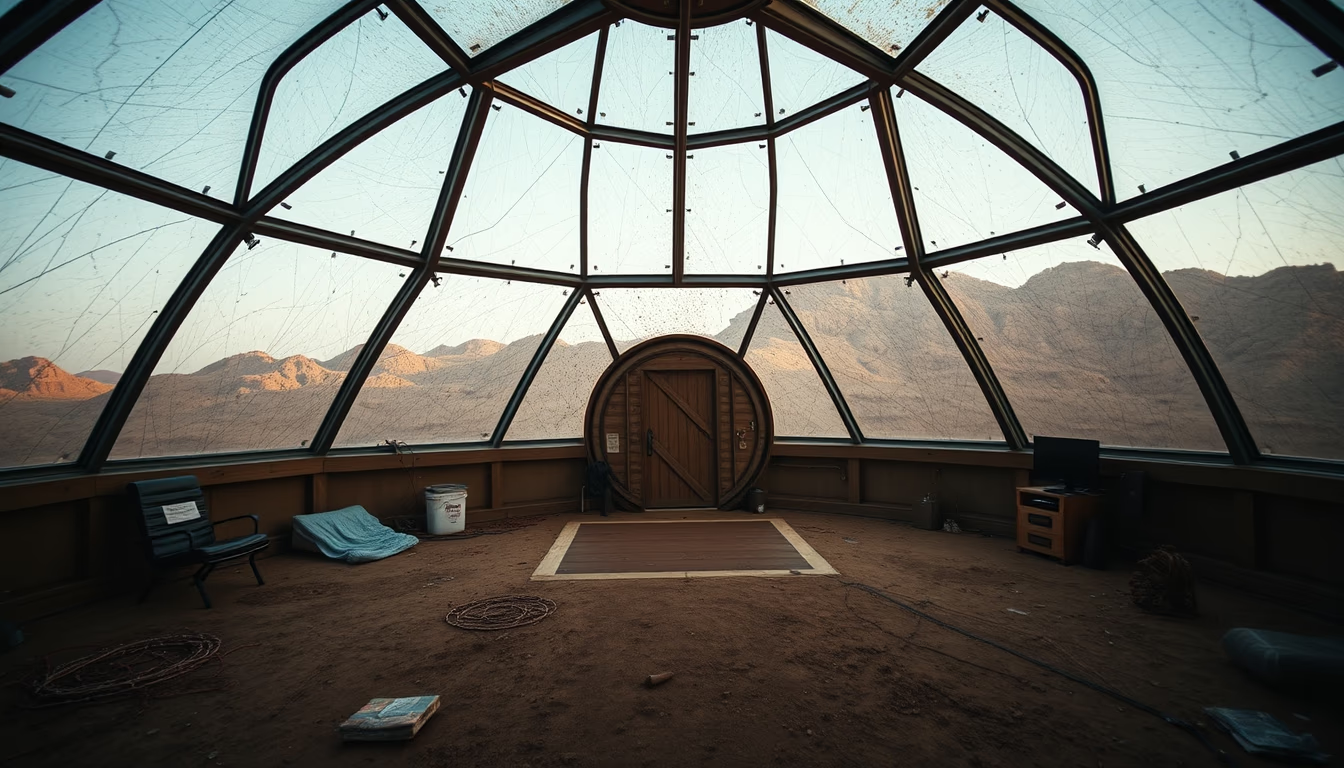
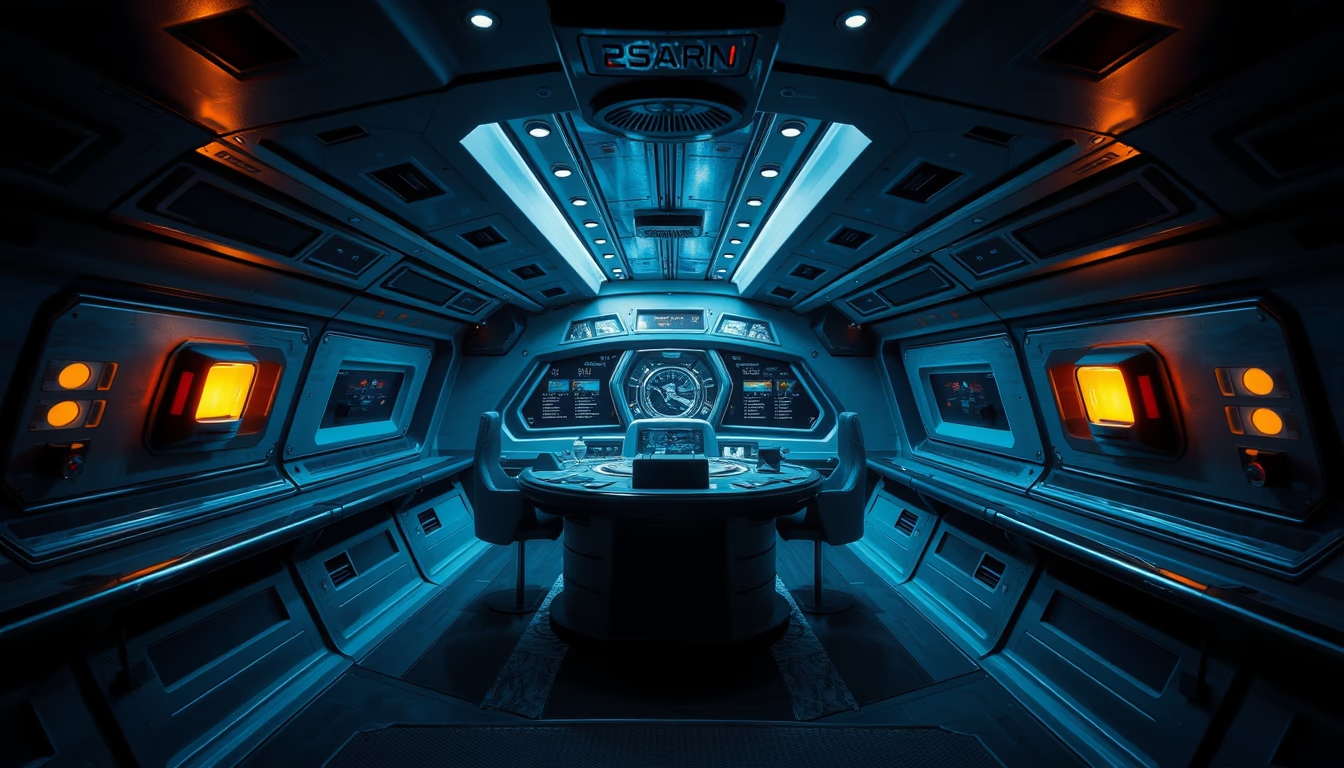
Futuristic space station blends advanced engineering concepts and interstellar exploration, representing humanity's next step into space.
About this subject
Futuristic space stations go beyond current projects like the International Space Station (ISS) by incorporating technologies still under development. Among them are artificial gravity, achieved through rotation of large rings or modules, and radiation shielding systems essential for long-duration missions. Concepts such as the O'Neill Cylinder, proposed by Gerard O'Neill in the 1970s, describe giant cylindrical habitats capable of housing thousands of people in self-sustaining environments.
Real projects, like NASA's Lunar Gateway, an orbital station around the Moon, and SpaceX's proposal to use Starship spacecraft as modular bases, point the way to more advanced structures. The Gateway will serve as an outpost for lunar exploration and future missions to Mars. The idea of a space station in Mars orbit or at Lagrange points (L1 or L2) enables refueling and support for interplanetary missions.
Building a futuristic station faces challenges such as launch cost, maintenance of life support systems, and the impact of prolonged microgravity on human health. Solutions include in-situ 3D printing of materials, use of asteroid resources, and closed-loop water and air cycles. International collaboration and private partnerships, like those from Blue Origin and Axiom Space, accelerate the development of such infrastructures. In the long run, space stations could become autonomous colonies, boosting Solar System exploration.
Frequently Asked Questions
What would life be like on a futuristic space station?
Life on a futuristic station would include artificial gravity, enabling daily activities closer to normal on Earth. There would be residential areas, laboratories, greenhouses for food production, and air and water recycling systems. The environment would be controlled, with radiation shielding and micrometeoroid protection.
What are the main technological challenges for building a space station in the future?
Main challenges include generating artificial gravity through rotation, effective shielding against cosmic rays and solar flares, closed-loop life support systems, food production in space, and mitigating the effects of prolonged microgravity on health, such as bone and muscle loss.
Are there real projects of space stations that can be considered futuristic?
Yes, NASA's Lunar Gateway is a real project serving as an orbital lunar station. Axiom Space plans commercial modules for the ISS and future private stations. SpaceX considers using Starship spacecraft as modular bases. Concepts like Lockheed Martin's Mars Base Camp are also being studied.
Direct URL
https://pub-c7d6a6ea828543ac903a74a341ccb2e1.r2.dev/imagens/space-station-futuristic-studio-editorial-portrait-fresh4.avifHow to credit
Include a visible link back to UtilizAí. Copy one of the snippets below:
<a href="https://xn--utiliza-eza.com/en/midia/imagens/space-station-futuristic-studio-editorial-portrait-fresh4">Space station futuristic</a> by <a href="https://xn--utiliza-eza.com">UtilizAí</a>, licensed under <a href="https://creativecommons.org/licenses/by/4.0/">CC BY 4.0</a>.
[Space station futuristic](https://xn--utiliza-eza.com/en/midia/imagens/space-station-futuristic-studio-editorial-portrait-fresh4) by [UtilizAí](https://xn--utiliza-eza.com), CC BY 4.0
License: CC-BY-4.0