Space station futuristic
1344×768 · AVIF · CC BY 4.0
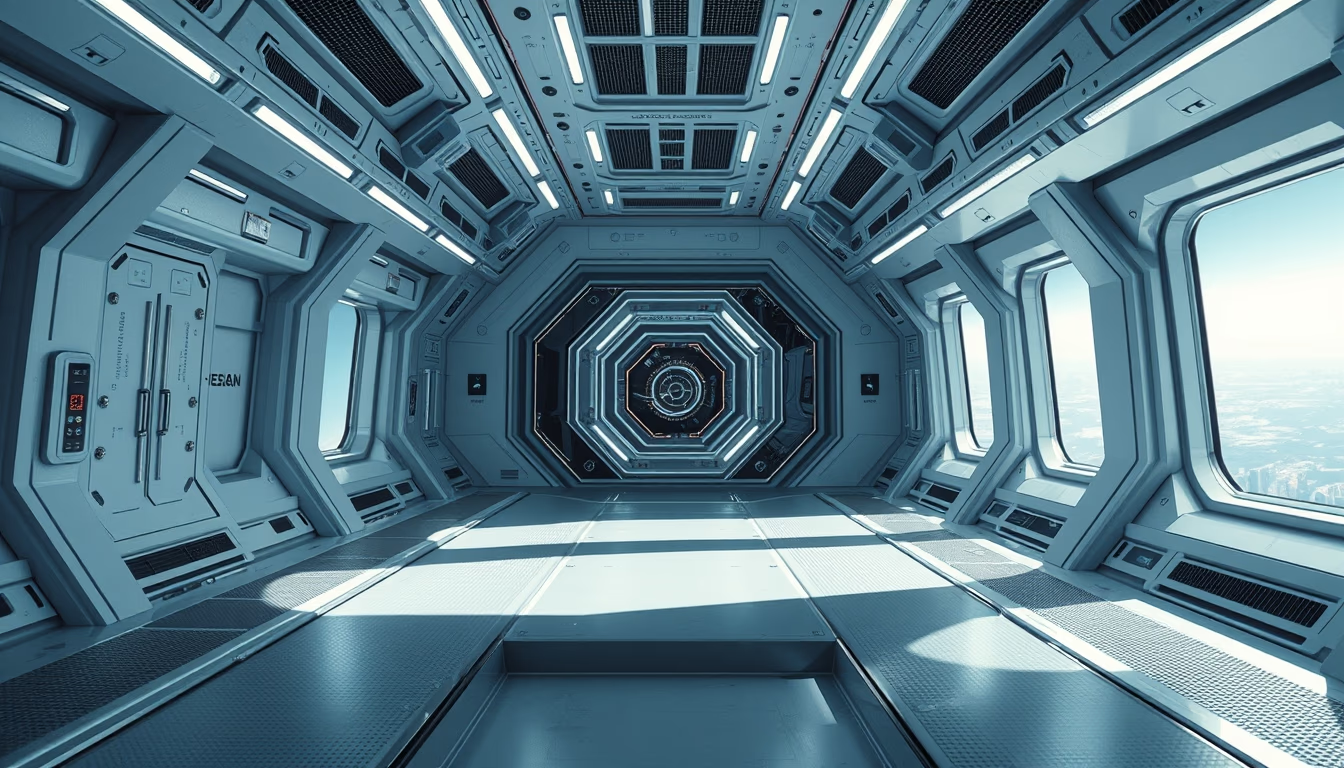
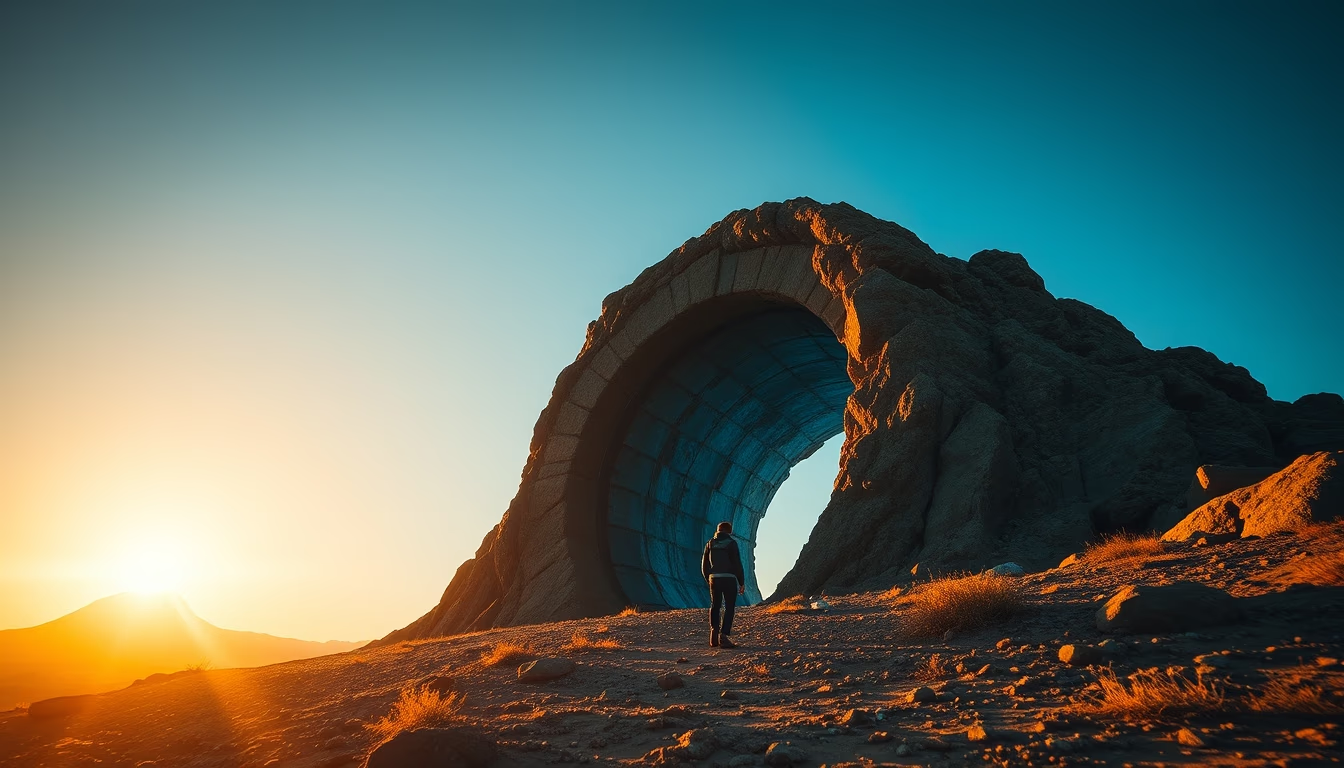
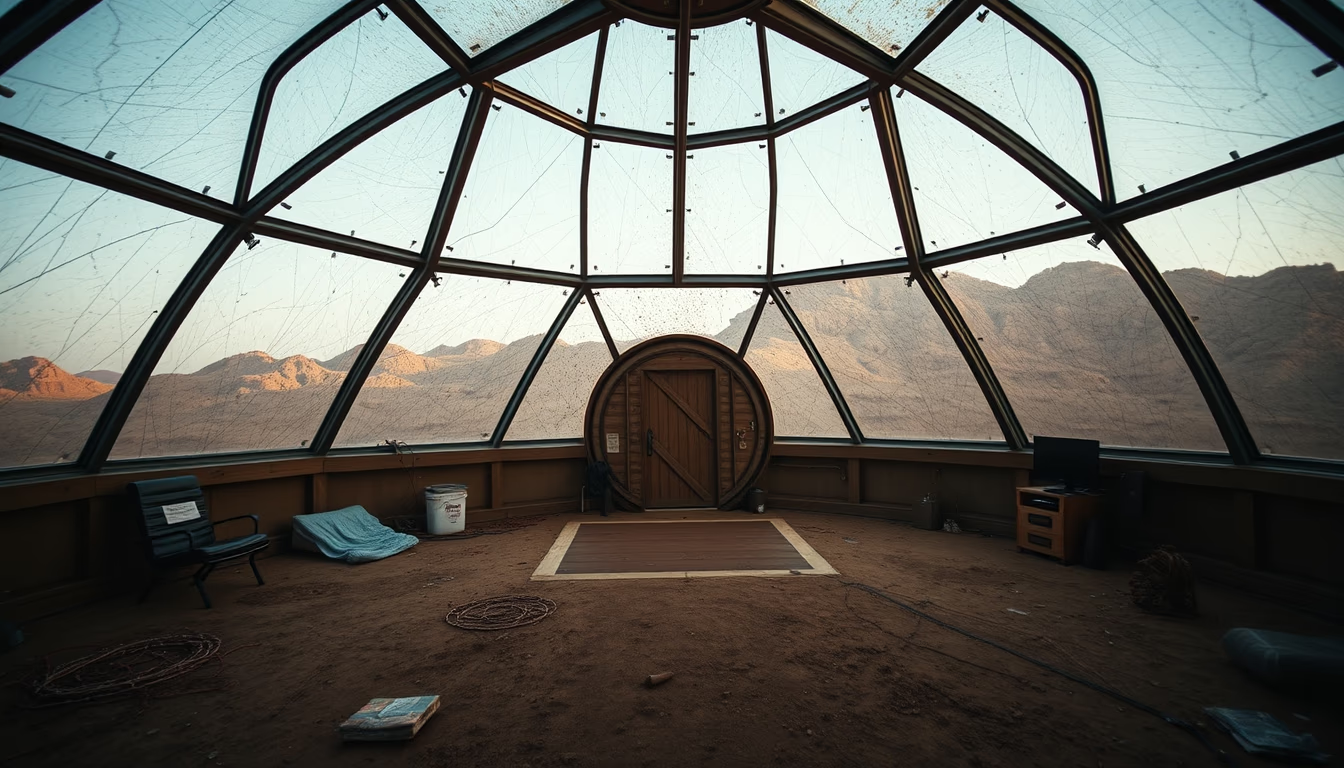
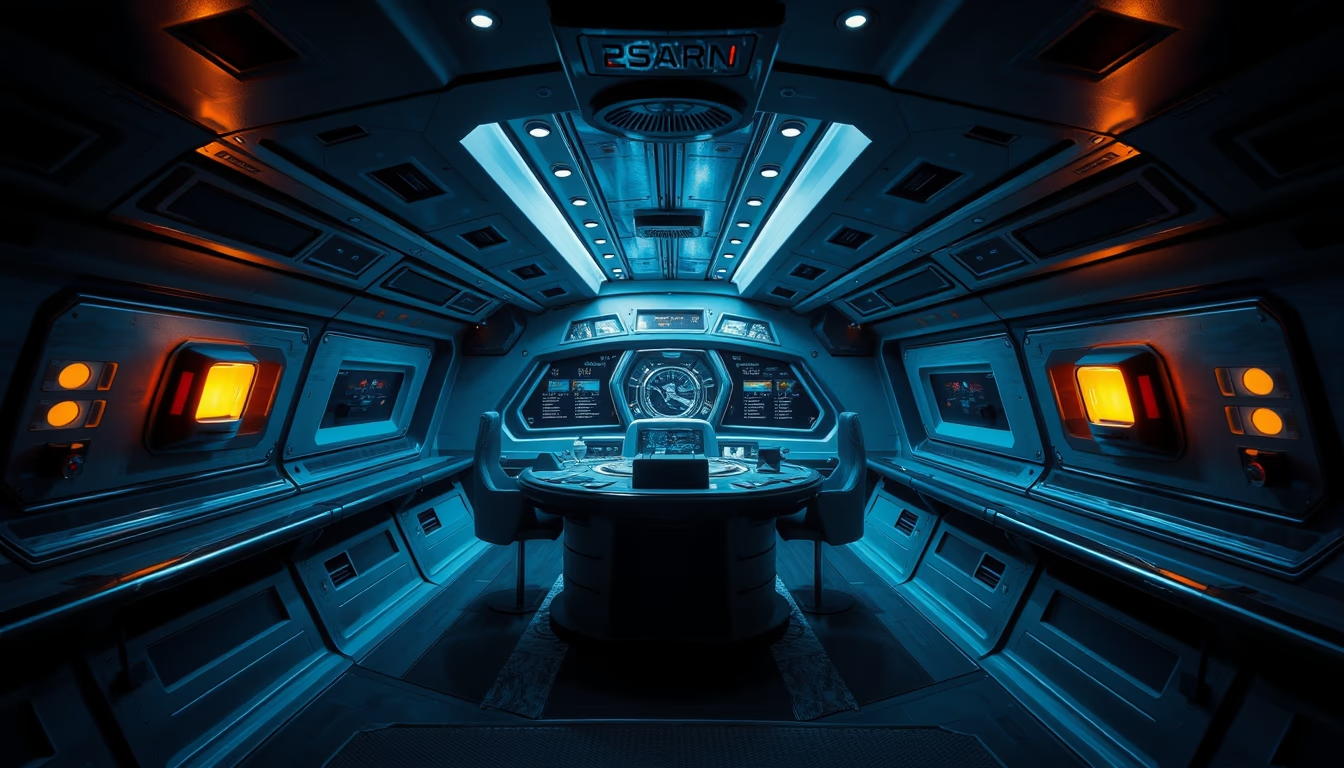
Futuristic space stations go beyond the ISS, featuring rotating habitats and self-sustaining systems that prepare humanity for deep space living.
About this subject
Futuristic space stations represent the next generation of orbital habitats, building upon the International Space Station (ISS) with innovative designs. Prominent concepts include rotating rings, such as the Stanford torus and O'Neill cylinder, which use centrifugal force to simulate artificial gravity, counteracting microgravity's health effects. Concrete projects like NASA's lunar Gateway and China's Tiangong already feature expandable modules and closed-loop life support systems.
Self-sufficiency is a key goal: water and air recycling, hydroponic food cultivation, and additive manufacturing for spare parts. China plans a larger station by 2030, while private companies like Axiom Space develop commercial modules for the ISS. Brazil, through the Brazilian Space Agency, contributes with microgravity experiments, such as protein crystal growth studies.
Technical challenges include radiation shielding, continuous power (high-efficiency solar panels or nuclear reactors), and maintaining closed ecosystems. Lessons from the ISS and Earth-based simulations like HI-SEAS provide essential data. Long-term, outposts in lunar orbit or at Lagrange points could serve as gateways for Mars and asteroid missions.
Frequently Asked Questions
How do space stations with artificial gravity work?
They rotate to create centrifugal force that pushes occupants against the outer wall, simulating gravity. Examples include the O'Neill cylinder and Stanford torus, still theoretical.
What are the most advanced space stations under development?
The Lunar Gateway (NASA/partners) will orbit the Moon by 2028. China's Tiangong station is operational and will be expanded. Axiom Station plans to add commercial modules to the ISS and later become independent.
Does Brazil participate in space station projects?
Yes, the Brazilian Space Agency (AEB) conducts microgravity experiments on the ISS, such as protein crystallization studies and materials testing, and collaborates on scientific missions.
Direct URL
https://pub-c7d6a6ea828543ac903a74a341ccb2e1.r2.dev/imagens/space-station-futuristic-minimalist-composition-fresh7.avifHow to credit
Include a visible link back to UtilizAí. Copy one of the snippets below:
<a href="https://xn--utiliza-eza.com/en/midia/imagens/space-station-futuristic-minimalist-composition-fresh7">Space station futuristic</a> by <a href="https://xn--utiliza-eza.com">UtilizAí</a>, licensed under <a href="https://creativecommons.org/licenses/by/4.0/">CC BY 4.0</a>.
[Space station futuristic](https://xn--utiliza-eza.com/en/midia/imagens/space-station-futuristic-minimalist-composition-fresh7) by [UtilizAí](https://xn--utiliza-eza.com), CC BY 4.0
License: CC-BY-4.0