Space station futuristic
1344×768 · AVIF · CC BY 4.0
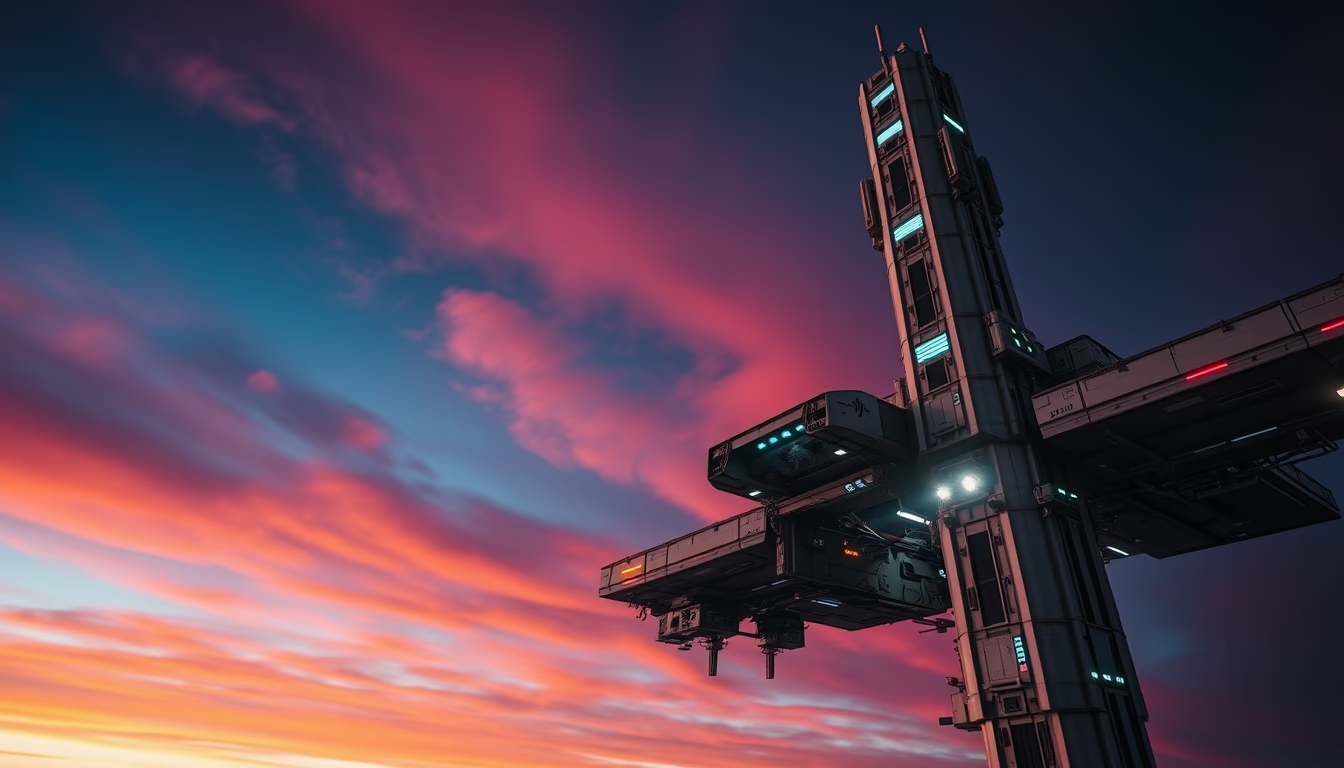
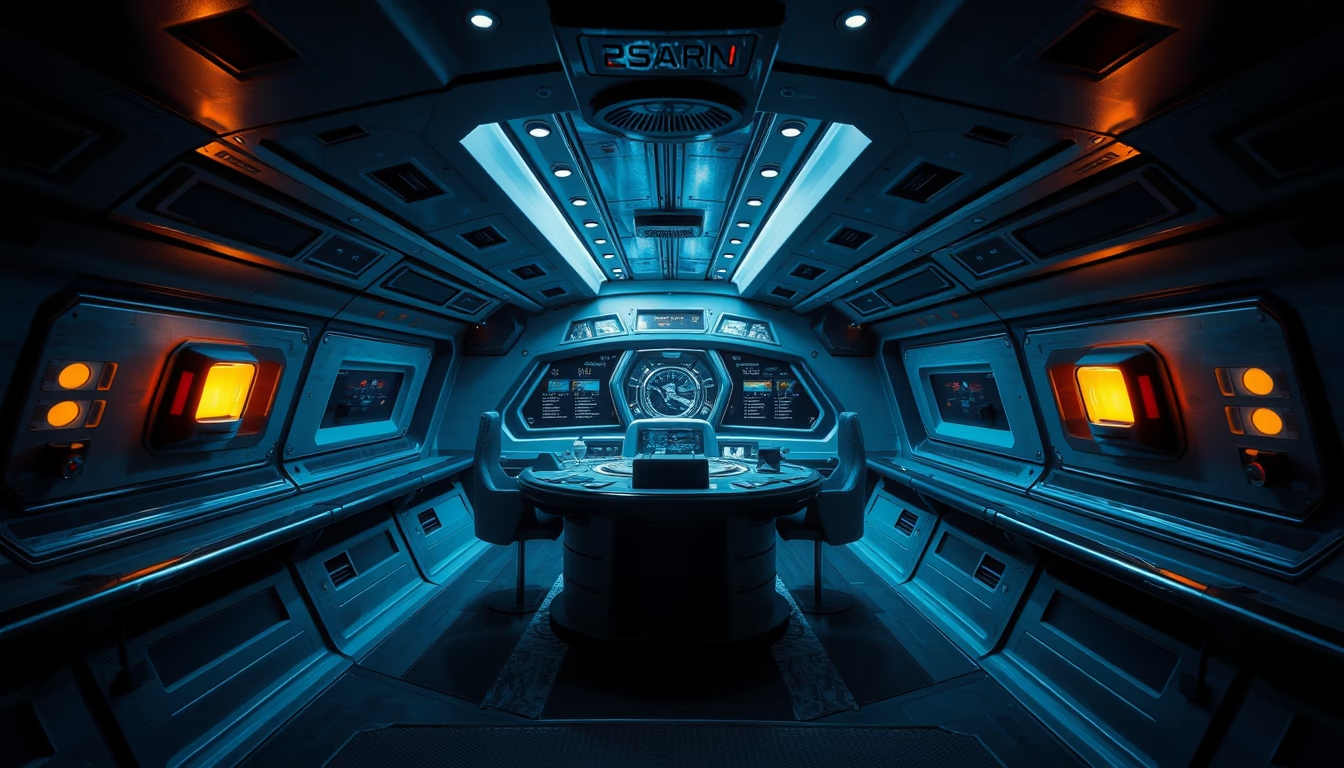
Estação espacial futurista em longa exposição: conceitos de arquitetura orbital para habitação humana no espaço profundo.
Sobre o tema
As estações espaciais representam o próximo passo na exploração humana além da Terra. Desde a Estação Espacial Internacional (ISS), que orbita a cerca de 400 km de altitude, até projetos visionários como o O'Neill Cylinder e o Stanford Torus, a engenharia orbital evolui para suportar missões de longa duração. A ISS, com seus módulos pressurizados e painéis solares, já abriga experimentos científicos e tripulações rotativas, mas conceitos futuros preveem estruturas rotativas para gerar gravidade artificial, essenciais para viagens a Marte e além.
A longa exposição fotográfica, técnica que capta o movimento das estrelas ao redor da estação, destaca a rotação da estrutura e a vastidão do espaço. Enquanto a ISS completa uma órbita a cada 90 minutos, projetos teóricos como o escudo de força eletromagnético ou a estação com anel de 1 km de diâmetro poderiam abrigar milhares de pessoas. A NASA e a ESA já estudam habitats infláveis e impressos em 3D, baseados em materiais lunares ou asteroides.
Curiosamente, o conceito de estação espacial futurista remonta a Wernher von Braun na década de 1950, que propôs um anel giratório para missões a Marte. Hoje, empresas como a SpaceX e a Blue Origin planejam estações comerciais para turismo e pesquisa. A imagem em longa exposição evoca a transição entre o presente orbital e o futuro interestelar, onde a humanidade se tornará uma espécie multiplanetária.
Perguntas frequentes
Qual é a função principal de uma estação espacial futurista?
Servir como habitat modular para pesquisa científica, turismo espacial, manufatura orbital e ponto de partida para missões interplanetárias, com sistemas de suporte à vida e propulsão avançados.
Como a gravidade artificial seria gerada em estações futuras?
Através da rotação de grandes anéis ou cilindros, criando força centrífuga que simula a gravidade terrestre. Exemplos incluem o Stanford Torus e o O'Neill Cylinder.
Que desafios técnicos existem para construir uma estação espacial do século 22?
Proteção contra radiação cósmica, produção de alimentos em ciclo fechado, manutenção de pressão e temperatura, e logística de materiais trazidos da Lua ou asteroides.
URL direta
https://pub-c7d6a6ea828543ac903a74a341ccb2e1.r2.dev/imagens/space-station-futuristic-long-exposure-fresh17.avifComo creditar
Inclua um link visível de volta pro UtilizAí. Copie um dos snippets abaixo:
<a href="https://xn--utiliza-eza.com/midia/imagens/space-station-futuristic-long-exposure-fresh17">Space station futuristic</a> by <a href="https://xn--utiliza-eza.com">UtilizAí</a>, licensed under <a href="https://creativecommons.org/licenses/by/4.0/">CC BY 4.0</a>.
[Space station futuristic](https://xn--utiliza-eza.com/midia/imagens/space-station-futuristic-long-exposure-fresh17) by [UtilizAí](https://xn--utiliza-eza.com), CC BY 4.0
Licença: CC-BY-4.0