Snowboard graphics deck
1344×768 · AVIF · CC BY 4.0
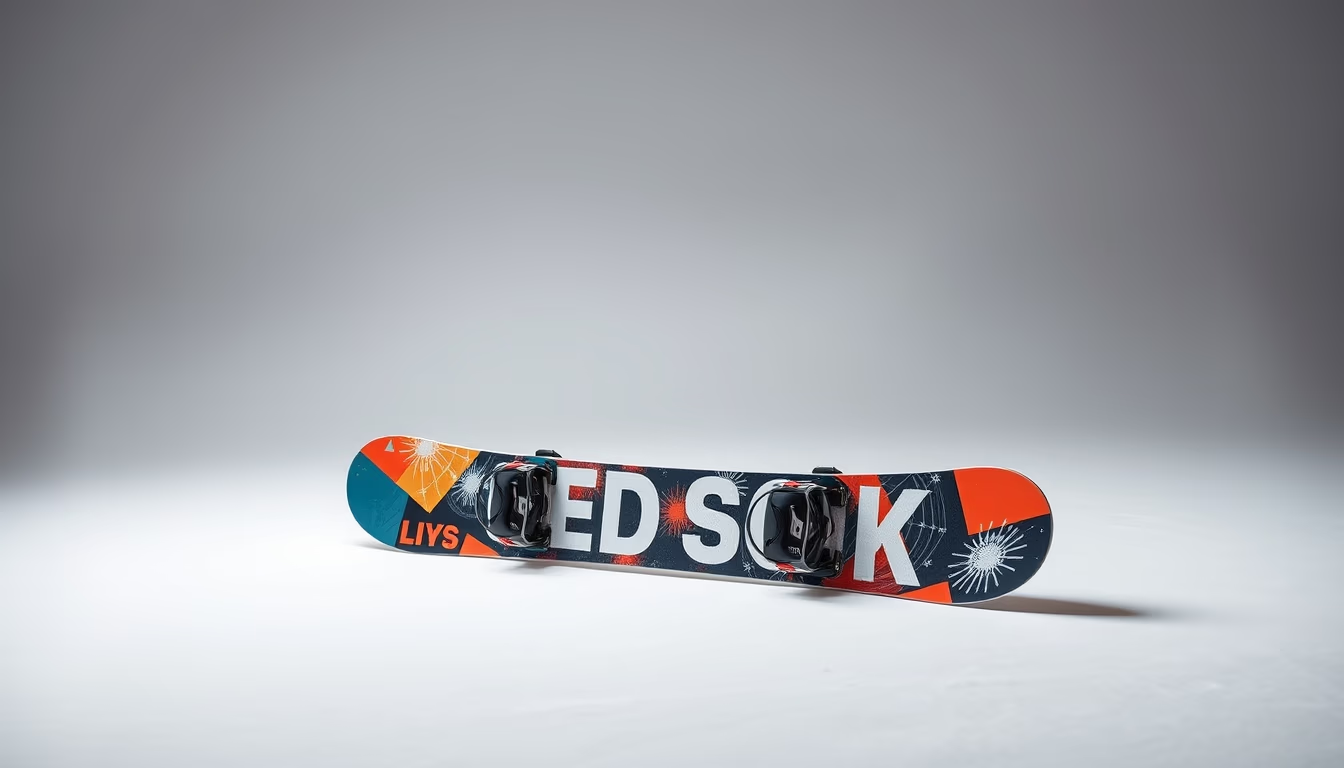
Snowboard deck graphics are a vital part of snowboarding culture, blending art and technology into personalized boards.
About this subject
A snowboard is not only sports equipment but also a canvas for artistic expression. The graphics on the deck represent the rider's identity, fashion trends, and brand creativity. Since the 1980s, when the sport gained popularity, boards evolved from simple logos to complex artworks, often signed by renowned artists like Jeff Koons and Keith Haring, who collaborated with manufacturers such as Burton and Lib Tech.
Graphics are applied during manufacturing. The top sheet, usually made of epoxy resin or polyurethane, receives the art via sublimation or screen printing. Sublimation produces vibrant, durable images as the dye penetrates the material, while screen printing allows precise details. Some boards feature glossy or matte finishes and even special textures that affect boot traction.
Beyond aesthetics, graphics hold cultural significance. Many riders choose boards based on artwork, treating the board as an extension of personality. Boards become collectibles, with limited editions that can appreciate over time. In Brazil, snowboarding is limited to cold regions in the South and Southeast, such as serras in Rio Grande do Sul and Santa Catarina, but interest in board design grows among skaters and snowboarders who travel to Argentina and Chile.
Snowboard manufacturing includes materials like wood core (often poplar or birch), fiberglass laminates, and sintered polyethylene base. Graphic design does not directly affect performance, but brands invest in collaborations to stand out. For instance, no local Brazilian snowboard brand exists, but specialized stores import models with exclusive artwork for national consumers.
Frequently Asked Questions
How are graphics applied to a snowboard?
Graphics are applied to the top sheet during manufacturing, usually via sublimation (dye penetrates the material) or screen printing. Sublimation provides vibrant colors and durability, while screen printing is used for precise details.
What materials are used in a snowboard deck?
A typical deck has a wood core (like poplar or birch), fiberglass laminates for strength, and a sintered polyethylene base for smooth gliding. The top sheet is made of epoxy resin or polyurethane, onto which the art is applied.
Do graphics affect snowboard performance?
No, graphics are purely aesthetic and do not alter performance, flex, or durability. However, some finishes (like textures on the top sheet) can influence boot traction.
Direct URL
https://pub-c7d6a6ea828543ac903a74a341ccb2e1.r2.dev/imagens/snowboard-graphics-deck-studio-still-life-fresh18.avifHow to credit
Include a visible link back to UtilizAí. Copy one of the snippets below:
<a href="https://xn--utiliza-eza.com/en/midia/imagens/snowboard-graphics-deck-studio-still-life-fresh18">Snowboard graphics deck</a> by <a href="https://xn--utiliza-eza.com">UtilizAí</a>, licensed under <a href="https://creativecommons.org/licenses/by/4.0/">CC BY 4.0</a>.
[Snowboard graphics deck](https://xn--utiliza-eza.com/en/midia/imagens/snowboard-graphics-deck-studio-still-life-fresh18) by [UtilizAí](https://xn--utiliza-eza.com), CC BY 4.0
License: CC-BY-4.0