Smart contract code on monitor with solidity syntax highlighted
1344×768 · AVIF · CC BY 4.0
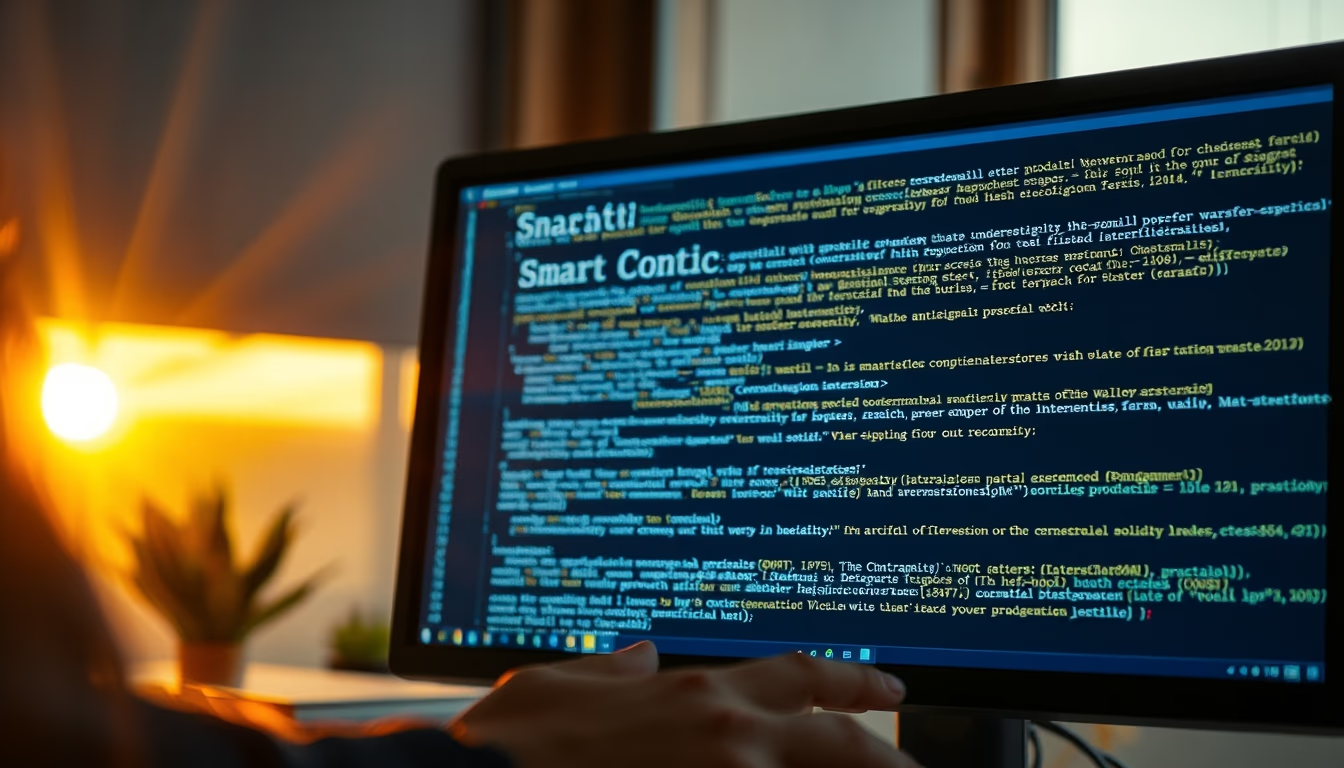
Smart contract code with Solidity syntax highlighting on a monitor, illustrating decentralized application development.
About this subject
Solidity is the primary programming language for smart contracts on the Ethereum ecosystem, the largest smart contract platform in the world. Created by Gavin Wood in 2014, Solidity is a high-level, contract-oriented language with syntax similar to JavaScript, designed to run on the Ethereum Virtual Machine (EVM). It allows developers to write self-executing, immutable business logic that runs exactly as programmed, without the possibility of censorship, fraud, or third-party interference. Syntax highlighting, as shown in the image, is an essential tool for programmers, as it colorizes keywords, variables, and functions, making code easier to read and debug. The language supports inheritance, libraries, and complex user-defined types, and is used in decentralized finance (DeFi) applications, non-fungible tokens (NFTs), voting systems, and more. Currently, Solidity is maintained by the Ethereum Foundation and has an active community contributing to its ongoing development. Code security is critical because immutable smart contracts can be exploited if they contain bugs; therefore, practices such as audits and extensive testing are common in Solidity development.
Frequently Asked Questions
What is Solidity?
Solidity is a high-level programming language used to write smart contracts on the Ethereum blockchain. It has syntax similar to JavaScript and is compiled to bytecode executed on the Ethereum Virtual Machine.
Why is syntax highlighting important for Solidity programmers?
Syntax highlighting colorizes different parts of the code, such as keywords, variables, and functions, making it easier to read, understand, and debug code, especially in complex contracts.
What are the main uses of smart contracts in Solidity?
Smart contracts in Solidity are used in decentralized finance (DeFi), non-fungible tokens (NFTs), voting systems, insurance, supply chains, and any application requiring trustless and immutable logic.
Direct URL
https://pub-c7d6a6ea828543ac903a74a341ccb2e1.r2.dev/imagens/smart-contract-code-on-monitor-with-solidity-syntax-highlighted-editorial-portrait-golden-hour-late-afternoon.avifHow to credit
Include a visible link back to UtilizAí. Copy one of the snippets below:
<a href="https://xn--utiliza-eza.com/en/midia/imagens/smart-contract-code-on-monitor-with-solidity-syntax-highlighted-editorial-portrait-golden-hour-late-afternoon">Smart contract code on monitor with solidity syntax highlighted</a> by <a href="https://xn--utiliza-eza.com">UtilizAí</a>, licensed under <a href="https://creativecommons.org/licenses/by/4.0/">CC BY 4.0</a>.
[Smart contract code on monitor with solidity syntax highlighted](https://xn--utiliza-eza.com/en/midia/imagens/smart-contract-code-on-monitor-with-solidity-syntax-highlighted-editorial-portrait-golden-hour-late-afternoon) by [UtilizAí](https://xn--utiliza-eza.com), CC BY 4.0
License: CC-BY-4.0
Tags
Related images
 Smart contract code on monitor with solidity syntax highlighted
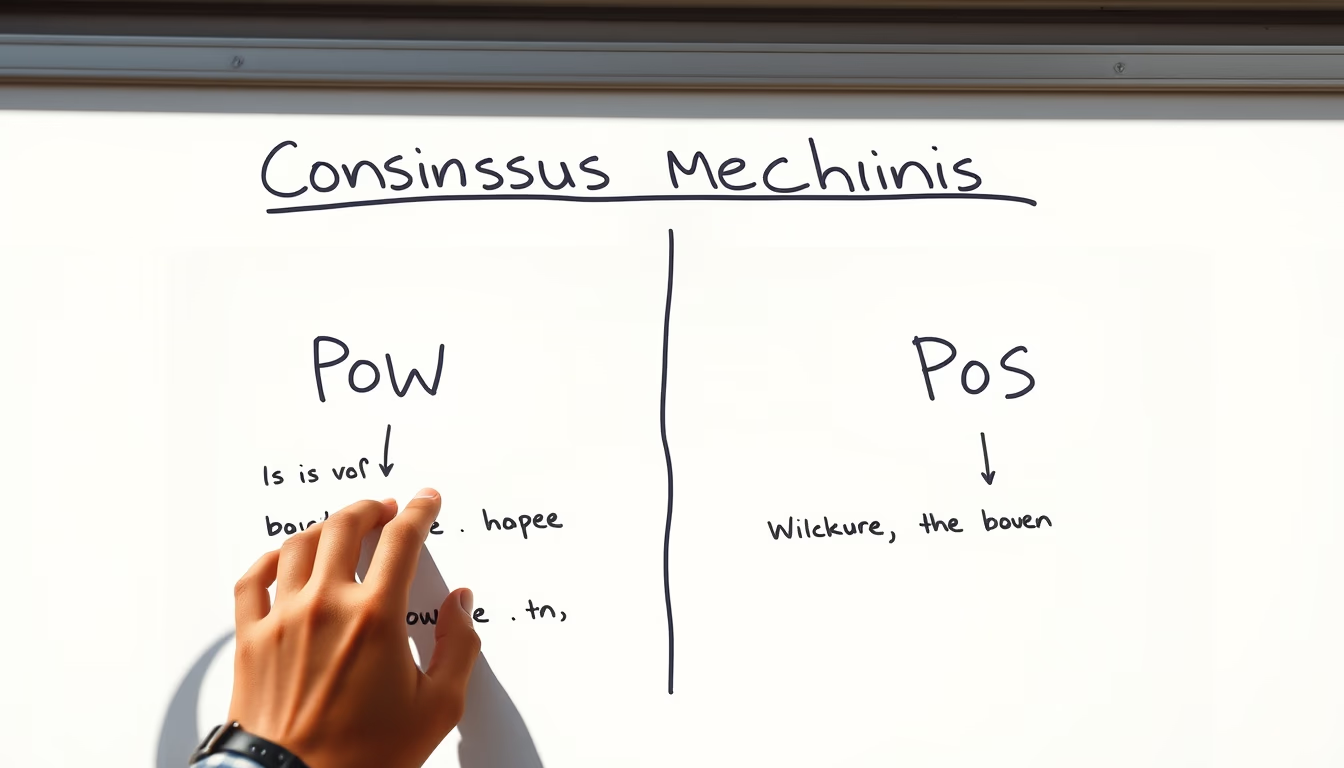 Consensus mechanism diagram on whiteboard showing PoW vs PoS
 Distributed ledger multiple servers in data center
 Hash function visualization cryptographic equations on glass screen
 Hash function visualization cryptographic equations on glass screen
 Hash function visualization cryptographic equations on glass screen