Consensus mechanism diagram on whiteboard showing PoW vs PoS
1344×768 · AVIF · CC BY 4.0
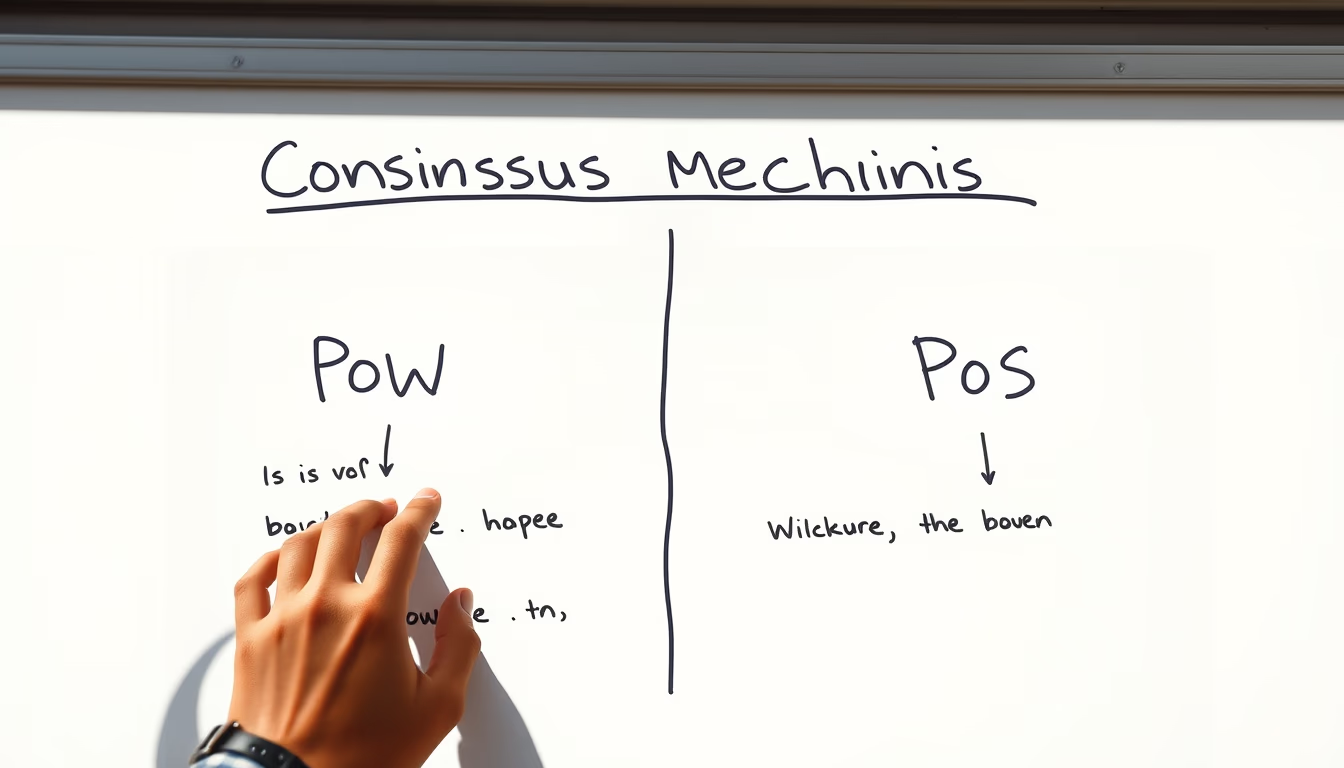
Educational whiteboard diagram compares Proof of Work and Proof of Stake, the leading blockchain consensus mechanisms.
About this subject
The whiteboard diagram illustrates the two main consensus mechanisms used in blockchains: Proof of Work (PoW) and Proof of Stake (PoS). PoW, used by Bitcoin since 2009, requires miners to solve complex mathematical problems to validate transactions and create new blocks. This process consumes enormous amounts of electricity, estimated at about 150 TWh annually for Bitcoin, equivalent to the consumption of countries like Argentina or Ukraine. In contrast, PoS, adopted by Ethereum after The Merge upgrade in September 2022, selects validators based on the amount of cryptocurrency they lock up as collateral. This method reduces energy consumption by over 99% and allows greater scalability and participation by ordinary users.
The comparison between PoW and PoS goes beyond energy consumption. While PoW offers robust security against attacks, PoS incentivizes validator honesty through financial penalties such as slashing, which confiscates part of the funds in case of malicious behavior. The diagram likely highlights these differences, showing how each mechanism impacts decentralization, transaction speed, and network governance. PoW tends to concentrate power in large mining operations, while PoS may favor centralization among large token holders, though both seek balance.
Although the diagram is generic, it reflects a central debate in the blockchain ecosystem. Networks like Cardano, Solana, and Polkadot were born with PoS, while Bitcoin remains faithful to PoW. The choice between mechanisms depends on the network's goals: maximum security and immutability (PoW) versus efficiency and sustainability (PoS). The whiteboard, typical of educational or brainstorming environments, suggests the content was created to explain these concepts to beginners, perhaps in a workshop, class, or technical meeting.
Frequently Asked Questions
What is the main difference between Proof of Work and Proof of Stake?
In PoW, miners compete solving mathematical problems to validate blocks, consuming a lot of energy. In PoS, validators are chosen based on the amount of cryptocurrency they hold and lock as collateral, drastically reducing energy consumption.
Why did Ethereum migrate from PoW to PoS?
The migration, called The Merge (September 2022), aimed to reduce energy consumption by over 99%, improve scalability, and prepare the network for future upgrades like sharding, while making participation more accessible.
Is Proof of Stake more secure than Proof of Work?
Both have strengths and weaknesses. PoW is considered more secure against certain attacks due to high mining costs, but PoS offers economic security with penalties (slashing) and is more resistant to 51% attacks in large networks.
Direct URL
https://pub-c7d6a6ea828543ac903a74a341ccb2e1.r2.dev/imagens/consensus-mechanism-diagram-on-whiteboard-showing-pow-vs-pos-documentary-photography-bright-midday-sun.avifHow to credit
Include a visible link back to UtilizAí. Copy one of the snippets below:
<a href="https://xn--utiliza-eza.com/en/midia/imagens/consensus-mechanism-diagram-on-whiteboard-showing-pow-vs-pos-documentary-photography-bright-midday-sun">Consensus mechanism diagram on whiteboard showing PoW vs PoS</a> by <a href="https://xn--utiliza-eza.com">UtilizAí</a>, licensed under <a href="https://creativecommons.org/licenses/by/4.0/">CC BY 4.0</a>.
[Consensus mechanism diagram on whiteboard showing PoW vs PoS](https://xn--utiliza-eza.com/en/midia/imagens/consensus-mechanism-diagram-on-whiteboard-showing-pow-vs-pos-documentary-photography-bright-midday-sun) by [UtilizAí](https://xn--utiliza-eza.com), CC BY 4.0
License: CC-BY-4.0
Tags
Related images
 Smart contract code on monitor with solidity syntax highlighted
 Distributed ledger multiple servers in data center
 Hash function visualization cryptographic equations on glass screen
 Hash function visualization cryptographic equations on glass screen
 Hash function visualization cryptographic equations on glass screen
 Hash function visualization cryptographic equations on glass screen