Smart contract code on monitor with solidity syntax highlighted
1344×768 · AVIF · CC BY 4.0
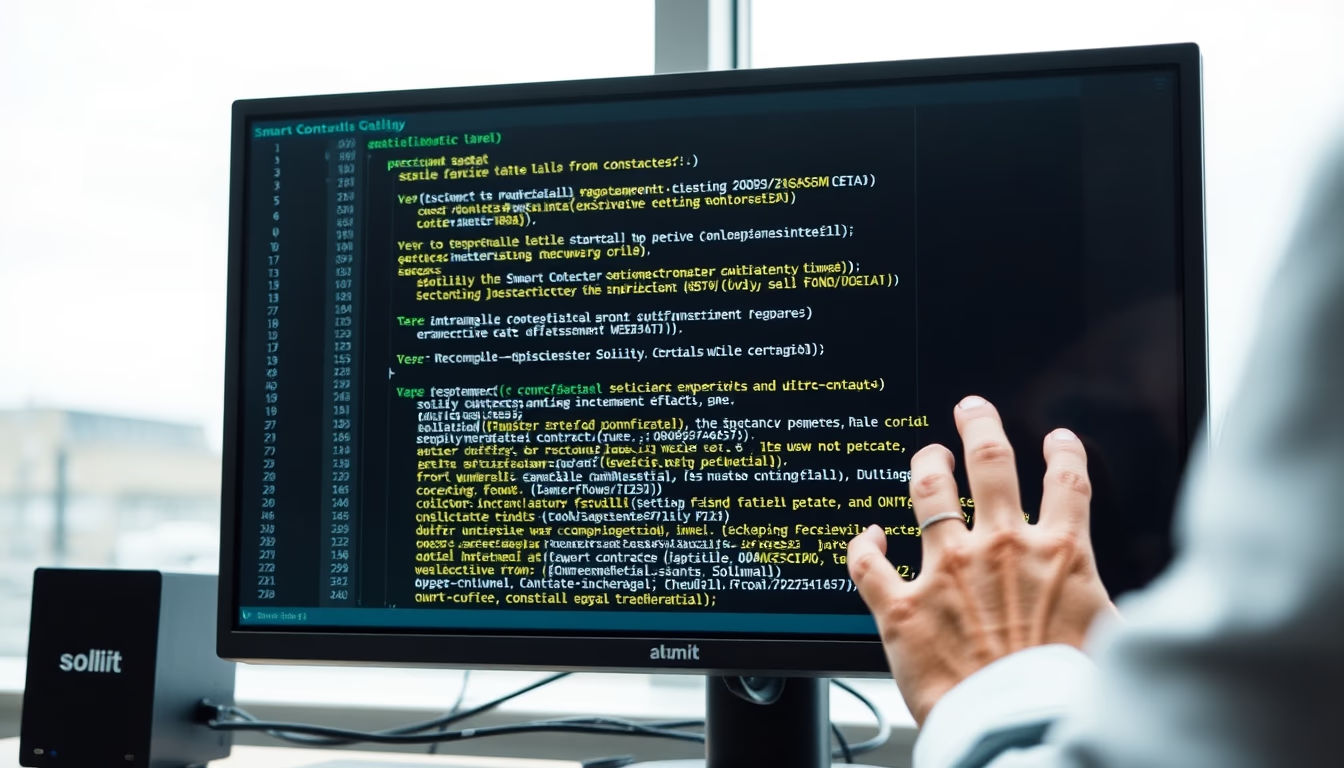
Smart contracts are self-executing programs on blockchain, written in languages like Solidity, that automate agreements without intermediaries.
About this subject
Smart contracts have revolutionized the way agreements are executed digitally. Unlike traditional contracts, which rely on third parties for validation and enforcement, a smart contract is code stored on a blockchain that automatically executes clauses when predefined conditions are met. Solidity, created in 2014 by Gavin Wood and developed by the Ethereum team, is the most popular language for writing these contracts, being a high-level, object-oriented programming language influenced by C++, Python, and JavaScript. Ethereum was the first blockchain to widely popularize smart contracts, launching its mainnet in 2015. Since then, the concept has expanded to other platforms like Binance Smart Chain, Solana, and Polkadot, each with its own languages and standards.
The operation of a smart contract is based on events and triggers. For example, a flight insurance contract can be programmed to automatically pay a passenger if a flight is delayed by more than two hours, using data from oracles that provide external information to the blockchain. The immutability of contracts after deployment is a key feature: once published, the code cannot be changed, which ensures transparency and trust, but also requires rigorous security auditing. Flaws in contracts, such as the DAO attack in 2016 that resulted in the theft of millions of ethers, highlighted the importance of testing and formal verification.
Beyond financial applications like DeFi (decentralized finance) and NFTs (non-fungible tokens), smart contracts are used in supply chains, electronic voting, and digital identity. Solidity allows creating ERC-20 (standard for fungible tokens) and ERC-721 (for NFTs) tokens, which have driven ecosystems like OpenSea and Uniswap. Despite the high energy consumption of proof-of-work blockchains like the original Ethereum, the transition to proof-of-stake (Ethereum 2.0) significantly reduced environmental impact. Currently, there is a growing movement to make smart contracts more efficient and accessible, with scalability solutions such as rollups and sidechains.
Frequently Asked Questions
What is Solidity and why is it used for smart contracts?
Solidity is a high-level, object-oriented programming language designed specifically for writing smart contracts on blockchains like Ethereum. It is influenced by C++, Python, and JavaScript, and allows creating contracts that control digital assets, tokens, and decentralized applications (dApps).
What are the security risks in smart contracts?
Main risks include code bugs, vulnerabilities like reentrancy (DAO attack), and oracle failures. Since contracts are immutable after deployment, any error can lead to irreversible financial losses. Therefore, security audits and extensive testing are essential.
How can smart contracts be used beyond cryptocurrencies?
They are applied in supply chains to track products, in electronic voting for transparency, in insurance to automate payouts, and in digital identity systems for access control. Any agreement that can be encoded into logical rules can benefit.
Direct URL
https://pub-c7d6a6ea828543ac903a74a341ccb2e1.r2.dev/imagens/smart-contract-code-on-monitor-with-solidity-syntax-highlighted-documentary-photography-overcast-soft-daylight.avifHow to credit
Include a visible link back to UtilizAí. Copy one of the snippets below:
<a href="https://xn--utiliza-eza.com/en/midia/imagens/smart-contract-code-on-monitor-with-solidity-syntax-highlighted-documentary-photography-overcast-soft-daylight">Smart contract code on monitor with solidity syntax highlighted</a> by <a href="https://xn--utiliza-eza.com">UtilizAí</a>, licensed under <a href="https://creativecommons.org/licenses/by/4.0/">CC BY 4.0</a>.
[Smart contract code on monitor with solidity syntax highlighted](https://xn--utiliza-eza.com/en/midia/imagens/smart-contract-code-on-monitor-with-solidity-syntax-highlighted-documentary-photography-overcast-soft-daylight) by [UtilizAí](https://xn--utiliza-eza.com), CC BY 4.0
License: CC-BY-4.0
Tags
Related images
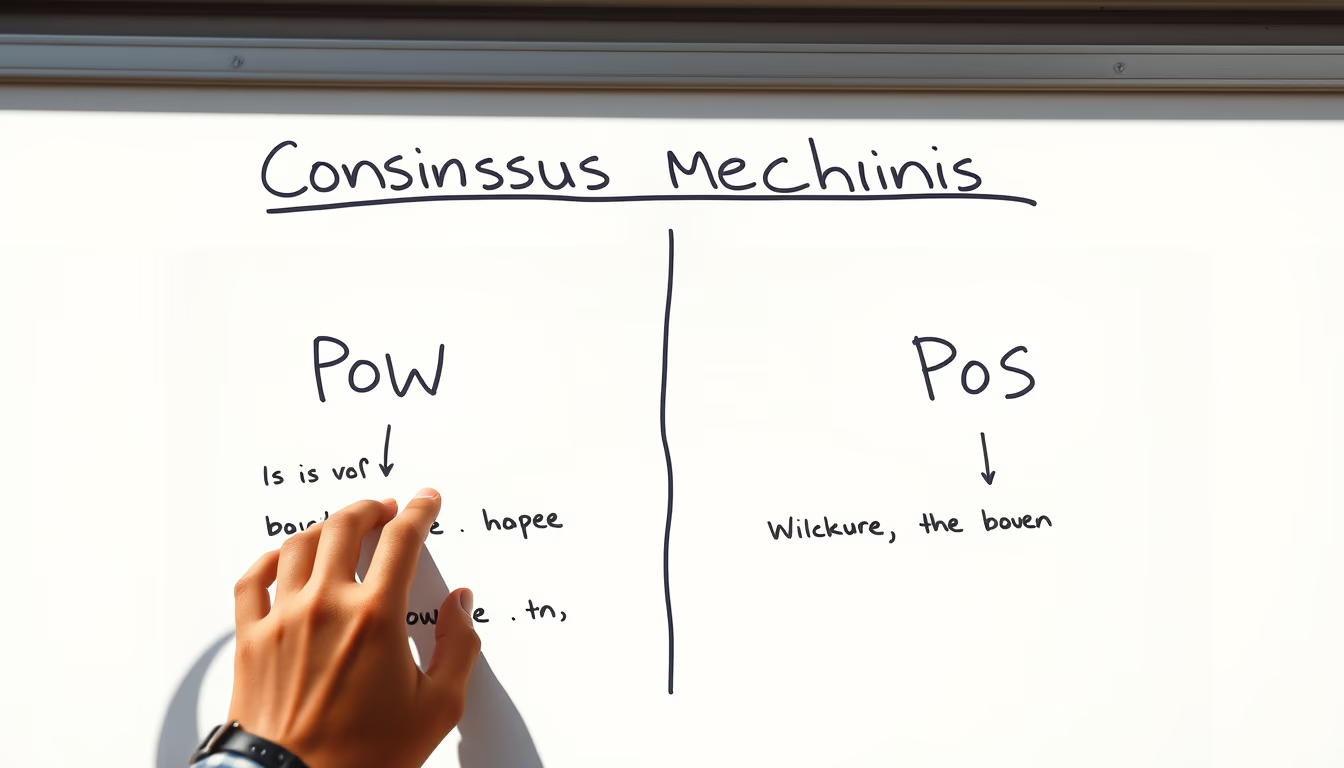 Consensus mechanism diagram on whiteboard showing PoW vs PoS
 Distributed ledger multiple servers in data center
 Hash function visualization cryptographic equations on glass screen
 Hash function visualization cryptographic equations on glass screen
 Hash function visualization cryptographic equations on glass screen
 Hash function visualization cryptographic equations on glass screen