Smart contract code on monitor with solidity syntax highlighted
1344×768 · AVIF · CC BY 4.0
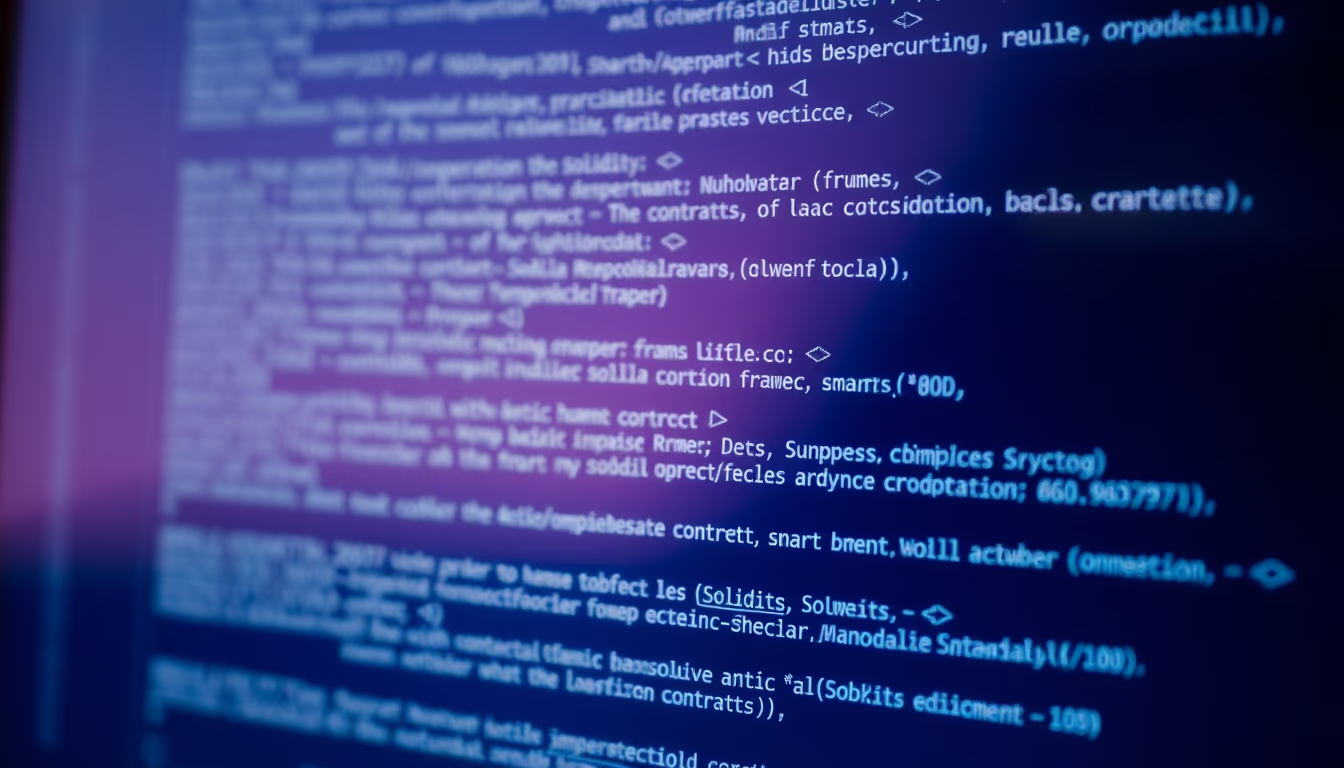
Smart contract code in Solidity displayed on a monitor during blue twilight, highlighting syntax and logic of blockchain smart contracts.
About this subject
Solidity is the primary programming language for writing smart contracts on the Ethereum blockchain, created in 2014 by Gavin Wood. Unlike traditional languages, Solidity is contract-oriented and compiled to bytecode executed on the Ethereum Virtual Machine (EVM). The code displayed on the monitor during blue twilight reflects the typical development environment of blockchain developers, who often work with IDEs like Remix or Visual Studio Code with specific extensions.
Highlighted Solidity syntax includes keywords such as 'contract', 'function', 'mapping', and 'uint256'. A technical curiosity: the language supports multiple inheritance between contracts, similar to C++, but with limitations to avoid ambiguities. Additionally, Solidity has function modifiers like 'onlyOwner', widely used for access control in decentralized applications (dApps).
The blue twilight hour, known as 'blue hour', is a short period after sunset or before sunrise with bluish lighting. Although not directly related to blockchain, this visual context suggests a nighttime work environment, common among remote programmers and cryptocurrency enthusiasts. The image captures a macro close-up, emphasizing code details and the technological atmosphere.
Smart contracts in Solidity have revolutionized decentralized finance (DeFi) and non-fungible tokens (NFTs), with notable examples like Uniswap and CryptoKitties. Code security is critical: errors can lead to million-dollar losses, as in the 2016 DAO attack, which resulted in the Ethereum fork. Therefore, contract auditing is essential, with tools like Slither and MythX analyzing vulnerabilities.
Frequently Asked Questions
What is Solidity and what is it used for?
Solidity is a high-level, contract-oriented programming language used to implement smart contracts on the Ethereum blockchain. It allows creating rules and logic that execute automatically when conditions are met, used in DeFi, NFTs, and other decentralized applications.
Why is syntax highlighting important in code?
Syntax highlighting helps developers quickly identify elements like functions, variables, and modifiers, making code easier to read and maintain. In Solidity, highlighting keywords such as 'contract' and 'function' is crucial to avoid compilation errors and vulnerabilities.
Why is security so critical in smart contracts?
Smart contracts directly handle digital assets, and code errors can be exploited for theft or loss of funds. The 2016 DAO attack, which exploited a reentrancy vulnerability, resulted in millions of ether lost and led to the Ethereum hard fork.
Direct URL
https://pub-c7d6a6ea828543ac903a74a341ccb2e1.r2.dev/imagens/smart-contract-code-on-monitor-with-solidity-syntax-highlighted-closeup-macro-shot-twilight-blue-hour.avifHow to credit
Include a visible link back to UtilizAí. Copy one of the snippets below:
<a href="https://xn--utiliza-eza.com/en/midia/imagens/smart-contract-code-on-monitor-with-solidity-syntax-highlighted-closeup-macro-shot-twilight-blue-hour">Smart contract code on monitor with solidity syntax highlighted</a> by <a href="https://xn--utiliza-eza.com">UtilizAí</a>, licensed under <a href="https://creativecommons.org/licenses/by/4.0/">CC BY 4.0</a>.
[Smart contract code on monitor with solidity syntax highlighted](https://xn--utiliza-eza.com/en/midia/imagens/smart-contract-code-on-monitor-with-solidity-syntax-highlighted-closeup-macro-shot-twilight-blue-hour) by [UtilizAí](https://xn--utiliza-eza.com), CC BY 4.0
License: CC-BY-4.0
Tags
Related images
 Smart contract code on monitor with solidity syntax highlighted
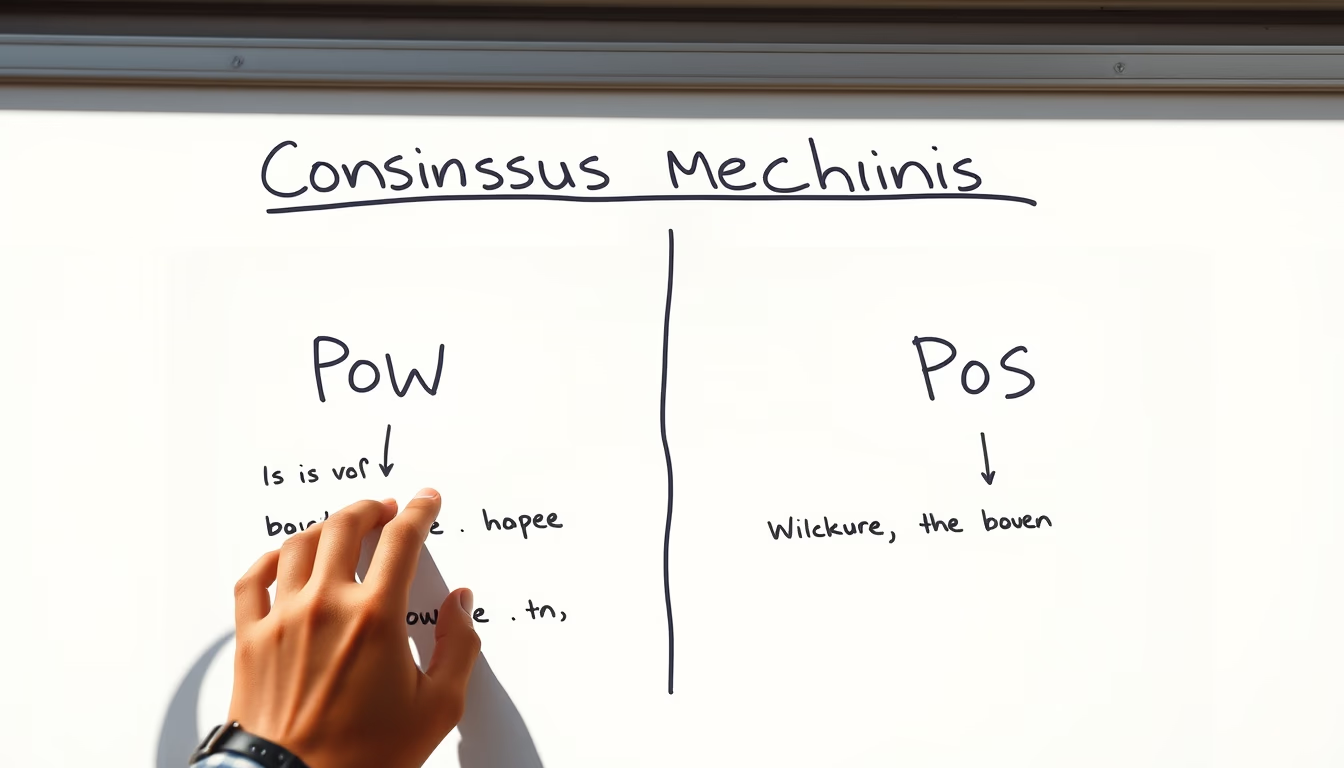 Consensus mechanism diagram on whiteboard showing PoW vs PoS
 Distributed ledger multiple servers in data center
 Hash function visualization cryptographic equations on glass screen
 Hash function visualization cryptographic equations on glass screen
 Hash function visualization cryptographic equations on glass screen