Ski boots boots snow
1344×768 · AVIF · CC BY 4.0
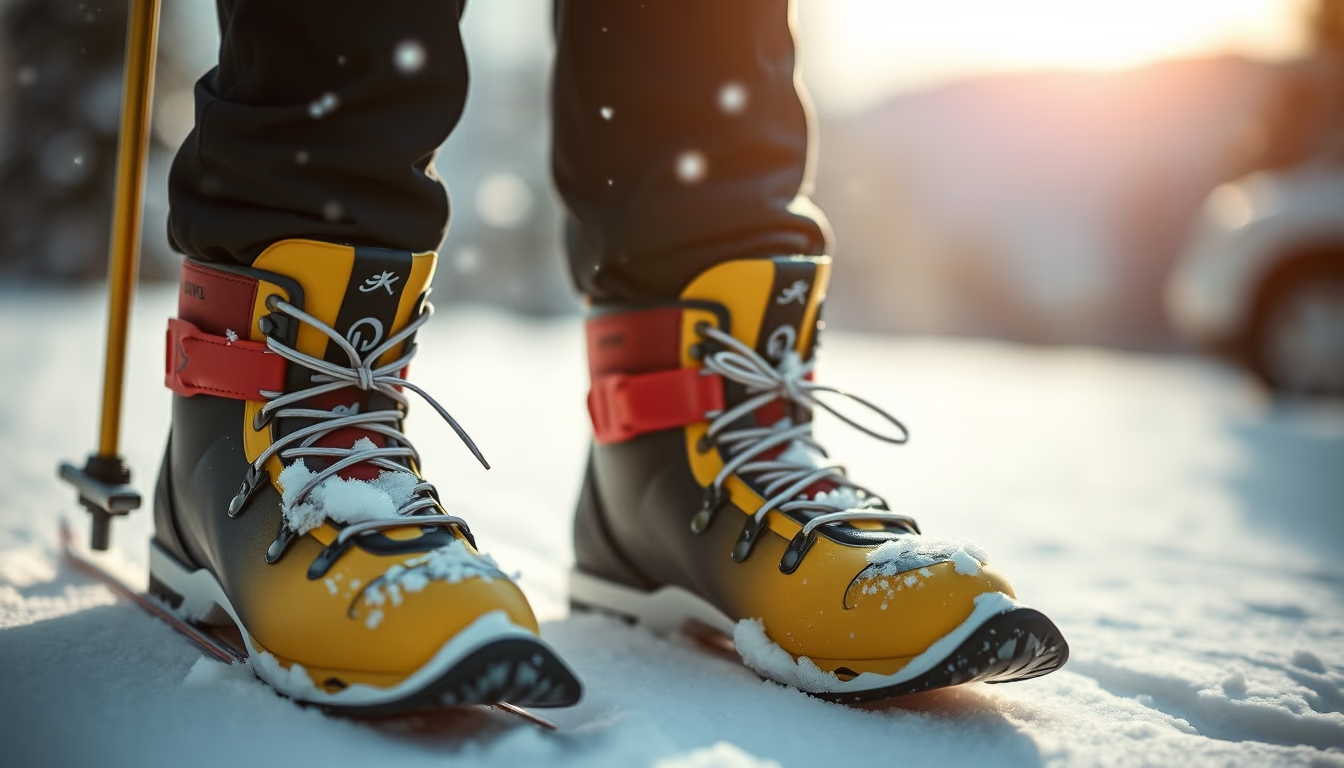
Ski boots are technical equipment that connect the skier to the ski, ensuring control, safety, and comfort on the slopes.
About this subject
Ski boots are one of the most critical pieces of ski equipment. They transmit every leg movement to the skis, enabling turns, braking, and speed control. Modern ski boots consist of a rigid plastic outer shell (made of polyurethane or polyamide) and an inner liner that shapes to the foot, providing comfort and thermal insulation. There are two main types: alpine (downhill) boots, stiffer and designed for groomed slopes, and touring (backcountry) boots, which have a walk mode for hiking and are lighter.
The history of ski boots dates back to the 19th century, when they were made of leather and fastened with straps. In the 1950s, plastic revolutionized design, allowing greater stiffness and durability. Today, technologies like the BOA system (cable adjustment) and micro-adjustable buckles offer precise fit. The flex rating indicates the boot's stiffness, ranging from 60 (soft for beginners) to 130 (stiff for advanced and racing). Proper selection depends on skill level, weight, and skiing style.
Custom fit is crucial: poorly fitted boots can cause pain, loss of control, and even injury. Specialized shops heat-mold the liner, and custom insoles improve energy transfer. The soles of modern boots follow ISO standards, compatible with ski bindings. Maintenance includes proper drying, buckle lubrication, and wear inspection. Curiosity: competition ski boots can cost over $1,000 and are custom-made for athletes.
The tilt-shift effect used in the image is a photographic technique that makes real objects look like miniatures, but the focus here is on the design and functionality of the boots. They are built to withstand extreme temperatures and impacts, using materials like reinforced plastics and viscoelastic foams. Evolution continues with integrated sensors and electronic adjustments, promising even more customization in the future.
Frequently Asked Questions
How do I choose the right ski boot for my level?
Consider your skill level, weight, and skiing style. Beginners should choose boots with a flex rating of 60-80, intermediates 80-100, and advanced above 100. Try different brands and models as foot shape matters.
What is the difference between alpine and touring ski boots?
Alpine boots are stiffer and focused on downhill performance, without a walk mode. Touring boots have a walk mode (articulated ankle) and specific soles for hiking, making them lighter and more flexible for uphill travel.
How should I maintain my ski boots to extend their lifespan?
Dry the boots at room temperature after use, away from direct heat. Lubricate buckles periodically and avoid letting sweaty feet stay inside. Store in a dry, cool place with the boots upright to prevent liner deformation.
Direct URL
https://pub-c7d6a6ea828543ac903a74a341ccb2e1.r2.dev/imagens/ski-boots-boots-snow-tilt-shift-miniature-fresh3.avifHow to credit
Include a visible link back to UtilizAí. Copy one of the snippets below:
<a href="https://xn--utiliza-eza.com/en/midia/imagens/ski-boots-boots-snow-tilt-shift-miniature-fresh3">Ski boots boots snow</a> by <a href="https://xn--utiliza-eza.com">UtilizAí</a>, licensed under <a href="https://creativecommons.org/licenses/by/4.0/">CC BY 4.0</a>.
[Ski boots boots snow](https://xn--utiliza-eza.com/en/midia/imagens/ski-boots-boots-snow-tilt-shift-miniature-fresh3) by [UtilizAí](https://xn--utiliza-eza.com), CC BY 4.0
License: CC-BY-4.0