Ski boots boots snow
1344×768 · AVIF · CC BY 4.0
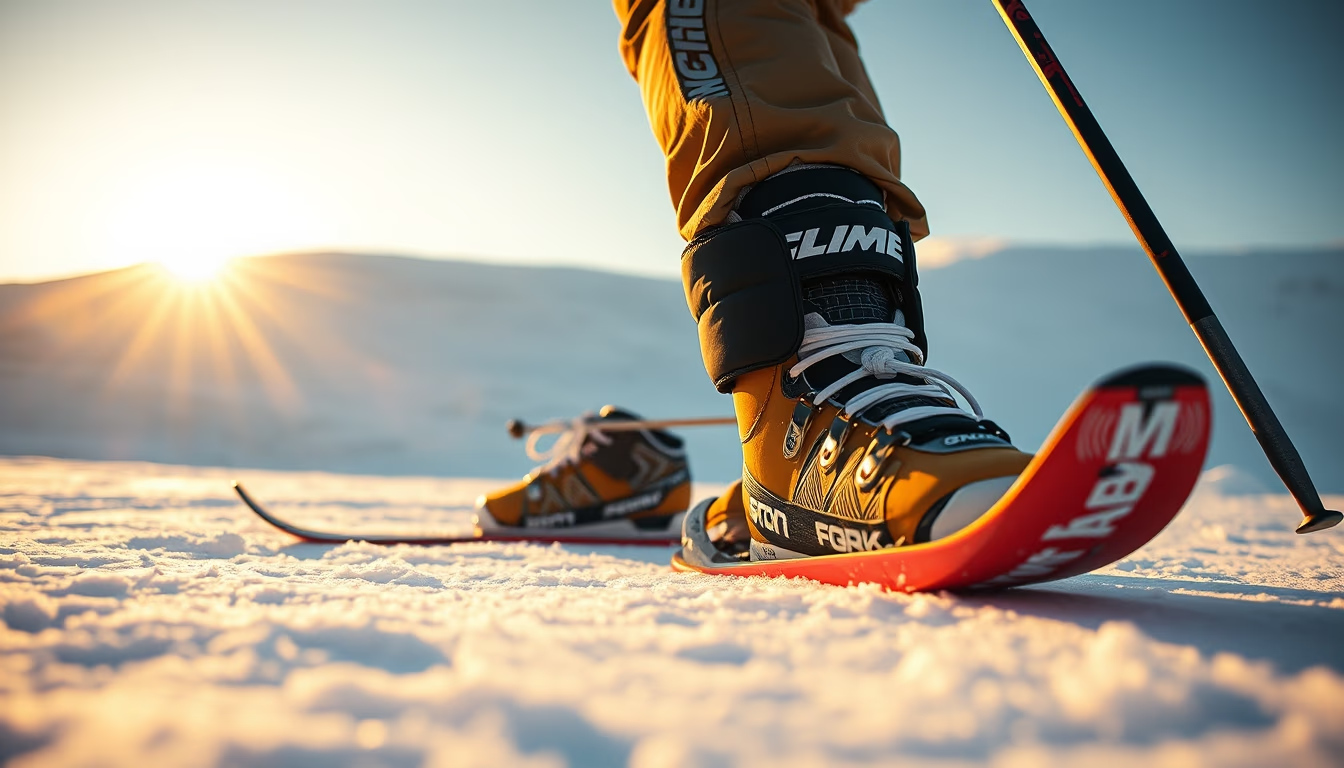
Ski boots: essential equipment for control and safety on snow slopes. Learn how to choose and adjust them.
About this subject
Ski boots are the most critical piece of equipment for a skier, as they form the direct link between the body and the skis. Unlike ordinary footwear, they are rigid and designed to transfer force precisely. Their construction combines an outer shell made of plastic (typically polyethylene or polyurethane) with a padded inner boot that can be heat-molded for a custom fit. Stiffness, measured in flex index, ranges from 60 (beginner) to 130+ (advanced), determining responsiveness and support.
Proper fit is crucial. The boot must hug the foot without gaps, but without causing pain. Techniques such as "shell fit" (checking shell clearance) and boot width (volume) influence comfort and performance. Too-wide boots compromise control; too-tight ones cut circulation. Additionally, soles are standardized (ISO 5355 for alpine, ISO 9523 for touring) for compatibility with modern bindings. Specific models, like touring boots, have articulated soles and allow walking.
Historically, boots evolved from leather and laces in the 1960s to injected plastics and buckles in the 1970s, which offer micro-adjustment. Today, brands like Lange, Atomic, and Dalbello innovate with walk/ski mode mechanisms, allowing switching between walking and skiing modes. Maintenance includes proper drying (avoid direct heat) and buckle inspection. Average lifespan is 100-150 ski days, depending on care.
In Brazil, although there is no natural snow, skiing has grown in popularity with trips to Argentina, Chile, and Europe. Equipment rental is common at resorts, but many Brazilian skiers prefer to buy their own boots to ensure fit and hygiene. Specialized stores in São Paulo, Rio de Janeiro, and Curitiba offer heat molding and technical consultation.
Frequently Asked Questions
How do I find the right ski boot size?
Measure your foot length in centimeters and consult the manufacturer's size chart. Try boots with thin ski socks; they should be snug with no gaps, no pain. Your heel should be locked in place, and toes should lightly touch the front.
What is the difference between alpine ski boots and touring boots?
Alpine boots have flat soles and are stiffer, optimized for downhill skiing. Touring boots have articulated soles (often with Vibram rubber) and a walk/ski mode, allowing comfortable walking and uphill climbing with skins.
Can I wear regular socks inside ski boots?
It is not recommended. Regular socks create uneven volume and can cause blisters. Use specific ski socks, thin and made of synthetic fibers or merino wool, which keep feet dry and improve fit.
Direct URL
https://pub-c7d6a6ea828543ac903a74a341ccb2e1.r2.dev/imagens/ski-boots-boots-snow-cinematic-wide-shot-fresh6.avifHow to credit
Include a visible link back to UtilizAí. Copy one of the snippets below:
<a href="https://xn--utiliza-eza.com/en/midia/imagens/ski-boots-boots-snow-cinematic-wide-shot-fresh6">Ski boots boots snow</a> by <a href="https://xn--utiliza-eza.com">UtilizAí</a>, licensed under <a href="https://creativecommons.org/licenses/by/4.0/">CC BY 4.0</a>.
[Ski boots boots snow](https://xn--utiliza-eza.com/en/midia/imagens/ski-boots-boots-snow-cinematic-wide-shot-fresh6) by [UtilizAí](https://xn--utiliza-eza.com), CC BY 4.0
License: CC-BY-4.0