Ski boots boots snow
1344×768 · AVIF · CC BY 4.0
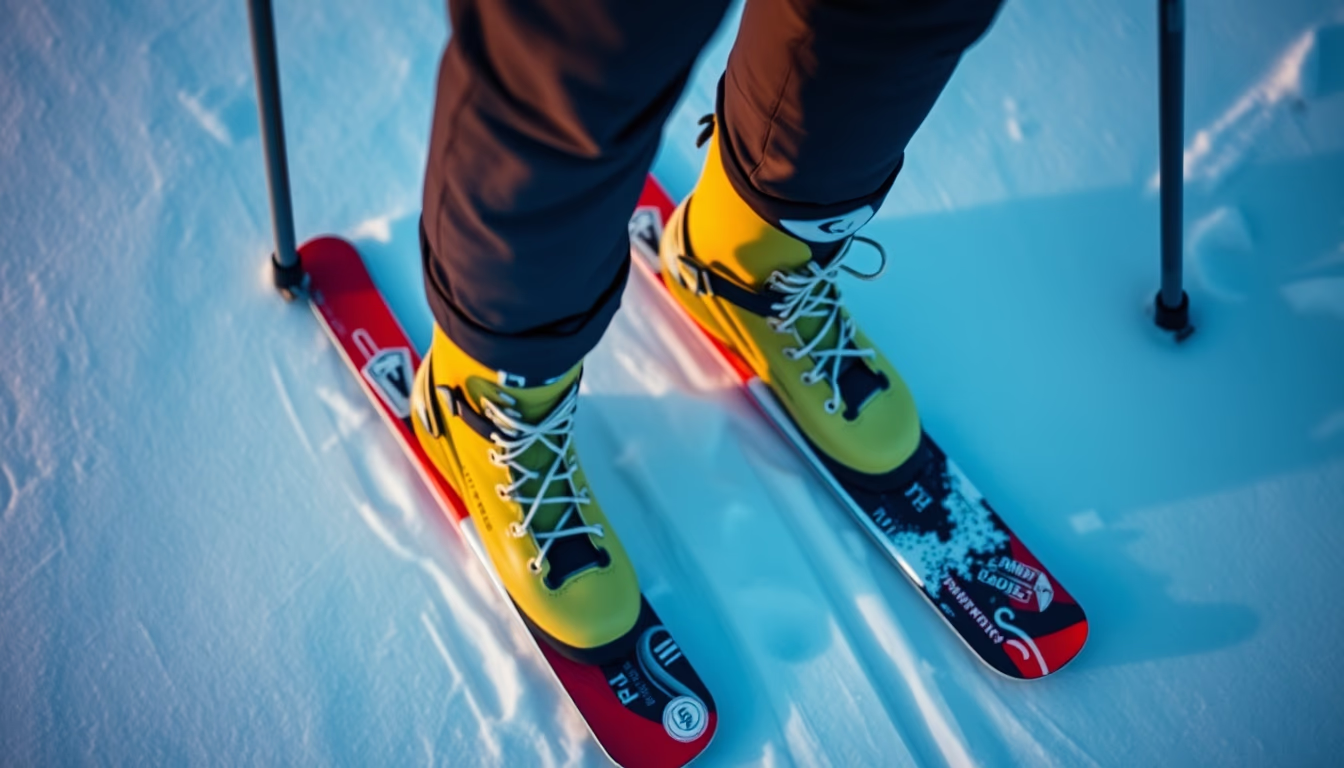
Ski boots are specialized footwear connecting skier to skis, blending stiffness and comfort for precise control on snow.
About this subject
Ski boots are a critical component of winter sports equipment, engineered to transfer energy from the skier to the skis with precision. Unlike ordinary footwear, they feature a rigid outer shell made of injected plastic (polyurethane or polyamide) and a soft inner liner that can be heat-molded for a custom fit. This design ensures that every subtle movement of the foot and leg is directly translated into steering and edge control. Modern ski boots date back to the 1950s, when metal buckles replaced leather laces, revolutionizing performance.
Today, brands like Lange, Nordica, and Salomon lead the market with innovations such as micro-adjustable buckles, canting adjustments, and interchangeable soles. The choice of boot depends on the skier's ability level, skiing style (alpine, freeride, touring), and anatomical factors. Flex index ratings indicate stiffness: softer boots (60, 80) suit beginners, while stiffer ones (120, 150) cater to experts who need rapid response at high speeds.
Safety is a major consideration. Poorly fitted boots can lead to injuries like spiral fractures or nerve compression. Professional fitting is strongly advised, especially for newcomers. Regular maintenance, replacing worn soles, checking buckles, and drying liners, extends boot life and reliability in cold, wet conditions. Some boots now feature walk modes, allowing the ankle to pivot for easier hiking or backcountry travel.
A lesser-known fact: ski boot soles come in different standards (ISO 5355 for alpine, ISO 9523 for touring) to ensure compatibility with bindings. Also, the forward lean angle (typically 12, 15 degrees) is adjustable on many models to match skiing stance. The evolution of materials has reduced weight without sacrificing stiffness, with carbon fiber reinforcements appearing in high-end boots for competitive skiers.
Frequently Asked Questions
How do I choose the right ski boot size?
The correct size considers foot length, width, and instep volume. Always try boots with thin ski socks and utilize a heat-molded liner fitting to eliminate pressure points.
What is the difference between beginner and advanced ski boots?
Beginner boots have a softer flex (60, 80) for comfort and forgiveness. Advanced boots are stiffer (100+) for precise control and high-speed stability.
Can ski boots be used for hiking?
Traditional alpine boots are not designed for walking. However, boots with a walk mode (e.g., touring boots) allow ankle articulation for easy striding. For extended backcountry travel, dedicated ski touring boots are recommended.
Direct URL
https://pub-c7d6a6ea828543ac903a74a341ccb2e1.r2.dev/imagens/ski-boots-boots-snow-aerial-drone-shot-fresh8.avifHow to credit
Include a visible link back to UtilizAí. Copy one of the snippets below:
<a href="https://xn--utiliza-eza.com/en/midia/imagens/ski-boots-boots-snow-aerial-drone-shot-fresh8">Ski boots boots snow</a> by <a href="https://xn--utiliza-eza.com">UtilizAí</a>, licensed under <a href="https://creativecommons.org/licenses/by/4.0/">CC BY 4.0</a>.
[Ski boots boots snow](https://xn--utiliza-eza.com/en/midia/imagens/ski-boots-boots-snow-aerial-drone-shot-fresh8) by [UtilizAí](https://xn--utiliza-eza.com), CC BY 4.0
License: CC-BY-4.0