Shrimp farm aerial
1344×768 · AVIF · CC BY 4.0
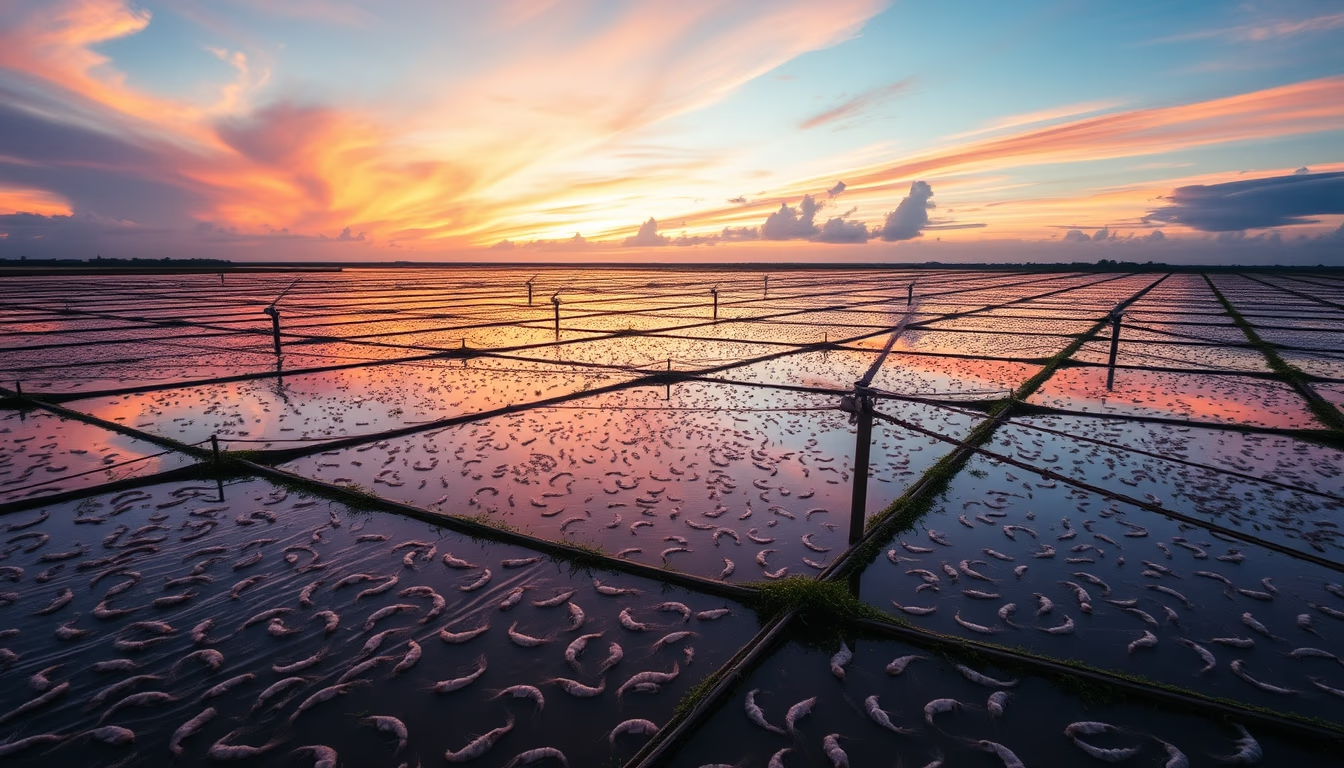
Shrimp farming in Brazil is a significant economic activity, particularly in the Northeast, where large aerial farms showcase intensive cultivation in coastal ponds.
About this subject
Shrimp farming (aquaculture of shrimp) is a globally significant industry, with major production hubs in Southeast Asia, Latin America, and parts of Africa. Brazil is among the top producers, particularly of the Pacific white shrimp (Litopenaeus vannamei), in the northeastern states like Rio Grande do Norte and Ceará. Aerial views of shrimp farms often reveal geometric patterns of ponds, typically located in coastal zones near estuaries or mangroves. These ponds are either excavated or built using earthen dikes, with water exchange from tidal sources. The industry ranges from small-scale family operations to large industrial farms employing advanced aeration and feeding systems.
Environmental concerns are central to shrimp farming. Mangrove deforestation for pond construction has led to habitat loss, reduced coastal resilience, and carbon emissions. Water pollution from uneaten feed and shrimp waste can cause algal blooms and oxygen depletion in surrounding waters. To mitigate these issues, international certifications such as the Aquaculture Stewardship Council (ASC) and Best Aquaculture Practices (BAP) set standards for responsible farming. In Brazil, some farms integrate mangrove restoration or use biofloc technology to recycle nutrients and reduce water exchange.
Economically, shrimp farming provides livelihoods for millions and supplies a growing global market. The industry has faced challenges from diseases like white spot syndrome virus (WSSV) and early mortality syndrome (EMS), which have prompted advances in biosecurity and breeding programs. Interestingly, farmed shrimp now accounts for over half of the shrimp consumed worldwide, with countries like China, Thailand, Ecuador, and Brazil leading production. The long-term sustainability of the sector depends on balancing yield with ecological stewardship, driving innovation in closed-loop systems and alternative feeds.
Frequently Asked Questions
What are the main shrimp farming regions in Brazil?
The main producing regions are in the Northeast, especially Rio Grande do Norte, Ceará, and Pernambuco, using coastal areas with access to brackish water.
What are the environmental impacts of shrimp farming?
Mangrove conversion for ponds reduces biodiversity, and nutrient-rich effluents can cause eutrophication. Certifications and recirculation systems help mitigate these effects.
Is farmed shrimp different from wild shrimp?
Yes, farmed shrimp is usually Litopenaeus vannamei raised in controlled ponds with formulated feed, while wild shrimp is caught at sea. Farmed shrimp accounts for over half of global consumption.
Direct URL
https://pub-c7d6a6ea828543ac903a74a341ccb2e1.r2.dev/imagens/shrimp-farm-aerial-long-exposure-fresh14.avifHow to credit
Include a visible link back to UtilizAí. Copy one of the snippets below:
<a href="https://xn--utiliza-eza.com/en/midia/imagens/shrimp-farm-aerial-long-exposure-fresh14">Shrimp farm aerial</a> by <a href="https://xn--utiliza-eza.com">UtilizAí</a>, licensed under <a href="https://creativecommons.org/licenses/by/4.0/">CC BY 4.0</a>.
[Shrimp farm aerial](https://xn--utiliza-eza.com/en/midia/imagens/shrimp-farm-aerial-long-exposure-fresh14) by [UtilizAí](https://xn--utiliza-eza.com), CC BY 4.0
License: CC-BY-4.0