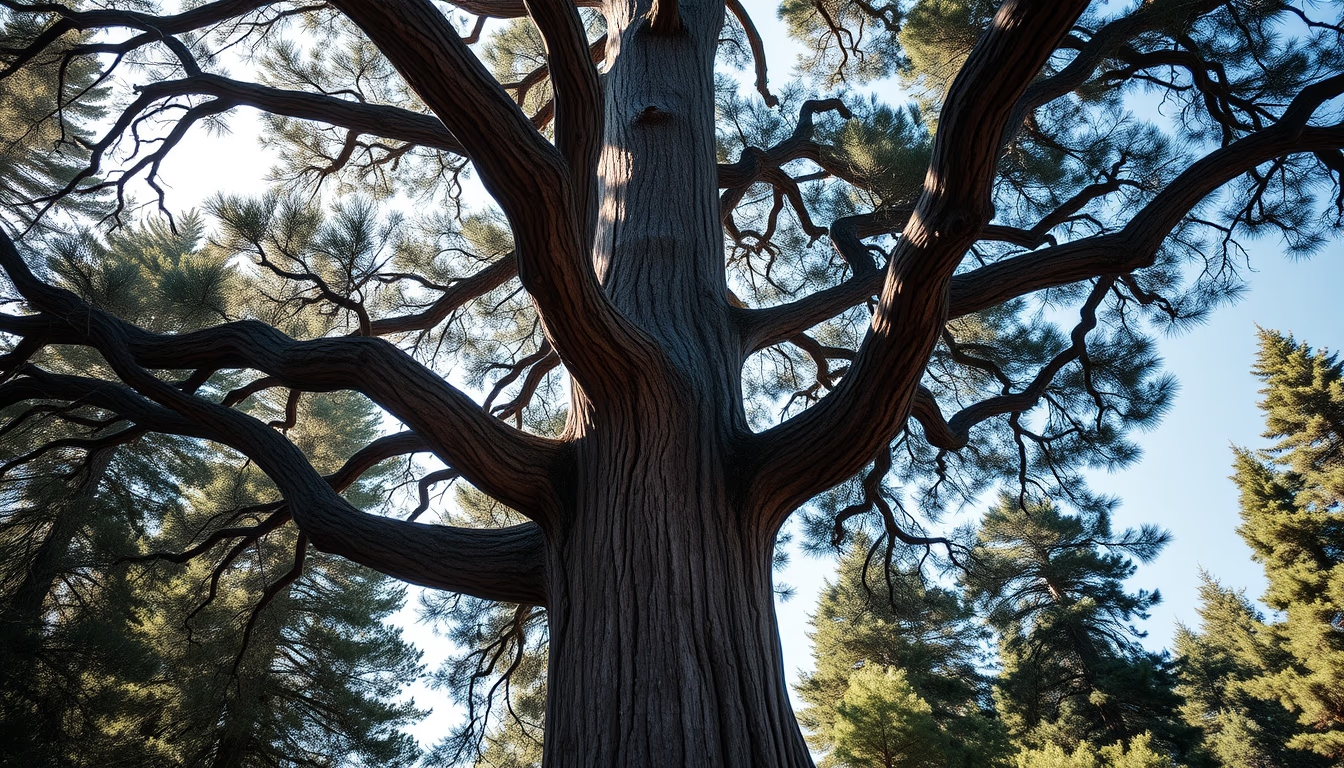
Sequoia giant tree
1344×768 · AVIF · CC BY 4.0
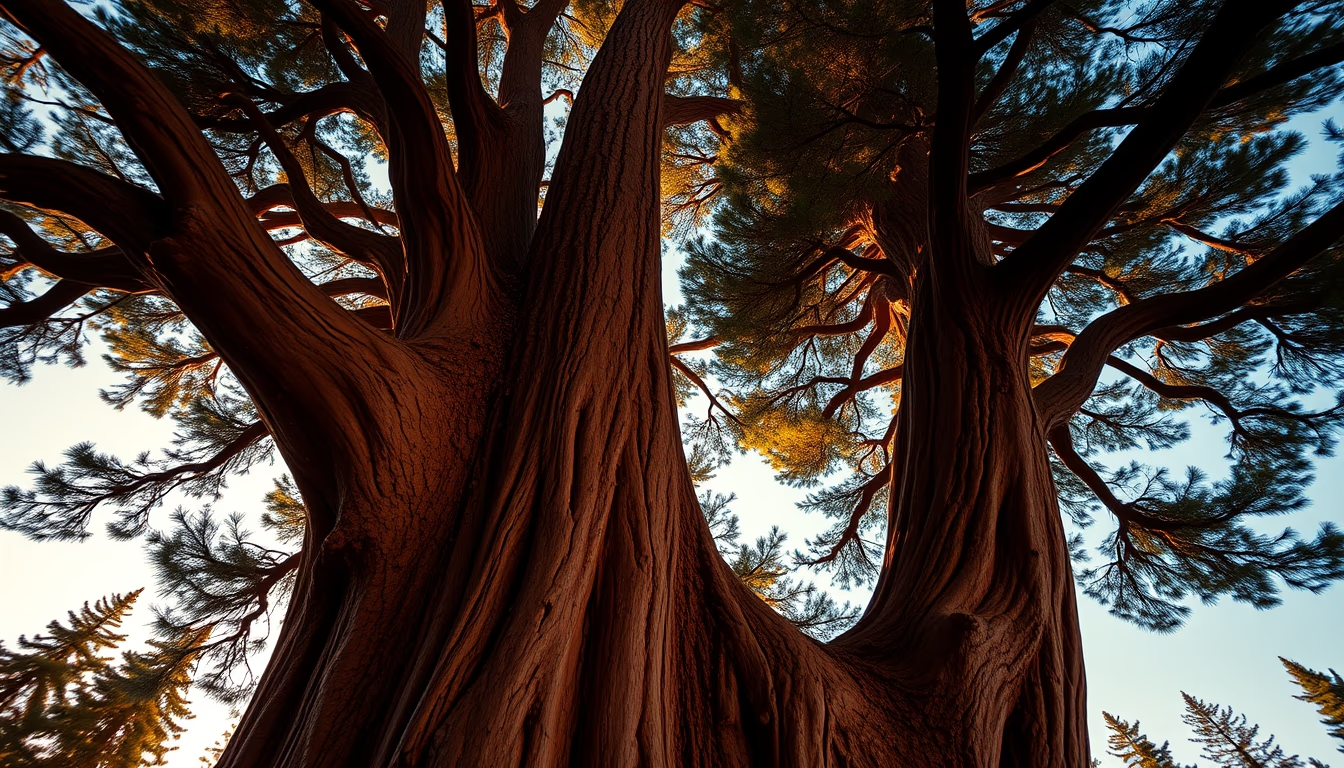
The giant sequoia (Sequoiadendron giganteum) is the world's largest tree by volume, native to the Sierra Nevada mountains in California.
About this subject
Giant sequoias, also known as Sierra redwoods, belong to the cypress family Cupressaceae. They are the most massive trees on Earth by trunk volume, reaching heights over 80 meters and diameters exceeding 8 meters. The largest known specimen, General Sherman in Sequoia National Park, California, has an estimated volume of 1,487 cubic meters and an age estimated between 2,300 and 2,700 years. These trees occur naturally only in a narrow, discontinuous belt of coniferous forests at elevations of 1,500 to 2,400 meters on the western slope of the Sierra Nevada.
The ecology of giant sequoias is deeply tied to fire. Their seeds, enclosed in cones that may remain closed for decades, germinate profusely only after low-intensity wildfires. Heat opens the cones and exposes mineral soil, removing undergrowth and reducing competition. The thick, fibrous bark, up to 60 centimeters thick, protects mature trees from fire. However, 20th-century fire suppression accumulated fuel, making current fires more severe and threatening.
Historically, giant sequoias were heavily logged in the late 19th and early 20th centuries, but their brittle, difficult-to-work wood discouraged commercial use. Nevertheless, vast areas were cut down, and today only about 73,000 hectares of sequoia forests remain in 70 separate groves. Protection came with the establishment of Sequoia National Park in 1890 and other reserves like Giant Sequoia National Monument. Current threats include climate change, with severe droughts and high-severity wildfires, as well as pests like the pine beetle.
Frequently Asked Questions
Why do giant sequoias depend on fire for reproduction?
Giant sequoia seeds are stored in cones that only open with the heat of fire. Low-intensity wildfires clear undergrowth and expose mineral soil, creating ideal conditions for germination and reducing competition for light and nutrients.
Where is the largest giant sequoia located?
The largest giant sequoia by volume is the General Sherman tree in Sequoia National Park, California, USA. It stands about 83 meters tall with a basal diameter of 11 meters.
How old can a giant sequoia live?
Giant sequoias can live over 3,000 years, making them among the longest-lived organisms on Earth. Age is estimated by counting growth rings, but many ancient trees have hollow centers, making exact measurement difficult.
Direct URL
https://pub-c7d6a6ea828543ac903a74a341ccb2e1.r2.dev/imagens/sequoia-giant-tree-cinematic-wide-shot-p5.avifHow to credit
Include a visible link back to UtilizAí. Copy one of the snippets below:
<a href="https://xn--utiliza-eza.com/en/midia/imagens/sequoia-giant-tree-cinematic-wide-shot-p5">Sequoia giant tree</a> by <a href="https://xn--utiliza-eza.com">UtilizAí</a>, licensed under <a href="https://creativecommons.org/licenses/by/4.0/">CC BY 4.0</a>.
[Sequoia giant tree](https://xn--utiliza-eza.com/en/midia/imagens/sequoia-giant-tree-cinematic-wide-shot-p5) by [UtilizAí](https://xn--utiliza-eza.com), CC BY 4.0
License: CC-BY-4.0